

[WOKING PRINCIPLE AND CHARACTERISTICS OF GRAPHITE ANODE MATERIAL PARTICLE CONVEYING]
Graphite anode material is a critical component in lithium-ion battery production, and the efficient handling of its particle form is essential for maintaining production quality and efficiency. The conveying system for graphite anode material particles, developed by Shandong HeadPowder Engineering Co., Ltd., headquartered in Shandong, China, involves several key mechanisms and features that ensure smooth operation and optimal performance.
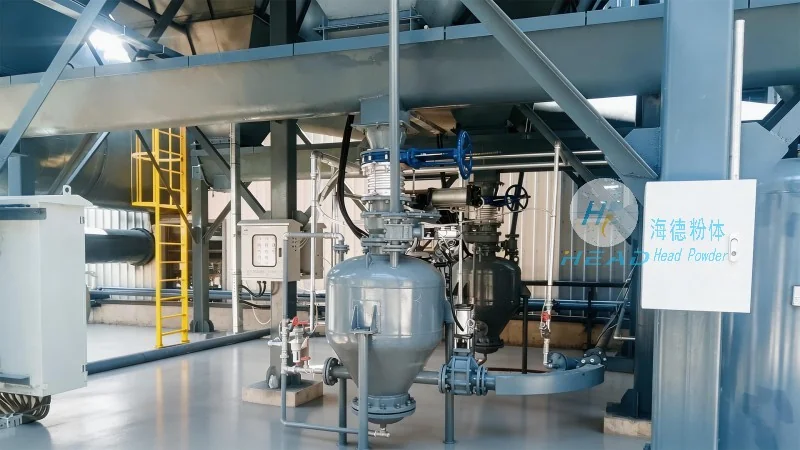
Working Principle of Graphite Anode Material Particle Conveying
The core working principle of the particle conveying system for graphite anode material revolves around the use of specialized equipment designed to transport fine particles from one location to another within a production facility. This process typically begins with the storage of raw graphite material in bulk containers or silos. From there, the material is transferred through a series of conveyors, such as screw conveyors, pneumatic conveyors, or belt conveyors, depending on the specific requirements of the production line. The system is engineered to handle the unique properties of graphite anode material, including its fine particle size, which can range from sub-micron to several microns, and its tendency to aggregate or form dust. To address these challenges, the conveying equipment is equipped with features like vibration screens, air classifiers, and dust collection systems to maintain material integrity and prevent loss during transport.
One of the primary mechanisms in the conveying process is the use of air pressure in pneumatic systems. In this method, the graphite particles are suspended in a stream of air and transported through pipes. This approach is particularly effective for handling fine powders, as it minimizes friction and reduces the risk of particle degradation. The air flow is carefully controlled to ensure consistent particle velocity and prevent clogging or blockages in the conveying lines. Additionally, the system incorporates sensors and monitoring devices to track the flow rate and particle concentration, allowing for real-time adjustments to maintain optimal performance.
Key Characteristics of Graphite Anode Material Particle Conveying Systems
Several distinct characteristics define the performance of graphite anode material particle conveying systems, making them suitable for high-volume production environments. First, the systems are designed for high efficiency and reliability, with minimal downtime due to maintenance or operational issues. This is achieved through robust construction materials, such as stainless steel and corrosion-resistant alloys, which can withstand the abrasive nature of graphite particles and the potential for moisture or chemical exposure in the production environment.
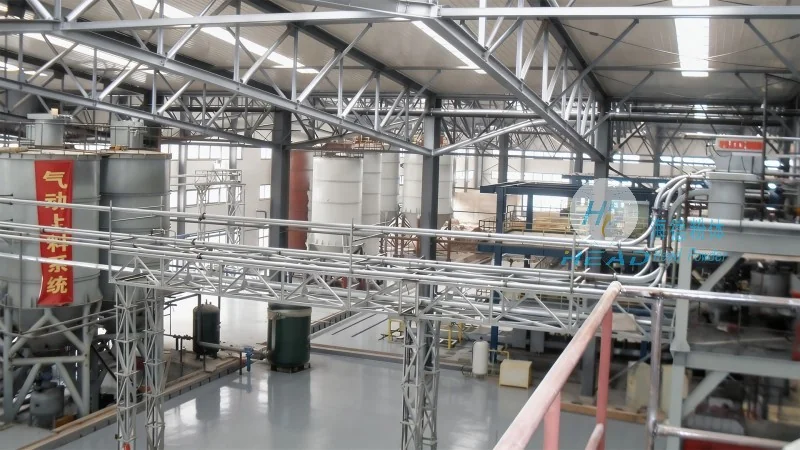
Second, the conveying systems are equipped with advanced control technologies that enable precise regulation of particle flow rates and pressure levels. This allows for consistent material delivery to downstream processing steps, such as mixing, coating, or pressing, which are critical for achieving uniform battery performance. The control systems often integrate with other production equipment, such as mixers and extruders, to create a seamless production line that minimizes material handling errors and improves overall throughput.
Third, the systems prioritize safety and environmental compliance. Graphite anode material is a fine powder that can pose respiratory hazards if not handled properly. Therefore, the conveying equipment includes comprehensive dust collection and filtration systems to capture airborne particles and prevent contamination of the work environment. Additionally, the systems are designed to minimize energy consumption through efficient motor drives and variable speed controls, contributing to lower operational costs and reduced environmental impact.
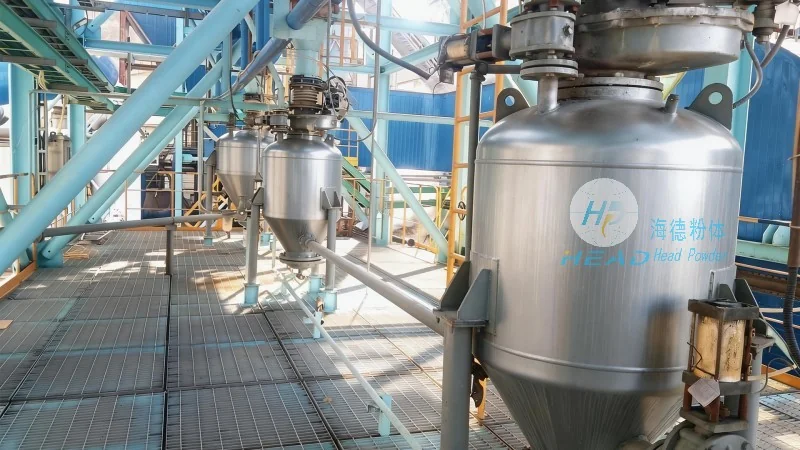
Applications and Industry Standards
The conveying systems for graphite anode material are widely used in the battery manufacturing industry, particularly in the production of lithium-ion batteries for electric vehicles, consumer electronics, and energy storage systems. The systems must comply with industry standards for material handling, such as those set by the International Organization for Standardization (ISO) and the American Society of Mechanical Engineers (ASME). These standards ensure that the equipment meets safety, performance, and quality requirements for handling hazardous materials like graphite anode powder.
In addition to compliance with industry standards, the systems are designed to be scalable and adaptable to different production volumes and material types. This flexibility allows manufacturers to adjust their conveying capacity as production needs change, whether expanding to meet increased demand or integrating new material sources. The adaptability also extends to the integration of automation technologies, such as robotics and artificial intelligence, which can enhance the precision and efficiency of the material handling process.
Conclusion
The working principle and characteristics of graphite anode material particle conveying systems are critical to the success of lithium-ion battery production. By leveraging advanced engineering and control technologies, these systems ensure the efficient and safe transport of fine graphite particles, contributing to high-quality battery manufacturing. As the demand for electric vehicles and renewable energy storage continues to grow, the importance of reliable and efficient material handling systems like these will only increase, making them a vital component of the battery supply chain.