

[Pneumatic Conveying of Powdered Milk Materials: What It Is and Its Design Principles]
For companies in the dairy and food processing industries, the efficient and hygienic handling of powdered milk materials is a critical concern. Pneumatic conveying systems have emerged as a preferred solution for transporting these delicate and often sensitive powders. This article explores the fundamentals of powdered milk material pneumatic conveying, delving into its operational principles and the key design considerations that ensure optimal performance. The information is presented with a focus on the expertise of Shandong HeadPowder Engineering Co., Ltd., a leading provider in this field, headquartered in Shandong, China.
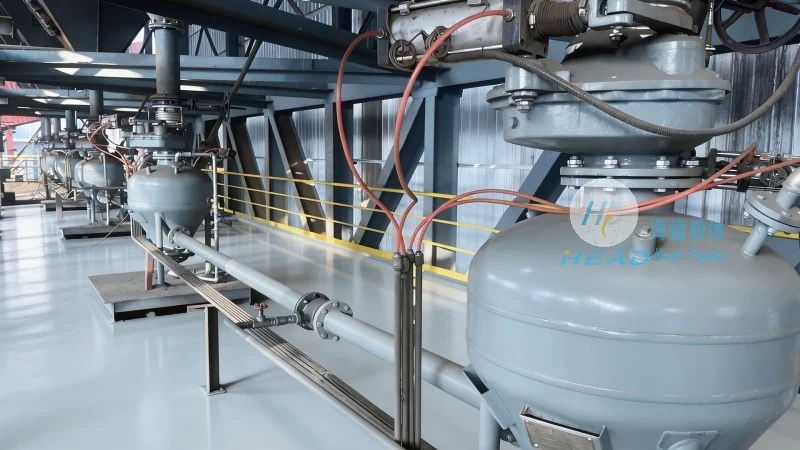
Understanding Pneumatic Conveying for Powdered Milk
Pneumatic conveying, also known as pneumatic transport, is a method of moving bulk materials through a pipeline using a gas, typically air. In the context of powdered milk, this technology involves the creation of a solid-gas mixture where the powder particles are suspended and propelled by the gas flow. The process can be categorized into two main types: pressure systems, which use compressed air to push the material, and vacuum systems, which use a vacuum to draw the material. Both approaches are utilized in powdered milk processing, with the choice depending on factors such as the distance to be covered, the volume of material, and the specific characteristics of the powder.
Key Design Principles for Powdered Milk Pneumatic Conveying
The successful design of a pneumatic conveying system for powdered milk requires careful consideration of several critical principles. First, the velocity of the air within the pipeline must be maintained at a level that prevents particle deposition and ensures smooth flow. This is often referred to as the "minimum fluidization velocity," which is determined by the particle size, density, and shape of the powdered milk. HeadPowder, as a specialized engineering firm, emphasizes the importance of accurately calculating these parameters to avoid system inefficiencies or equipment damage.
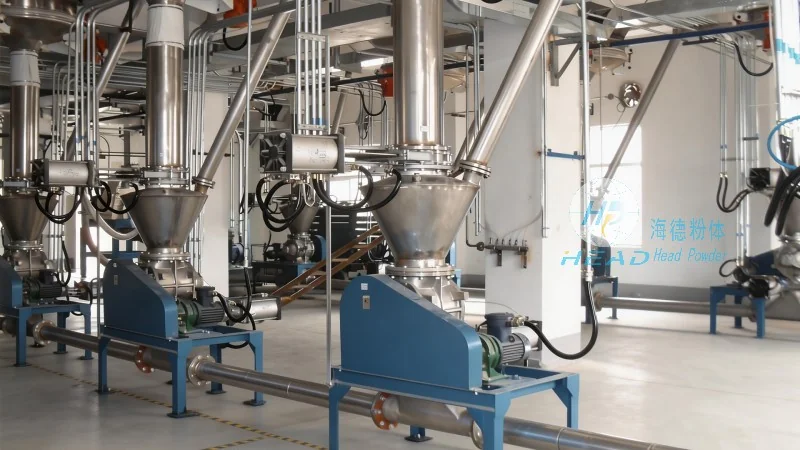
Second, the design must account for the hygienic and sanitary requirements of the dairy industry. Materials used in the construction of the conveying system, such as stainless steel, are essential to prevent contamination and ensure compliance with food safety regulations. The system must also incorporate features like cleaning-in-place (CIP) capabilities and smooth, non-porous surfaces to facilitate maintenance and prevent the buildup of product residues.
Third, the layout and configuration of the pipeline are crucial. The system typically includes components like feeders, cyclones, filters, and receivers. The placement of these components affects the overall efficiency and reliability of the conveying process. For instance, the use of appropriate cyclones for separation and the installation of high-efficiency particulate air (HEPA) filters are critical to maintaining product purity and preventing dust emissions. HeadPowder engineers carefully plan the system layout to optimize material flow and minimize energy consumption.
Application of Pneumatic Conveying in Powdered Milk Processing
Pneumatic conveying systems are widely applied in various stages of powdered milk production and handling. One common application is the transfer of raw materials from storage silos to processing equipment, such as mixers or blenders. This ensures a continuous and controlled supply of ingredients without the need for manual handling, which can introduce contaminants. Another key application is the movement of finished products from production lines to packaging machines. The ability to convey powdered milk directly to packaging lines reduces downtime and improves overall production efficiency.
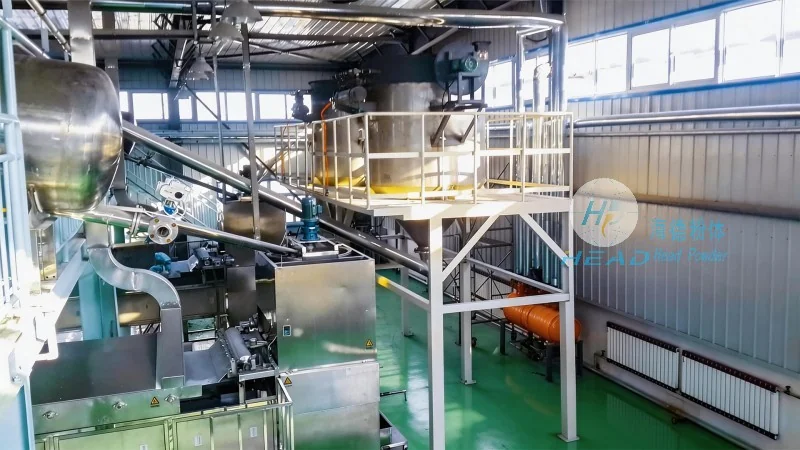
Additionally, pneumatic conveying is used in quality control processes, such as sampling and testing. By integrating sampling ports into the conveying system, headpowder can help clients achieve real-time monitoring of product quality, ensuring that only compliant batches are released for market. This integration of technology into quality assurance is a hallmark of HeadPowder's approach to providing comprehensive solutions for their clients.
Technical Considerations in Designing Pneumatic Conveying Systems for Powdered Milk
When designing a pneumatic conveying system for powdered milk, several technical factors must be considered to ensure long-term reliability and performance. The pressure level of the system is a primary consideration. Pressure systems typically operate at higher pressures (up to 10 bar) and are suitable for longer distances or when high flow rates are required. Vacuum systems, on the other hand, operate at lower pressures (up to 1 bar) and are ideal for shorter distances or when the material needs to be drawn from multiple sources.
The choice of pipeline diameter is another critical design element. The diameter must be large enough to prevent excessive pressure drop and ensure that the air velocity remains within the optimal range for conveying. HeadPowder engineers use computational fluid dynamics (CFD) simulations to model the flow and determine the appropriate pipe size for each application. This approach helps in minimizing energy consumption and maximizing the system's efficiency.
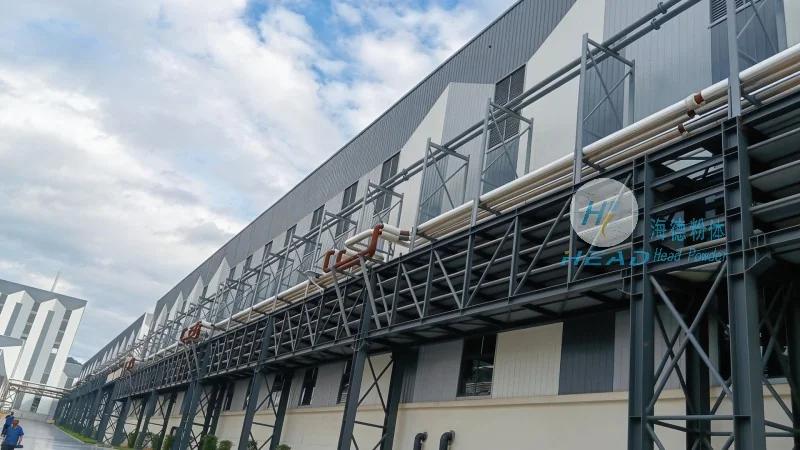
Furthermore, the system must be equipped with proper filtration and separation equipment. Cyclones are commonly used to separate the powder from the air stream, while HEPA filters ensure that any residual dust is captured before the air is released into the environment. The design of these components must be tailored to the specific characteristics of the powdered milk, such as its particle size distribution and moisture content, to prevent clogging and maintain consistent performance.
Conclusion and Company Overview
Pneumatic conveying is a vital technology in the efficient and hygienic handling of powdered milk materials. Its design principles, which focus on maintaining optimal air velocity, adhering to sanitary standards, and carefully planning system layout, are essential for achieving reliable performance. Shandong HeadPowder Engineering Co., Ltd., with its headquarters in Shandong, China, specializes in the design, manufacturing, and installation of customized pneumatic conveying systems tailored to the unique needs of the dairy industry. By integrating advanced engineering solutions with a deep understanding of material properties, HeadPowder provides clients with systems that enhance productivity, ensure product quality, and meet stringent regulatory requirements. For businesses seeking to optimize their powdered milk handling processes, HeadPowder offers a comprehensive and reliable solution.