

What is a High-Pressure Dense-Phase Material Handling System? And What Are Its Design Principles?
High-pressure dense-phase material handling systems represent a sophisticated approach to transporting bulk materials, particularly in industries where efficiency, product integrity, and safety are paramount. These systems are engineered to handle a wide range of materials, from powders and granules to fine particles, by utilizing compressed air or other gases to create a dense, plug-like flow within the pipeline. This method significantly reduces material degradation, dust generation, and system wear compared to traditional pneumatic or vacuum systems. The core of such a system lies in its ability to maintain a high solids concentration, which minimizes the risk of clogging and ensures consistent flow rates, making it ideal for applications in pharmaceuticals, food processing, chemical manufacturing, and other sectors where product purity is critical.
The Fundamental Design Principles of High-Pressure Dense-Phase Systems
The design of a high-pressure dense-phase material handling system is governed by several key principles that ensure optimal performance and reliability. First, the system must maintain a high solids loading ratio, typically ranging from 30% to 70% by volume, depending on the material properties and pipeline length. This high concentration is achieved by injecting a controlled amount of compressed air or gas into the material stream, creating a dense, non-pulsating flow. The design also emphasizes the use of appropriate pipeline diameters and smooth internal surfaces to minimize friction and pressure drop. Additionally, the system incorporates pressure control mechanisms, such as regulators and valves, to maintain consistent pressure levels throughout the pipeline, which is crucial for preventing material segregation and ensuring uniform flow. The selection of components, including air compressors, filters, and material feeders, is tailored to the specific characteristics of the material being handled, such as particle size, density, and moisture content. This tailored approach ensures that the system operates efficiently and effectively, minimizing energy consumption and maintenance requirements.
Key Components and Their Roles in the System
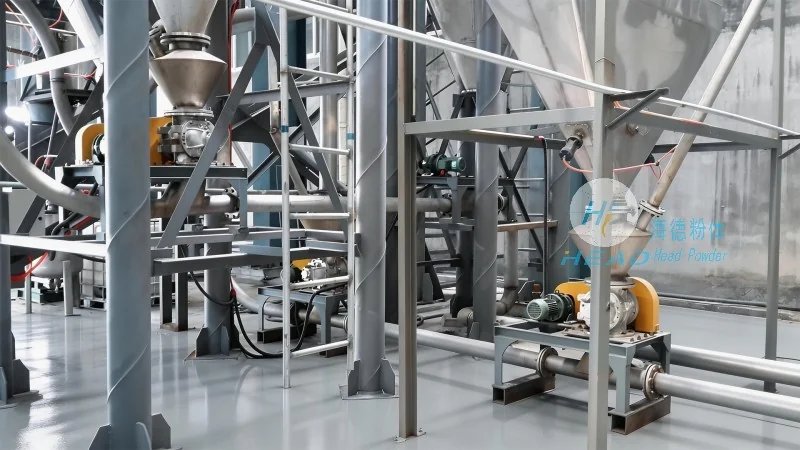
A high-pressure dense-phase material handling system consists of several critical components, each playing a vital role in the overall operation. The primary components include a material feeder, which accurately meters the material into the pipeline, a high-pressure air compressor or blower that supplies the necessary compressed air, a filter system to remove contaminants from the air, and a pipeline network that transports the material. The material feeder is typically designed as a positive displacement type, such as a rotary valve or a screw feeder, to ensure a consistent flow rate and prevent material buildup. The air compressor is usually a high-pressure model, capable of delivering air at pressures ranging from 5 to 15 bar, depending on the system requirements. The filter system is essential to maintain air quality and prevent dust from entering the system, which could affect material quality and equipment performance. The pipeline network is constructed from materials like stainless steel or PVC, chosen for their corrosion resistance and ability to withstand high pressures. Additionally, the system may include pressure sensors, flow meters, and control valves to monitor and regulate the operation, ensuring that the system operates within safe and efficient parameters.
Advantages of High-Pressure Dense-Phase Material Handling
Compared to traditional pneumatic or vacuum systems, high-pressure dense-phase material handling offers several significant advantages. The most notable benefit is the reduction in material degradation, as the dense flow minimizes particle impact and friction. This is particularly important for heat-sensitive or fragile materials, where even minor handling can affect product quality. Additionally, the system generates significantly less dust, which improves workplace safety and reduces the risk of contamination. The high solids concentration also reduces the required pipeline diameter, making the system more compact and cost-effective. Furthermore, the consistent flow rates and pressure control lead to improved process control and reduced downtime, resulting in higher overall productivity. The system is also more energy-efficient than traditional systems, as it requires less air volume to transport the same amount of material. These advantages make high-pressure dense-phase systems a preferred choice for industries where product integrity and operational efficiency are top priorities.
Application Examples and Industry Use Cases
High-pressure dense-phase material handling systems are widely used in various industries due to their versatility and effectiveness. In the pharmaceutical industry, these systems are used to transport active pharmaceutical ingredients (APIs) and excipients, ensuring that the materials remain pure and free from contamination. The system's ability to maintain a high solids concentration and minimize dust generation is critical for meeting stringent regulatory requirements. In the food processing industry, high-pressure dense-phase systems are used to handle powders like flour, sugar, and spices, preserving the product's quality and freshness. The system's gentle handling reduces product degradation and extends shelf life. In the chemical manufacturing industry, these systems are used to transport fine chemicals and catalysts, where the risk of material segregation and contamination is high. The consistent flow rates and pressure control ensure that the materials are delivered to the processing units in the correct proportions. Other applications include the handling of minerals, fertilizers, and other bulk materials in the mining and agriculture sectors. The adaptability of high-pressure dense-phase systems to different materials and industries makes them a valuable asset for any operation requiring reliable and efficient bulk material transport.
Design Considerations and Best Practices
When designing a high-pressure dense-phase material handling system, several factors must be considered to ensure optimal performance and longevity. First, the material properties of the bulk material must be thoroughly analyzed, including particle size distribution, density, moisture content, and flowability. This analysis helps determine the appropriate solids loading ratio and system pressure. The pipeline layout and diameter must be carefully planned to minimize pressure drop and ensure consistent flow. The selection of components, such as air compressors and material feeders, should be based on the system's operating conditions and the material's characteristics. Regular maintenance is also crucial to ensure the system operates efficiently. This includes cleaning filters, checking for leaks, and inspecting components for wear and tear. Proper training of operators is also essential to ensure the system is operated correctly and safely. By following these best practices, the system can achieve long-term reliability and performance, minimizing downtime and maintenance costs.