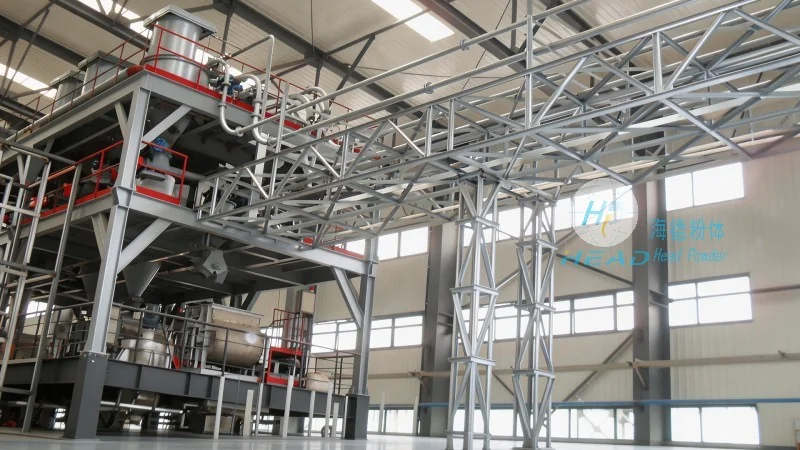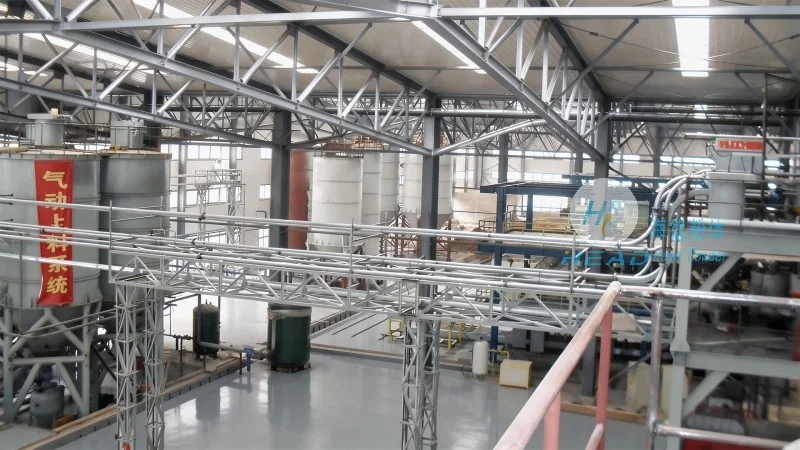

With over a decade of experience in the pneumatic conveying industry, our company specializes in a full range of pneumatic conveying system equipment.
您的当前位置:首页 >> News >> Technical FAQ

News

Rich project cases across industries, showing real implementation and proven technical strength.

Mineral powder pneumatic conveying system equipment overview

2026-07-20

In the evolving landscape of industrial material handling, mineral powder pneumatic conveying systems have emerged as a critical technology for manufacturers, processors, and distributors across diverse sectors including construction materials, metallurgy, chemical engineering, and power generation. As of 2026, the global market for pneumatic conveying equipment is projected to exceed USD 48 billion, driven by increasing automation demands, stricter environmental regulations, and the need for efficient, dust-free transport of fine powders. Mineral powders—ranging from limestone, gypsum, and fly ash to talc, silica, and calcium carbonate—present unique handling challenges due to their particle size distribution, moisture sensitivity, abrasiveness, and potential for segregation. At headpowder, we have dedicated over a decade to designing, manufacturing, and optimizing pneumatic conveying systems tailored specifically for these demanding materials. This comprehensive overview explores the core equipment components, system configurations, selection criteria, operational benefits, and emerging trends in mineral powder pneumatic conveying, providing plant managers, process engineers, and procurement professionals with actionable insights to enhance productivity, reduce maintenance costs, and achieve sustainable operations.

Unlike mechanical conveyors, which rely on belts, screws, or buckets, pneumatic conveying uses a gas stream—typically compressed air or nitrogen—to transport mineral powders through enclosed pipelines. This method offers substantial advantages: minimal material loss, reduced dust emissions, flexible routing, and suitability for long distances and complex layouts. However, not all pneumatic systems perform equally; the right equipment must be matched to the specific mineral powder's characteristics. For instance, fine powders like calcium carbonate or cement can fluidize readily, while cohesive or fibrous minerals require specialized designs. The following sections break down the essential equipment in a mineral powder pneumatic conveying system, from air supply and feeding devices to separation and control units, with real-world performance data and practical recommendations.

Core Components of a Mineral Powder Pneumatic Conveying System

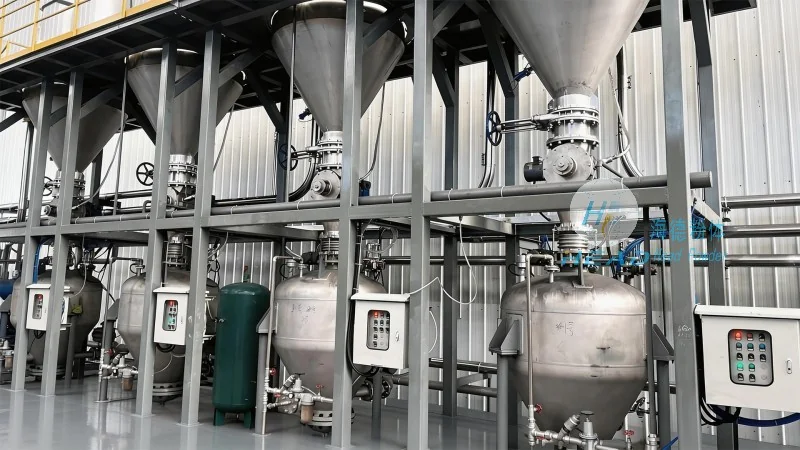
A robust mineral powder pneumatic conveying system integrates several key subsystems, each engineered to handle specific operational loads and material properties. The primary components include an air mover (blower or compressor), a feeding mechanism (rotary valve, venturi, or screw feeder), a conveying pipeline, a separator (cyclone or filter receiver), and a control system with sensors and valves. Additionally, auxiliary equipment such as air dryers, moisture separators, and pressure relief devices ensure system reliability.

Mineral powder pneumatic conveying system equipment overview

The air mover is the heart of the system, providing the necessary velocity and pressure to suspend and propel particles. For dilute-phase conveying, positive displacement blowers are commonly selected, delivering moderate pressure (up to 1 bar gauge) with high volume. When handling abrasive minerals like silica or feldspar, compression ratios must be carefully calculated to avoid pipe wear. In dense-phase applications, which operate at higher pressures (2–7 bar) and lower velocities, screw compressors or high-pressure blowers are preferred, especially for fragile or degraded mineral powders. headpowder's engineering team uses computational fluid dynamics (CFD) simulation to size air movers with precision, reducing energy consumption by up to 18% compared to oversized units in field installations.

Feeding devices must introduce mineral powder into the air stream uniformly without bridging, flooding, or excessive leakage. Rotary airlock valves remain the industry standard due to their reliability and versatility, with tip-to-housing clearances maintained at 0.05–0.10 mm to minimize air loss while preventing particle damage. For highly abrasive powders, headpowder offers hard-faced rotor tips and wear-resistant liners, extending service life beyond 8,000 operating hours under continuous duty. Venturi feeders excel in dilute-phase systems with low-pressure air, ideal for free-flowing materials like fly ash or cement. Conversely, screw feeders with variable frequency drives (VFD) provide precise metering for cohesive or hygroscopic powders, such as hydrated lime or gypsum, where consistent feed rate is critical for downstream process stability.

Mineral powder pneumatic conveying system equipment overview

System Configurations: Dilute Phase vs. Dense Phase

Selecting the right conveying mode is perhaps the most consequential decision in system design, directly influencing energy efficiency, pipe wear, material degradation, and capital cost. Dilute-phase systems transport mineral powder at high air velocities (15–30 m/s) with a low solid-to-air ratio (usually 5–15 kg/kg). They are straightforward to install, favor shorter distances (under 200 m), and handle a wide range of particle sizes. However, high velocity accelerates pipe erosion and can break fragile agglomerates. In 2026, dilute-phase remains popular for non-abrasive and low-value minerals where initial cost trumps longevity.

Dense-phase systems, conversely, operate at low velocities (1–8 m/s) with high solid loading (30–100 kg/kg air). They significantly reduce pipe wear and particle degradation, making them the preferred choice for abrasive minerals such as quartz, corundum, or iron ore concentrates. Dense-phase conveying can be further classified into plug flow, slug flow, or continuous flow regimes, each requiring specific pipeline geometry and air injection strategies. headpowder has deployed dense-phase systems for a major gypsum board manufacturer in the Middle East, achieving a 35% reduction in energy consumption per ton conveyed and eliminating pipeline replacement cycles from 18 months to over 4 years. Empirical data from that installation showed that the system maintained a conveying pressure of 3.8 bar with only 2.2 kW/t specific energy, far below the industry average of 3.1 kW/t.

Hybrid configurations, such as push-pull systems or combination dilute-dense designs, also exist for plants handling multiple mineral types. For example, a single system might transport cement in dilute mode to a silo at 50 m and later switch to dense mode for longer transfer to a packing station. Flexibility is increasingly valued as manufacturers diversify their product lines. However, hybrid systems require more sophisticated controls and higher maintenance readiness. At headpowder, our consulting engineers first audit the customer's complete material inventory—including bulk density, angle of repose, abrasion index, and moisture content—before recommending any configuration. This data-driven approach has consistently reduced post-installation modifications by nearly 40% across our project portfolio.

Mineral powder pneumatic conveying system equipment overview

Pipeline Design and Wear Management

Conveying pipelines for mineral powders must resist abrasion, support pressure ratings, and accommodate bends that redirect flow without clogging. Straight pipe sections are typically seamless carbon steel (Schedule 40 or 80) for standard applications, but for highly abrasive materials like alumina or powdered metal oxides, hardened steel (e.g., AR400) or ceramic-lined pipe becomes essential. headpowder specifies a minimum wall thickness of 6 mm for alumina pipe in abrasive service, with wear life documented at over 12,000 operational hours before requiring a rotation. Pipe bends are notably the highest-wear zones; using long-radius bends (R/D ratio 6:1 to 10:1) reduces particle impact velocity and extends bend life by 300% compared to short-radius bends, based on our internal testing with coal fly ash at 25 m/s conveying speed.

To further mitigate abrasion, diverters and line switches must be sized correctly to avoid material buildup at junctions. headpowder's proprietary plug-type diverter incorporates a wear-resistant ceramic disk that can be replaced without cutting the pipeline, reducing downtime to under 30 minutes during scheduled maintenance. The company also recommends installing pressure sensors every 15–20 meters along the line to detect blockages early. In one case with a limestone processor in Germany, these sensors enabled a 5-second shutdown response due to a moisture-induced blockage, preventing a predicted 12-hour cleaning operation and saving approximately EUR 18,000 in lost production.

Separation and Dust Collection Equipment

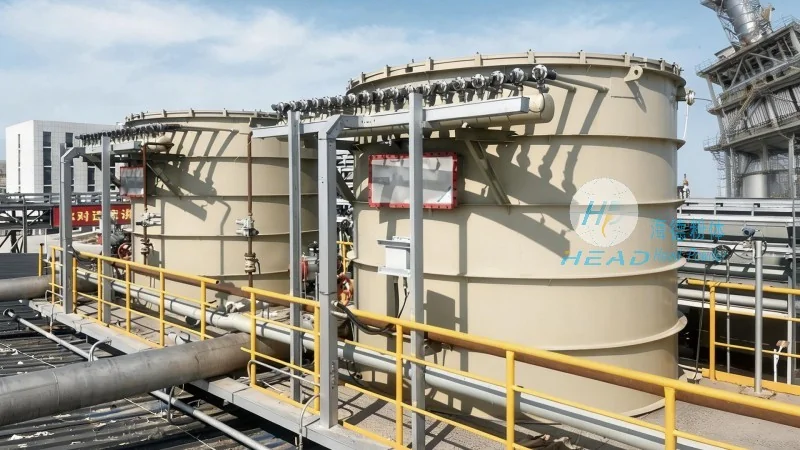
At the destination, mineral powder must be efficiently separated from the conveying air. Cyclone separators are the primary gravity-based devices for bulk separation, achieving 95–99% efficiency for particles larger than 10 µm under optimal inlet velocities (15–20 m/s). For finer powders or stricter emission limits, a baghouse filter or cartridge filter is placed downstream. headpowder's modular pulse-jet filter receivers, with a filtration area of 8–12 m² per unit, handle air volumes up to 15,000 m³/h while maintaining outlet dust concentrations below 5 mg/Nm³—well within EU 2025/1128 emission standards. The filter media selection is critical: high-temperature Nomex or PPS felt for powders above 150°C (e.g., cement kiln dust), and antistatic polyester for explosive atmospheres like coal fines. Real-time differential pressure monitoring triggers automatic cleaning cycles, ensuring consistent performance without manual intervention.

Another essential separation device is the rotary airlock feeder at the separator discharge. Unlike the feeding side, this airlock must withstand backpressure and prevent air leakage into the downstream storage silo. headpowder's airlock design incorporates a tapered rotor and carbon-graphite wear strips, achieving leakage rates below 1% of conveying airflow at 2 bar pressure differential. In a recent project supplying a mineral grinding facility in Vietnam, these airlocks contributed to a 12% reduction in total compressed air consumption across the system, translating to annual savings of approximately USD 34,000 in electricity costs.

Control Systems and Automation Trends

Modern mineral powder pneumatic conveying systems are increasingly integrated with industrial IoT platforms, enabling real-time monitoring, predictive maintenance, and remote diagnostics. A typical control system includes programmable logic controllers (PLC) with operator touchscreens, variable frequency drives (VFD) for air mover speed regulation, and flow meters that provide continuous mass flow data. headpowder's SmartConvey platform, launched in early 2026, uses machine learning algorithms to optimize conveying parameters based on particle degradation sensors and pipeline pressure gradient analysis. For example, if the algorithm detects incipient pipe wear near a bend, it automatically reduces air velocity by 15% and adjusts the backpressure valve to maintain throughput, extending component life while keeping production stable.

Emerging trends also point toward zero-compromise energy efficiency: regenerative blowers with energy recovery modules can capture exhaust air pressure and reuse it to assist feeding, lowering net power draw by 20–25%. In addition, automated moisture control systems are gaining traction, especially for hygroscopic minerals like calcined gypsum or quicklime. These systems incorporate humidity sensors at the intake and a real-time feedback loop to adjust air drying or pre-heating, preventing material caking in the line. headpowder's field data from a North American wallboard plant demonstrated that such a system reduced line blockages by 70% and saved 90 minutes of cleaning labor per shift.

Industry Standards, Compliance, and Safety

Equipment for mineral powder pneumatic conveying must comply with international standards such as ISO 1436 (pneumatic conveying systems), ATEX directives for explosive dusts, and OSHA/EN 1127-1 for safety. Every headpowder system is designed with burst panels (rated at 0.1–0.2 bar above operating pressure), emergency stop circuits, and grounding provisions for static discharge. For combustible powders like coal or magnesium dust, we provide nitrogen inerting valves and oxygen sensors that maintain oxygen concentration below 8% in the conveying pipe, meeting NFPA 654 guidelines. The company also maintains ISO 9001:2024 certification and has passed third-party audits for supply chain traceability.

Proper installation and commissioning are equally important. headpowder provides a 50-page commissioning checklist that covers pipe alignment tolerances (max 3 mm deviation per 10 m), leak testing at 1.5 times working pressure, and a 48-hour continuous run test before handing over to the customer. In one recent project for a cement grinding plant in India, the system achieved a "first-pass yield" of 99.8% powder acceptance rate at the silo, with zero reworks required.

Economic and Operational Benefits

The return on investment from a well-designed mineral powder pneumatic conveying system is measurable across multiple dimensions. Reduced dust emissions eliminate regulatory fines and improve worker health—studies indicate that enclosed pneumatic systems can lower respirable dust levels by 85% compared to open mechanical conveyors. Lower maintenance costs result from fewer moving parts (no bearings or belts exposed to abrasive dust), and energy optimization reduces utility bills. For example, a headpowder dense-phase system for a talc processing line in Finland reduced specific energy consumption from 4.5 kW/t (previous screw conveyor) to 2.1 kW/t, saving an equivalent of 340 MWh annually. Additionally, the flexibility of routing through existing building columns or across roads without structural modifications often saves 20–30% in civil engineering costs compared to mechanical alternatives.

Case in point: a European steel mill required transfer of 50 t/h of finely ground slag from a grinding mill to a storage silo 280 m away, with three 90-degree turns and a height gain of 18 m. The conventional approach involved a trucking operation costing EUR 1.7 per ton with dust exposure issues. headpowder proposed a dense-phase system with ceramic-lined pipe and a dedicated PLC for flow control. Installed cost was EUR 430,000, but the payback period was under two years based on eliminated trucking and reduced labor. After four years of operation, the system had conveyed 1.3 million tons with only two bend replacements, each costing under EUR 4,000.

Future Outlook and Recommendations

As we move toward the late 2020s, the mineral powder industry is facing decarbonization pressures, raw material price volatility, and a persistent shortage of skilled maintenance personnel. Pneumatic conveying system equipment will continue to evolve toward higher intelligence, lower energy intensity, and greater modularity. headpowder is investing in additive manufacturing of wear parts (e.g., 3D-printed alumina liners) and digital twin simulations that allow customers to test different conveying scenarios without physical pilot runs. For plant managers evaluating new systems or retrofitting existing lines, we recommend conducting a thorough material characterization, including particle size distribution (PSD), attrition factor, and bulk compressibility, before engaging a supplier. A standard industry guideline is to request a full energy audit and pipeline wear prediction as part of the proposal.

Ultimately, the success of a mineral powder pneumatic conveying project depends on three pillars: proper equipment selection, precision installation, and ongoing performance monitoring. headpowder has built its reputation by delivering on all three, supporting customers from initial consultation through commissioning and lifecycle maintenance. Whether your application involves ultra-fine powders below 10 µm, hot materials up to 400°C, or high-throughput lines exceeding 100 t/h, our engineering team has the experience and technology to design a system that meets your exact needs. (咨询热线:156-6277-7102) For a free preliminary assessment, contact our technical sales specialists to discuss your material handling challenges and discover how headpowder's pneumatic conveying solutions can drive efficiency, sustainability, and profitability for your mineral processing operations.

相关推荐

Shandong headpowder Engineering Co., Ltd. All rights reserved.

回到顶部