
With over a decade of experience in the pneumatic conveying industry, our company specializes in a full range of pneumatic conveying system equipment.
您的当前位置:首页 >> News >> Technical FAQ

News

Rich project cases across industries, showing real implementation and proven technical strength.

Coating powder pneumatic conveying system equipment overview

2026-07-20

In the rapidly evolving landscape of industrial coating, the efficiency and reliability of powder handling systems have become critical determinants of production quality and operational cost. Among the various technologies employed, the coating powder pneumatic conveying system stands out as a cornerstone for modern powder coating facilities. This article provides a comprehensive overview of the equipment, operational principles, and strategic considerations surrounding pneumatic conveying systems for powder coatings. It is designed for plant managers, process engineers, and procurement professionals seeking to understand how to optimize their powder handling workflows while maintaining consistent product quality.

Pneumatic conveying systems utilize air pressure or vacuum to transport bulk powder materials through enclosed pipelines from storage silos to application points. In the context of powder coating, these systems are responsible for moving fine, electrostatically chargeable powders—typically in the range of 10 to 100 microns—without degrading particle size or altering chemical properties. The choice of conveying method, whether dilute phase, dense phase, or semi-dense phase, directly impacts system wear, energy consumption, and powder integrity. Understanding these distinctions is essential for selecting equipment that aligns with specific production volumes and coating requirements.

Core Components of a Coating Powder Pneumatic Conveying System

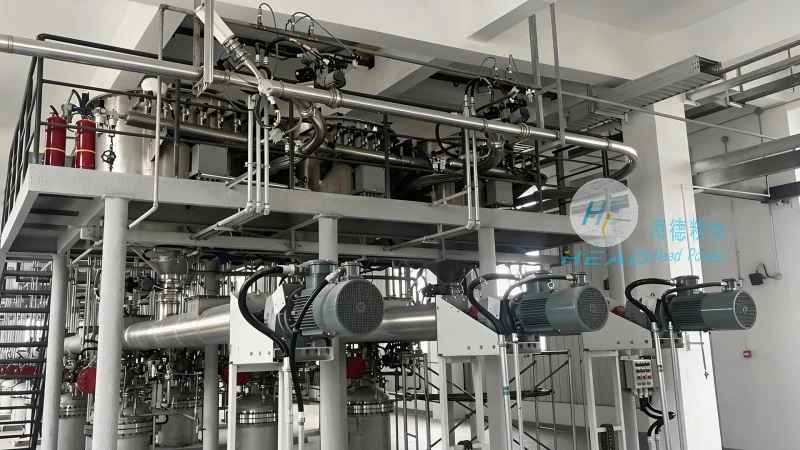
A well-designed pneumatic conveying system for powder coating comprises several interconnected modules, each engineered to perform a distinct function. The primary components include the powder supply unit (often a fluidized hopper or blow pot), the conveying pipeline network, separation and filtration devices, and control systems. The powder supply unit is where the bulk powder is introduced into the air stream. For coating applications, a fluidized hopper ensures consistent powder density by injecting low-pressure air through a porous membrane, preventing agglomeration and bridging. This fluidization step is critical because even minor variations in powder density can lead to uneven spraying and film thickness inconsistencies.

Coating powder pneumatic conveying system equipment overview

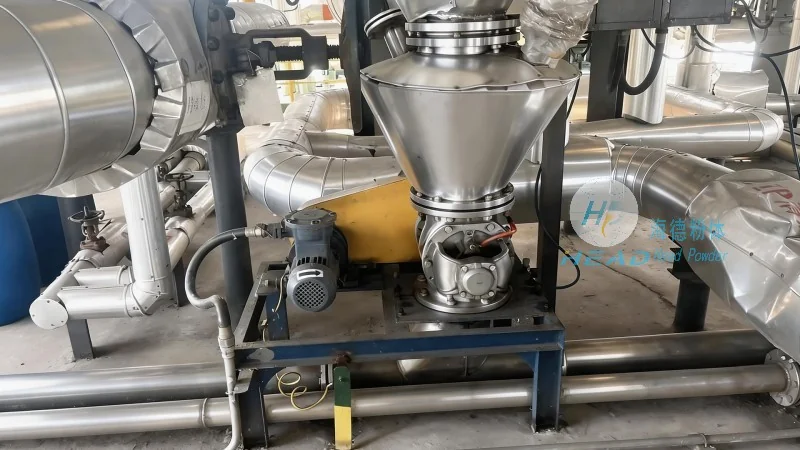
The conveying pipeline must be constructed from materials that resist abrasion and electrostatic buildup. Stainless steel or electrically conductive polymers are common choices. Pipeline diameter, length, and bend configuration are calculated based on the powder’s flow characteristics and the required throughput. For example, in dilute phase conveying, high air velocities (20–30 m/s) carry powders in suspension, but this can cause particle attrition and pipeline wear over time. Dense phase conveying, operating at lower velocities (2–8 m/s), pushes slugs of material through the line, reducing wear but requiring higher inlet pressures. Many modern facilities, including those served by headpowder, adopt a hybrid approach that balances these factors to maintain powder quality while achieving high transfer rates. (咨询热线:156-6277-7102)

At the receiving end, a cyclone separator or filter receiver decelerates the air-powder mixture and separates the powder from the conveying air. Bag filters or cartridge filters with pulse-jet cleaning mechanisms capture fine particles that escape the primary separation. The cleaned air is either exhausted or recirculated, depending on environmental regulations and energy recovery strategies. Control systems equipped with PLCs and variable frequency drives regulate air pressure, flow rates, and powder feed consistency. Advanced systems also incorporate real-time monitoring of powder level, pressure differentials, and filter condition to enable predictive maintenance and minimize downtime.

Coating powder pneumatic conveying system equipment overview

Key Operational Parameters and System Selection Criteria

Selecting the appropriate pneumatic conveying configuration for powder coating demands a thorough evaluation of material properties and process constraints. The angle of repose, bulk density, particle size distribution, and moisture sensitivity of the powder all influence conveyability. For instance, powders with a high fines content (particles below 10 microns) tend to exhibit poor flowability and may require dense phase systems with enhanced fluidization or vibration aids. Conversely, coarse powders (above 80 microns) can be conveyed in dilute phase but may settle in horizontal sections if air velocity drops below the saltation point.

Throughput requirements are another decisive factor. A typical powder coating line may need to transfer between 50 kg/h and 1000 kg/h, depending on the number of spray booths and production speed. For lower throughputs, a vacuum conveying system is often more cost-effective, as it eliminates the need for a separate blower and reduces maintenance complexity. For high-volume operations, positive pressure systems with rotary valves or screw feeders offer superior capacity and longer transport distances. System designers must also account for the number of destinations—for example, multiple spray booths requiring simultaneous feeding—and the required level of automation. In multi-booth setups, a centralized pneumatic network with diverter valves and level sensors allows batch or continuous feeding without manual intervention.

Energy efficiency has become a growing concern in the industry. According to market analyses from 2023–2026, the average energy consumption of pneumatic conveying systems in coating facilities accounts for approximately 15–25% of total plant energy use. Implementing variable speed drives on blowers and vacuum pumps, optimizing pipe routing to minimize bends, and using wear-resistant linings can reduce energy costs by up to 30%. Additionally, many equipment manufacturers now offer modular designs that allow incremental capacity expansion, aligning with the trend toward flexible manufacturing.

Coating powder pneumatic conveying system equipment overview

Material Handling Challenges and Mitigation Strategies

Powder coating materials present unique handling challenges that differentiate them from granular or liquid materials. Electrostatic charging during conveying can cause powders to adhere to pipeline walls, leading to build-up, blockages, and inconsistent feed rates. This is especially pronounced in dry environments with low relative humidity. To mitigate static issues, many pneumatic systems incorporate grounding straps, conductive piping, or anti-static additives in the powder formulation. Some advanced systems also use ionizing air guns at the conveying inlet to neutralize charges before transport.

Another common challenge is particle degradation. Repeated collisions with pipe walls and fittings can break fragile powder particles, generating excessive fines that alter the electrostatic charging behavior and reduce transfer efficiency during application. Studies have shown that a 10% increase in fines content can reduce first-pass transfer efficiency by up to 5 percentage points in electrostatic spray guns. To address this, dense phase conveying is often preferred for friable powders, as the lower velocity minimizes impact forces. In addition, pipe bends with large radius (R ≥ 10D) and smooth internal surfaces help reduce shear and attrition.

Moisture and contamination control is also paramount. Hygroscopic powders can absorb ambient moisture, causing caking and flow disruptions. Pneumatic systems should be equipped with desiccant dryers or refrigerated air dryers to maintain dew points below -20°C. Filters and seals must be inspected regularly to prevent ingress of foreign particles. Many facilities performing quality-sensitive coatings—such as automotive clearcoats or architectural finishes—adopt closed-loop nitrogen-inerted systems to eliminate moisture and oxidation risks altogether. headpowder has implemented such solutions for several high-end clients, achieving a reduction in powder waste by 18% and consistent coating thickness within ±2 microns. (咨询热线:156-6277-7102)

Integration with Coating Lines and Automation Trends

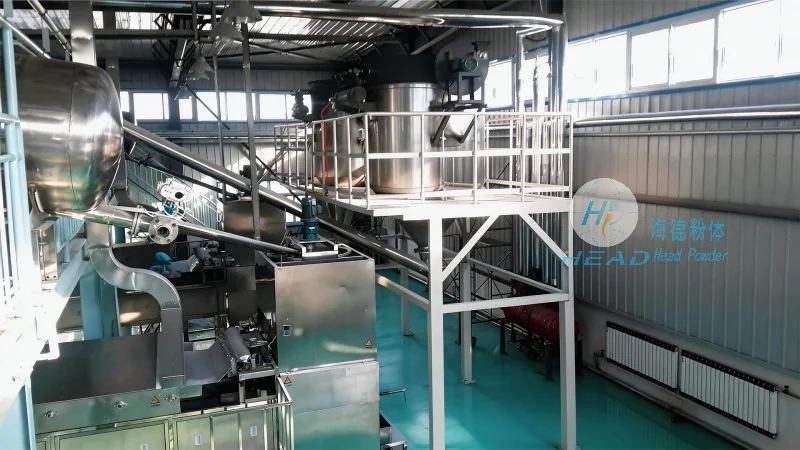
The efficiency of a pneumatic conveying system is fully realized only when it is seamlessly integrated with downstream coating equipment. The conveying system must synchronize with powder spray booths, reclaim units, and recycling loops. In modern powder coating lines, overspray powder is captured by cyclone and filter systems, then returned to the conveying network for reuse. This closed-loop approach not only reduces material costs but also minimizes environmental waste. However, the recycled powder often has a different particle size distribution and electrostatic charge compared to virgin powder, requiring careful blending or dedicated conveying lines.

Automation and Industry 4.0 capabilities are reshaping how pneumatic systems are controlled and monitored. Smart sensors embedded in hoppers, pipelines, and filters transmit data on flow rate, pressure, temperature, and vibration to a centralized SCADA system. Machine learning algorithms can predict when filter cleaning is needed, optimize air-to-powder ratios, and even detect early signs of wear in pipe elbows. For example, a pressure drop anomaly of more than 15% in a specific line segment may indicate a partial blockage, prompting automated purging or maintenance alerts. Such predictive maintenance has been shown to reduce unplanned downtime by 25–40% in powder coating operations.

Moreover, the trend toward smaller batch sizes and faster color changes in the powder coating industry drives demand for modular and quick-cleaning conveying systems. Dedicated lines for each color, or systems with rapid purge cycles using short-length pipes and minimal dead zones, enable changeover times under five minutes. This is particularly important for job shops and custom coaters who handle frequent color changes daily. Systems designed with clean-in-place (CIP) capabilities further reduce manual cleaning labor, improving overall equipment effectiveness (OEE).

Economic Considerations and Return on Investment

Investing in a high-quality pneumatic conveying system requires careful financial justification. The initial capital expenditure covers equipment, installation, and commissioning, which for a medium-sized facility can range from $150,000 to $500,000 depending on complexity. However, the long-term savings from reduced material waste, lower labor costs, and improved production throughput often yield a positive ROI within 18 to 24 months. Data from industry benchmarks indicate that a well-optimized pneumatic system can reduce powder consumption by 10–15% compared to manual or semi-automated feeding methods, primarily through minimized spillage and consistent feed rates.

Operational expenses also include energy, maintenance, and spare parts. Energy-efficient blowers and vacuum pumps with VFDs, coupled with properly sized pipelines, can lower annual electricity costs by $8,000–$20,000 for a typical 200 kg/h system. Maintenance costs, such as replacement of filter cartridges, gaskets, and wear sleeves, typically account for 2–4% of the initial system cost per year. When factoring in the value of reduced scrap and rework—which in many coating operations can exceed $100,000 annually—the business case becomes compelling.

Furthermore, regulatory compliance regarding dust explosion safety and emissions is an increasingly important consideration. Pneumatic conveying systems for combustible powders must adhere to standards such as NFPA 654 in the United States or ATEX directives in Europe. Installing features like explosion vents, isolation valves, and grounding systems not only protects personnel and assets but also ensures uninterrupted production. Insurers often offer reduced premiums for facilities equipped with properly rated explosion protection systems, adding another layer of financial benefit.

Future Directions and Technological Advancements

As the coating powder industry moves toward more sustainable and efficient practices, pneumatic conveying technology is evolving in tandem. One emerging trend is the use of digital twins—virtual replicas of the physical conveying system that simulate powder flow, pressure drops, and wear patterns under different operating conditions. Engineers can use these models to optimize system design before installation or to troubleshoot existing lines without disrupting production. Another promising development is the integration of continuous mass flow meters based on microwave or capacitance technologies, which provide real-time feedback for closed-loop control of powder delivery.

Additionally, the adoption of energy recovery systems is gaining traction. For instance, the compressed air used in dense phase conveying can be captured and reused for fluidization or cleaning cycles, reducing the overall compressed air demand. Some cutting-edge installations now report total energy savings exceeding 35% compared to traditional designs. The drive for zero-waste manufacturing is also pushing the development of ultra-high efficiency reclaim systems that achieve 99.5% powder recovery rates, minimizing the amount of powder sent to landfill.

Finally, the growing variety of coating powders—including low-temperature cure, anti-microbial, and UV-curable types—requires pneumatic systems that can handle wider ranges of particle shapes and stickiness levels. Equipment manufacturers are responding with flexible conveying technologies, such as air-assisted vibratory feeders and multi-stage dense phase pumps, that adapt to changing material characteristics. For companies like headpowder that specialize in custom-engineered solutions, staying ahead of these material trends ensures that clients receive systems tailored to their current and future product portfolios. (咨询热线:156-6277-7102)

Conclusion: Building a Reliable Powder Handling Foundation

In summary, a coating powder pneumatic conveying system is far more than a simple material transport mechanism—it is a strategic asset that directly influences production efficiency, powder yield, and final coating quality. From fluidized hoppers and abrasion-resistant pipelines to smart control systems and explosion safety features, every component must be selected and configured with a deep understanding of the powder’s rheology and the plant’s operational goals. By adopting best practices in system design, maintenance, and automation, facilities can achieve consistent throughput, minimal waste, and a rapid return on investment. As the industry continues to embrace sustainability and digitalization, partnering with experienced solution providers who combine engineering expertise with real-world deployment knowledge becomes key to long-term success. For powder coaters looking to upgrade or build new lines, a thorough evaluation of pneumatic conveying options is the first step toward a more resilient and profitable operation. (咨询热线:156-6277-7102)

相关推荐

Shandong headpowder Engineering Co., Ltd. All rights reserved.

回到顶部