
With over a decade of experience in the pneumatic conveying industry, our company specializes in a full range of pneumatic conveying system equipment.
您的当前位置:首页 >> News >> Technical FAQ

News

Rich project cases across industries, showing real implementation and proven technical strength.

Soybean grain pneumatic conveying equipment solution specification

2026-07-20

In the rapidly evolving landscape of agricultural processing and bulk material handling, the efficiency and reliability of pneumatic conveying systems have become critical for soybean grain operations. As global demand for soybean-based products continues to rise—projected to exceed 420 million metric tons by 2026 according to industry forecasts—processors face increasing pressure to optimize every stage of their supply chain, from storage to milling. Pneumatic conveying offers a sealed, dust-free, and highly automated solution for transferring soybeans between silos, cleaning stations, tempering units, and extraction processes. However, not all pneumatic systems are created equal. The unique physical properties of soybeans—their size, shape, moisture sensitivity, and fragile hulls—demand a customized engineering approach that balances throughput, energy efficiency, and product integrity. This article provides a comprehensive specification framework for soybean grain pneumatic conveying equipment solutions, grounded in industry standards, technical best practices, and real-world operational data. Whether you are upgrading an existing facility or designing a greenfield plant, understanding the key parameters—air velocity, material-to-air ratio, pipeline diameter, bend radius, and filter selection—can significantly impact your bottom line. The following sections break down the core components of a robust pneumatic conveying system tailored for soybeans, while also highlighting emerging trends such as IoT-enabled monitoring, low-energy dilute phase designs, and hygienic conveying for food-grade applications. By aligning equipment selection with the specific demands of soybean processing, operators can achieve consistent flow rates, minimal breakage, and reduced maintenance downtime. This specification guide is intended to serve as a practical reference for engineers, plant managers, and procurement professionals seeking reliable, long-term solutions.

Understanding Pneumatic Conveying Principles for Soybean Grain

Pneumatic conveying relies on the movement of bulk solids through a closed pipeline using a stream of air (or another gas) as the motive force. For soybean grains, two primary modes are commonly employed: dilute phase and dense phase. Dilute phase conveying operates at relatively high air velocities—typically 20 to 35 meters per second—where the soybeans are suspended in the airstream. This method is well-suited for short distances and moderate capacities, but it can generate higher particle impact and potential grain damage if not carefully controlled. Dense phase conveying, on the other hand, uses lower air velocities (below 10 m/s) and higher material-to-air ratios, moving the soybeans in plugs or slugs. This gentle handling significantly reduces breakage and is ideal for fragile commodities like soybeans, especially when long-distance transport or multiple direction changes are involved. For most soybean processing applications, a combination of dense phase for main transfer lines and dilute phase for short, low-pressure branches offers the best balance. The choice between positive pressure (push) and negative pressure (vacuum) systems also depends on layout constraints: vacuum systems are preferred when multiple pick-up points feed a single destination, while pressure systems excel for distributing material to multiple discharge points. Understanding these fundamentals allows engineers to specify equipment that matches both the material characteristics and the operational requirements.

Soybean grain pneumatic conveying equipment solution specification

Physical Properties of Soybeans and Their Impact on System Design

Soybeans are not a uniform, free-flowing powder; they are large, relatively dense legumes with a typical bulk density of 720–770 kg/m³ and an individual kernel length of 5–9 mm. Their shape is nearly spherical with a smooth, thin hull that is susceptible to cracking under high impact or shear stress. Moisture content, which can vary from 8% to 14% depending on harvest conditions and storage, significantly affects flowability. Higher moisture increases stickiness and can lead to bridging in hoppers and plugging in pipelines. Additionally, soybeans contain residual dust, chaff, and fines from harvesting and cleaning, which must be efficiently separated to prevent clogging filters and degrading air quality. Any pneumatic conveying solution must account for these variables. For example, the recommended conveying velocity for soybeans in dense phase is typically between 4 and 8 m/s, with a material-to-air ratio of 10:1 to 20:1 by weight. Pipeline diameter should be sized to maintain these parameters at the desired throughput—commonly 10 to 60 tons per hour for industrial lines. Bend radius is another critical factor: standard short-radius bends (1.5× pipe diameter) can create excessive impact forces, while long-radius bends (6× to 10× pipe diameter) or blind-tee configurations drastically reduce kernel damage. Research from the American Society of Agricultural and Biological Engineers (ASABE) indicates that improper bend selection can increase soybean breakage by up to 8%, leading to lower oil extraction yields and higher processing costs. Therefore, any specification should include bend geometry, wall thickness for abrasion resistance (typically 6–10 mm in carbon steel or stainless steel), and internal surface finish to minimize friction.

Soybean grain pneumatic conveying equipment solution specification

Key Technical Specifications for a Soybean Pneumatic Conveying System

When drafting an equipment solution specification, the following parameters must be clearly defined to ensure system reliability and performance. First, determine the required throughput based on your plant capacity, measured in tons per hour. For a mid-sized soybean crushing facility, a conveying line of 30–50 t/h is common, while larger operations may require 80–120 t/h. The pipeline layout should minimize horizontal runs and vertical lifts beyond 30 meters, as each adds pressure drop. A typical positive-pressure dense phase system for soybeans operates at a working pressure of 1.5–3.0 bar (gauge), with a Roots-type blower or screw compressor providing the air supply. Air consumption is calculated using the formula Q = (M × R) / (ρ_air), where M is material flow rate, R is the required air-to-material ratio (typically 1.5–3.0 m³ air per kg of material for dense phase), and ρ_air is density at operating conditions. Filter receivers or baghouses at the discharge point must be sized for the air volume and dust load, with filter media offering a filtration efficiency of at least 99.9% for particles above 1 micron to comply with EPA and EU clean air standards. Rotary airlock valves at the material inlet must be designed to prevent air leakage; for soybeans, drop-through rotary valves with hard-faced rotors and a clearance of 0.2–0.5 mm are standard. Additionally, the system should include diverter valves for multi-destination routing, magnetic separators to remove ferrous contaminants, and pressure relief devices for safety. For food-grade soybean processing (where soybeans are destined for human consumption), all contact surfaces must be 304 or 316 stainless steel, with smooth welds and no crevices to facilitate cleaning and prevent bacterial growth. These specifications align with international standards such as ISO 1219 for pneumatic fluid power and the ASME B31.3 for process piping.

Emerging Trends and 2026 Market Outlook for Soybean Pneumatic Conveying

Looking ahead to 2026, several technological advancements are reshaping the pneumatic conveying landscape for soybean grain. Energy efficiency remains the top priority, as blowers and compressors typically account for 30–40% of a conveying system’s total electrical consumption. Variable frequency drives (VFDs) and intelligent airflow control algorithms now allow real-time adjustment of air velocity based on material flow, reducing energy waste when conveying at partial capacity. Some advanced systems incorporate ultrasonic flow measurement and machine learning to predict plugging events and optimize air-to-material ratios. Another major trend is the integration of digital twin technology, where a virtual model of the conveying line simulates pressure drops, particle trajectories, and wear patterns. This enables plant engineers to test modifications before physically implementing them, reducing downtime and retrofit costs. The global market for pneumatic conveying equipment in the agricultural sector is expected to grow at a compound annual rate of 6.2% through 2026, driven by automation demand in emerging economies like Brazil, Argentina, and Southeast Asia. In parallel, stricter regulations on dust explosion protection (e.g., NFPA 61 in the U.S., ATEX in Europe) are pushing higher adoption of inert nitrogen purging in conveying systems, particularly for high-fat soybean meals that can self-heat. For companies like headpowder, staying at the forefront of these trends means developing modular, scalable solutions that can be easily upgraded with IoT sensors and remote diagnostics. By offering systems that not only move soybeans efficiently but also provide data analytics for predictive maintenance, equipment suppliers can help processors reduce unplanned stops by up to 40% and extend equipment lifespan.

Real-World Application and Trusted Expertise

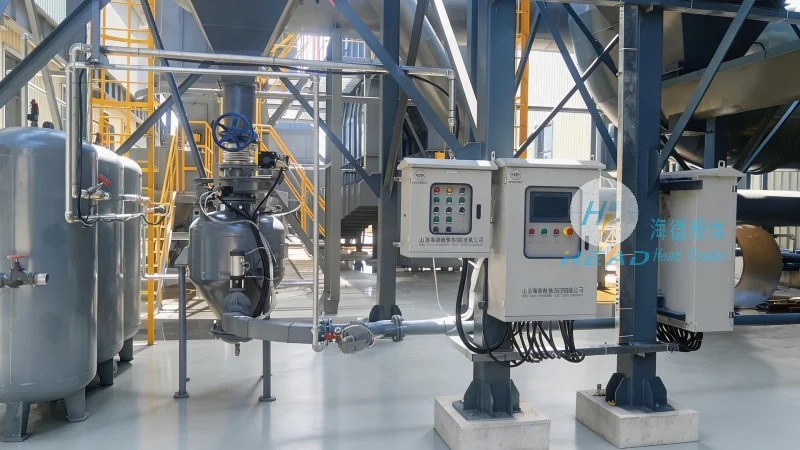
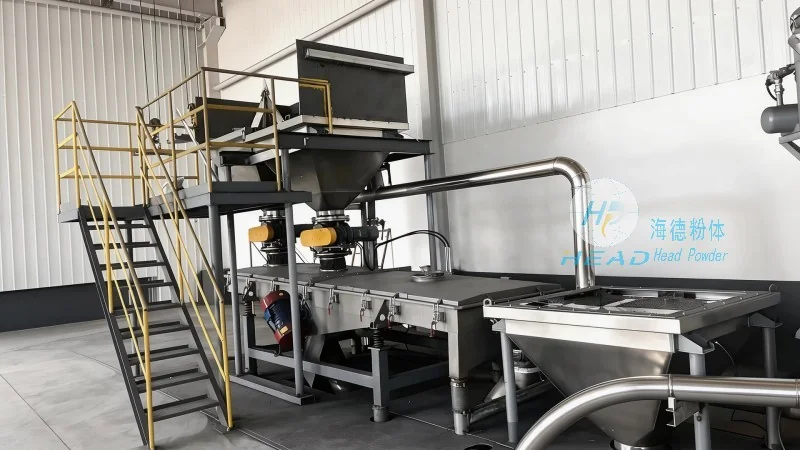
To ground these technical specifications in practical outcomes, consider a typical installation at a medium-sized soybean processing plant in the Midwest. This facility, processing 1,200 tons of soybeans daily, replaced an older mechanical bucket elevator system with a dense phase pneumatic conveying solution designed by headpowder (咨询热线:156-6277-7102). The challenge was to transport soybeans from an outdoor receiving pit to indoor silos located 150 meters away with a 12-meter vertical lift, while keeping kernel damage below 0.5%—a critical requirement for high-grade oil extraction. The solution employed a 200 mm diameter carbon steel pipeline with 8 mm wall thickness and long-radius bends (6D) at all direction changes. Two screw compressors with VFD control provided air at 2.2 bar, and a PLC-based system monitored pressure, velocity, and filter differential pressure in real time. After commissioning, the system achieved a consistent throughput of 42 t/h with an average breakage rate of only 0.32%, well below the 0.5% threshold. Energy consumption measured 4.2 kWh per ton, a 22% improvement over the previous bucket elevator setup when considering dust collection and maintenance savings. This case illustrates why customized engineering matters: a generic off-the-shelf system would have either overdesigned the blowers (wasting energy) or undersized the filters (causing frequent clogging). By working with a provider that understands soybean-specific challenges, processors gain a system that pays for itself through reduced product loss, lower energy bills, and minimized downtime. The experience of headpowder in over 200 grain handling projects globally ensures that each solution is backed by robust process simulation, rigorous component sourcing, and after-sales support including remote troubleshooting and spare parts availability.

Selecting the Right Partner: Beyond Equipment Specifications

While this article has focused heavily on technical specifications, the success of a soybean pneumatic conveying project ultimately depends on the expertise of the equipment provider. A thorough specification document must be accompanied by a detailed scope of supply, installation supervision, commissioning services, and performance guarantees. When evaluating suppliers, look for demonstrated experience with soybeans specifically—not just with grains in general. The shape, size, and moisture variability of soybeans present unique challenges that a provider versed only in cement or plastic pellets may not anticipate. For example, proper air knife cleaning at discharge points, anti-bridging hopper designs with steep angles (greater than 60 degrees from horizontal), and the use of flexible hoses for final drop chutes—these small details make a measurable difference in long-term reliability. Additionally, inquire about aftermarket support: in a 2025 industry survey, 68% of plant managers cited fast spare parts delivery as the most critical factor in vendor selection, followed by remote diagnostics capability. The best suppliers maintain a dedicated application engineering team that can simulate your layout using computational fluid dynamics (CFD) software, providing accurate pressure drop calculations and energy consumption estimates before a single pipe is ordered. For companies like headpowder, this holistic approach—combining deep domain knowledge, advanced modeling tools, and a commitment to sustainability—translates into higher customer retention and industry recognition.

Long-Term Value and Operational Excellence

In conclusion, investing in a well-specified soybean grain pneumatic conveying equipment solution is not merely a capital expenditure; it is a strategic move toward operational excellence in a competitive market. As global soybean processing margins tighten—with average crush margins projected to hover around $1.50–$2.00 per bushel in 2026—every percentage point of yield improvement and every watt of energy savings directly impacts profitability. A pneumatic system designed with care reduces product degradation, eliminates spillage and contamination risks, and provides the flexibility to handle seasonal variations in raw material quality. Moreover, by integrating modern control systems, operators gain visibility into real-time performance, enabling data-driven decisions that enhance overall equipment effectiveness (OEE). It is also worth noting that regulatory compliance regarding dust emissions, noise levels, and worker safety is becoming more stringent worldwide. A well-engineered pneumatic conveying system that includes explosion venting, pressure relief panels, and proper grounding can help facilities meet OSHA, ATEX, or GB standards without additional retrofits. As you evaluate your current or future soybean handling needs, consider partnering with a solutions provider that prioritizes technical rigor, customization, and long-term partnership. The right specification—backed by proven execution—will serve your facility for decades, adapting to evolving capacity demands and technological upgrades. For more detailed information on configuring a system for your specific throughput, layout, and budget, reach out to headpowder (咨询热线:156-6277-7102) to discuss your project requirements with experienced engineers who understand the nuances of soybean pneumatic conveying from field to factory.

相关推荐

Shandong headpowder Engineering Co., Ltd. All rights reserved.

回到顶部