

Introduction to Sodium Dithionite Pneumatic Conveying: Structure and Principle Explanation
Headpowder, formally known as Shandong HeadPowder Engineering Co., Ltd., is a professional manufacturer and supplier of pneumatic conveying systems, with a focus on handling specialized chemical materials such as sodium dithionite. The company is headquartered in Shandong, China, and specializes in designing, manufacturing, and installing efficient and reliable pneumatic conveying solutions tailored to the unique requirements of various industrial applications.
Understanding Sodium Dithionite and Its Handling Challenges
Sodium dithionite (Na₂S₂O₄) is a white crystalline powder widely used as a reducing agent in chemical processes, food processing, and pharmaceutical manufacturing. It is hygroscopic, meaning it readily absorbs moisture from the air, and can also be susceptible to oxidation when exposed to air. These properties make traditional bulk handling methods, such as manual loading or belt conveyors, impractical due to the risk of product degradation, dust generation, and safety hazards. Pneumatic conveying offers a solution by transporting the material in a sealed system, minimizing exposure to air and moisture.
Structure of a Pneumatic Conveying System for Sodium Dithionite
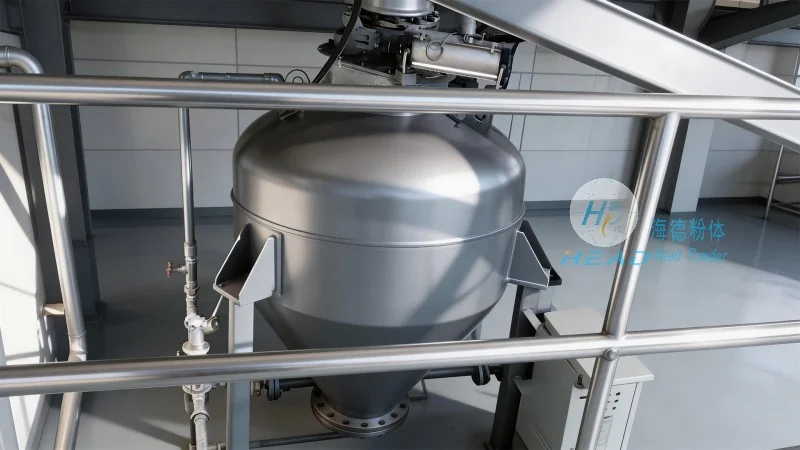
The pneumatic conveying system for sodium dithionite typically consists of several key components, each designed to ensure efficient and safe material transport. The primary components include a feed hopper or silo, a feeding device (such as a screw feeder or rotary valve), a high-pressure or low-pressure air blower, a network of stainless steel or plastic pipes, a separation unit (e.g., cyclone separator or bag filter), and a receiving hopper or storage tank. The system is often equipped with control panels to regulate airflow, pressure, and material flow rates, ensuring consistent operation.
Working Principle of the Pneumatic Conveying Process
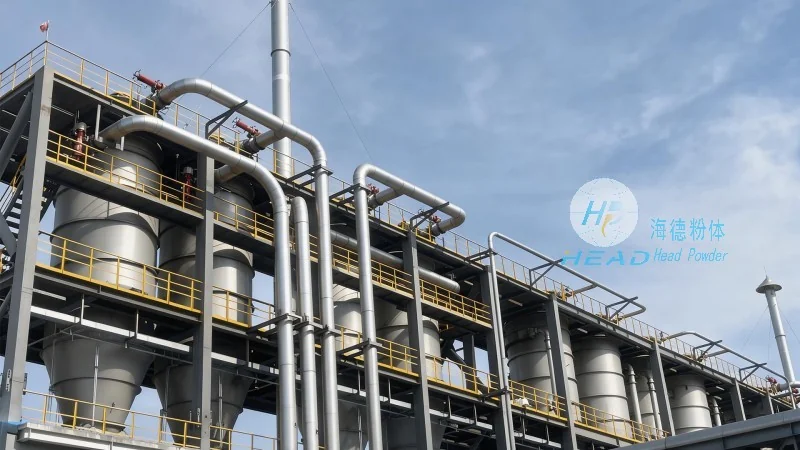
The operation of the pneumatic conveying system begins with the material being fed from the hopper into the feeding device. The feeding device then meters the material into the conveying line as the air blower generates a high-velocity airflow. This airflow creates a negative pressure or positive pressure environment within the pipes, depending on the system design (e.g., dilute-phase or dense-phase conveying). The sodium dithionite particles are entrained by the air stream and carried through the pipes to the destination point. At the receiving end, the air and material are separated using a cyclone separator or bag filter, where the material is collected in the receiving hopper and the air is discharged or recirculated. The system is designed to maintain a consistent flow rate and pressure, ensuring reliable and continuous operation.
Advantages of Pneumatic Conveying for Sodium Dithionite
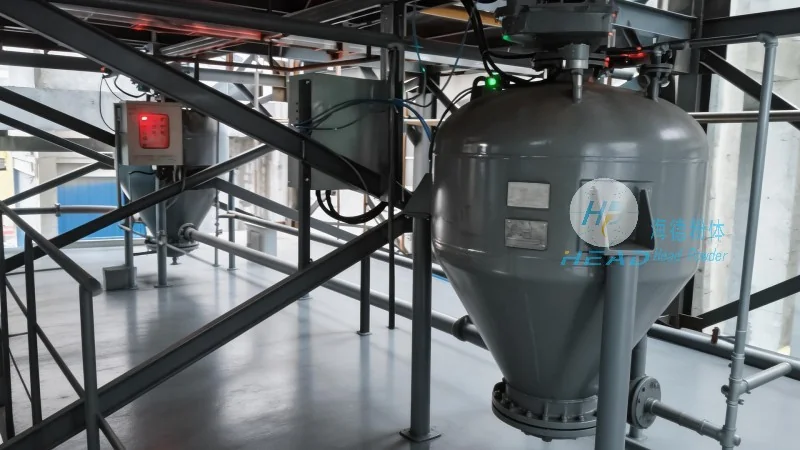
Pneumatic conveying offers several advantages when handling sodium dithionite compared to traditional methods. First, it provides a dust-free environment, reducing the risk of inhalation hazards and contamination. Second, the sealed system minimizes exposure to moisture and air, preserving the material's quality and reducing degradation. Third, the system can handle materials with varying particle sizes and moisture content, making it versatile for different applications. Additionally, pneumatic conveying systems are relatively compact and can be integrated into existing production lines, reducing installation time and costs. The efficiency of the system ensures that material is transported quickly and reliably, improving overall production throughput.
Applications and Industries Served
Headpowder's pneumatic conveying systems for sodium dithionite are used in a variety of industries, including chemical manufacturing, food processing, and pharmaceuticals. In chemical plants, the system is used to transport sodium dithionite from storage silos to reactors or processing equipment. In food processing, it is used to move the material to mixing or packaging lines, ensuring hygienic and safe handling. In pharmaceutical applications, the system is designed to meet stringent regulatory requirements for material purity and contamination control. The systems are tailored to meet the specific needs of each industry, ensuring compliance with safety and quality standards.