

Operation Process and Working Principle of Lightweight Cement Pneumatic Conveying Lines
Lightweight cement pneumatic conveying lines are advanced industrial systems designed for the efficient transportation of lightweight cement and similar powders. These systems utilize air as the primary medium to move materials, offering a dust-free, flexible, and low-maintenance solution for various industrial applications. The technology is particularly beneficial in environments where traditional bulk material handling methods may pose challenges, such as in construction, manufacturing, and chemical processing sectors.
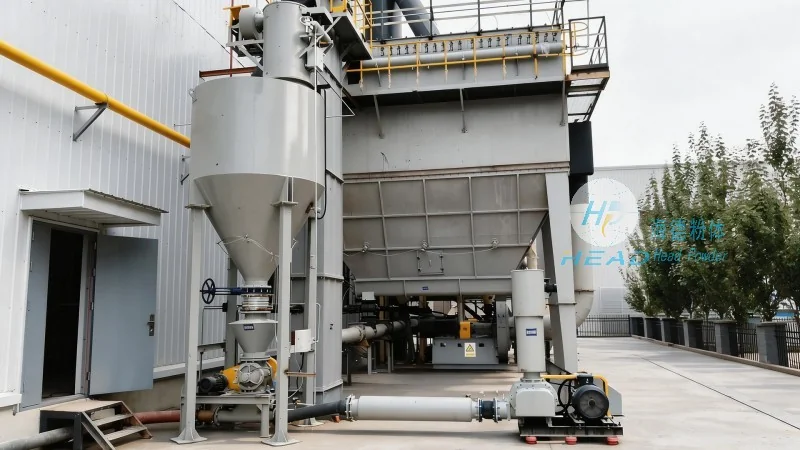
Key Components of the Pneumatic Conveying System
The core components of a lightweight cement pneumatic conveying line typically include a hopper for material storage, a blower or compressor to generate airflow, a pipeline network to direct the material flow, and a receiver or discharge unit for material collection. Each component plays a critical role in ensuring the system operates smoothly and efficiently. The hopper is designed to maintain a consistent material level, preventing blockages and ensuring a steady feed. The blower provides the necessary pressure and airflow to move the lightweight cement particles through the pipeline. The pipeline network, often made of stainless steel or other corrosion-resistant materials, is configured to minimize pressure loss and maintain material flow. The receiver unit collects the conveyed material, ensuring it is discharged safely and without spillage.
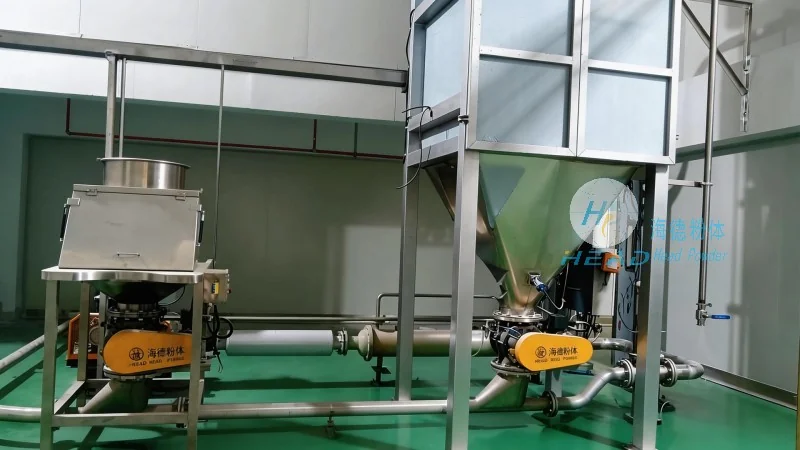
Operation Process of the Pneumatic Conveying Line
The operation process of a lightweight cement pneumatic conveying line involves several sequential steps that ensure the material is transported from the source to the destination with minimal loss and maximum efficiency. Initially, the lightweight cement is fed into the hopper from a storage silo or batch mixer. The material then flows into the conveying line as the blower starts operating, creating a vacuum or pressure differential within the system. As the air flows through the pipeline, it carries the lightweight cement particles along with it, moving them from the inlet to the outlet. The material is then discharged into the receiver unit, where it is collected and prepared for further processing or use. Throughout the process, the system continuously monitors airflow and pressure to maintain optimal performance, adjusting as needed to prevent clogging or inefficient transport.
Working Principle of the Pneumatic Conveying System
The working principle of a lightweight cement pneumatic conveying line is based on the fundamental physics of fluid dynamics and particle transport. The system operates by creating a pressure difference between the inlet and outlet of the pipeline. When the blower is activated, it generates a flow of air that moves through the pipeline, creating a low-pressure zone at the inlet and a higher pressure zone at the outlet. The lightweight cement particles, being light and aerodynamic, are entrained by the airflow and carried along the pipeline. The velocity of the air is critical; it must be sufficient to overcome the gravitational force acting on the particles and maintain a stable suspension. The system uses a combination of positive and negative pressure modes, depending on the distance and layout of the conveying line. Positive pressure systems are used for short-distance or horizontal transport, while negative pressure systems are suitable for longer distances or vertical lifts. The design of the system, including the size of the pipeline, the speed of the blower, and the angle of the pipeline, all contribute to the overall efficiency and effectiveness of the material transport.
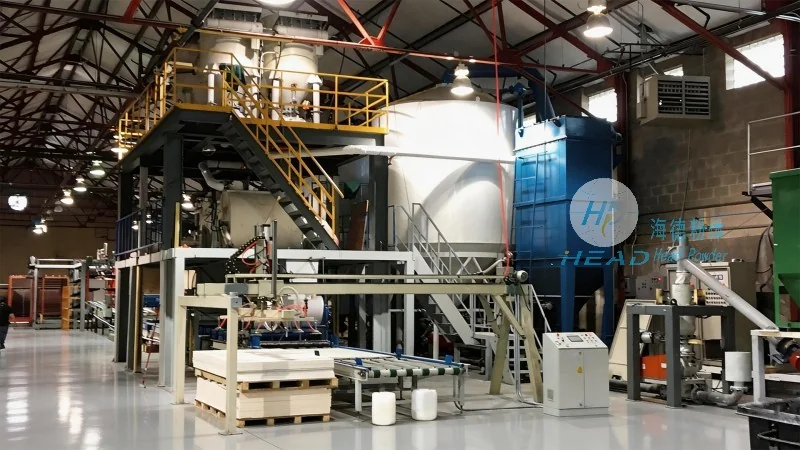
About Shandong HeadPowder Engineering Co., Ltd.
Shandong HeadPowder Engineering Co., Ltd., operating under the brand name headpowder, is a leading manufacturer and supplier of advanced pneumatic conveying systems. With a strong focus on innovation and quality, the company specializes in designing and producing lightweight cement pneumatic conveying lines tailored to meet the specific needs of various industrial sectors. HeadPowder's expertise lies in integrating cutting-edge technology with practical engineering solutions, ensuring that their systems are not only efficient but also reliable and cost-effective. The company's products are widely used in construction, manufacturing, and chemical industries, where the transportation of lightweight cement and other powders is essential. HeadPowder is committed to providing high-quality equipment and excellent customer service, helping clients optimize their material handling processes and improve overall operational efficiency.