

Principle of Pneumatic Conveying System for Lithium-Ion Battery Cathode Materials
Pneumatic conveying systems are essential in the production and processing of lithium-ion battery cathode materials. These systems utilize air or gas to transport bulk materials like lithium cobalt oxide (LiCoO₂), lithium iron phosphate (LiFePO₄), and other advanced powders. The technology offers a non-contact, efficient, and environmentally friendly method for material handling, which is crucial for maintaining the purity and quality of cathode powders used in modern battery manufacturing. By eliminating direct contact between the material and machinery, the system minimizes the risk of contamination and degradation, ensuring that the final cathode material meets the stringent specifications required for high-performance lithium-ion batteries.
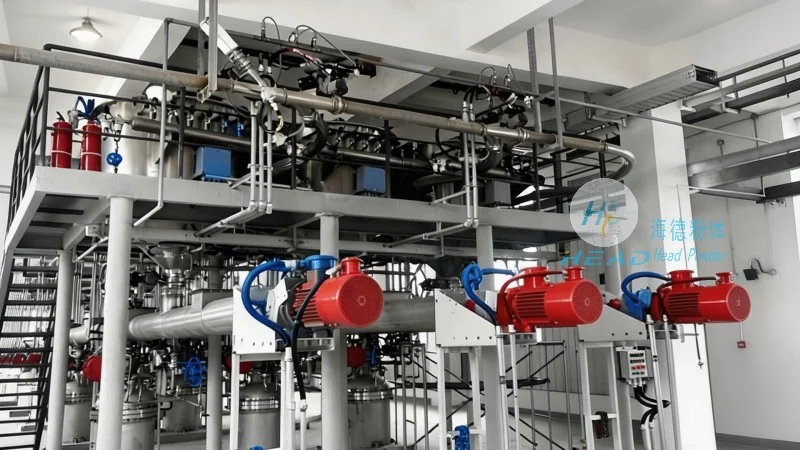
Working Principle of Pneumatic Conveying Systems
The fundamental principle of pneumatic conveying involves using pressurized or vacuum air to move material particles through a pipeline. In a typical positive pressure system, a compressor supplies high-pressure air that pushes the material through the pipeline. The material is fed into a hopper or feeder, where it is then introduced into the pipeline via a rotary valve or other feeder device. The air flow carries the material particles along the pipeline, with the velocity of the air being sufficient to overcome the gravitational and frictional forces acting on the particles. In a negative pressure system, a vacuum pump creates a low-pressure environment that draws the material into the pipeline. The system's design, including the type of air flow, pipeline configuration, and material characteristics, determines the efficiency and effectiveness of the conveying process. For example, cohesive materials like cathode powders may require higher air velocities or specialized feeder designs to ensure smooth transport.
Key Components and Their Functions
Several critical components are integral to the operation of a pneumatic conveying system for cathode materials. These include: feeders (such as rotary valves, screw feeders, or vibratory feeders) that control the material flow rate and prevent blockages; conveying lines (usually made of stainless steel or PTFE-coated materials to prevent corrosion and contamination); air supply units (compressors or vacuum pumps) that generate the necessary pressure or vacuum; and separation devices (cyclones or bag filters) that separate the material from the air at the discharge end. The feeders are designed to handle materials with varying particle sizes and moisture content, ensuring consistent material flow. The conveying lines are often equipped with bends, elbows, and expansion joints to accommodate the system's layout and minimize pressure losses. The air supply units are selected based on the system's capacity and the required pressure or vacuum levels. The separation devices are crucial for maintaining material purity and preventing dust emissions, which is essential for compliance with environmental regulations.
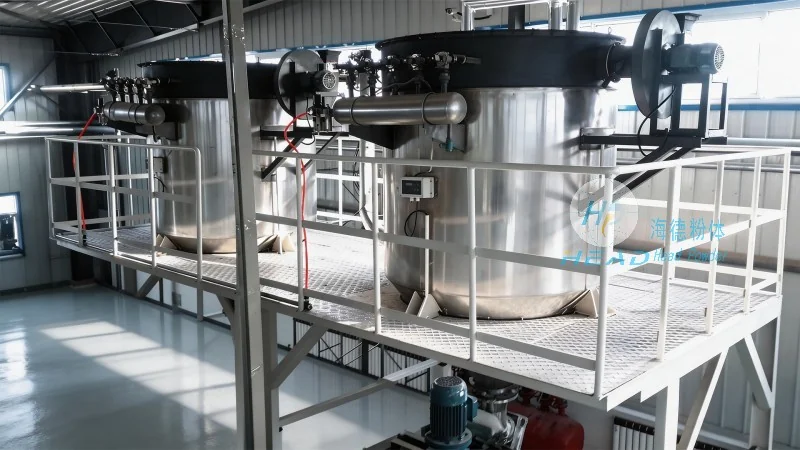
Advantages of Pneumatic Conveying in Lithium-Ion Battery Production
Implementing pneumatic conveying systems in the production of lithium-ion battery cathode materials offers several significant advantages. Firstly, it provides a continuous and automated material handling process, reducing manual labor and minimizing the risk of human error or contamination. This automation enhances production efficiency and consistency, which are vital for meeting the high demand for lithium-ion batteries in the market. Secondly, the system is highly efficient, capable of transporting large volumes of material over long distances with minimal energy consumption compared to traditional methods like bucket elevators or belt conveyors. For instance, a well-designed pneumatic system can transport up to several tons of cathode material per hour over distances of several hundred meters, making it ideal for large-scale battery manufacturing facilities. Thirdly, it is environmentally friendly, as it eliminates the need for dust collection systems that are common in other material handling methods. The system's enclosed pipeline design reduces dust emissions, contributing to a cleaner and safer working environment. Additionally, the system can be designed to handle materials with varying particle sizes and moisture content, making it versatile for different cathode material formulations, such as those used in electric vehicles and energy storage systems.
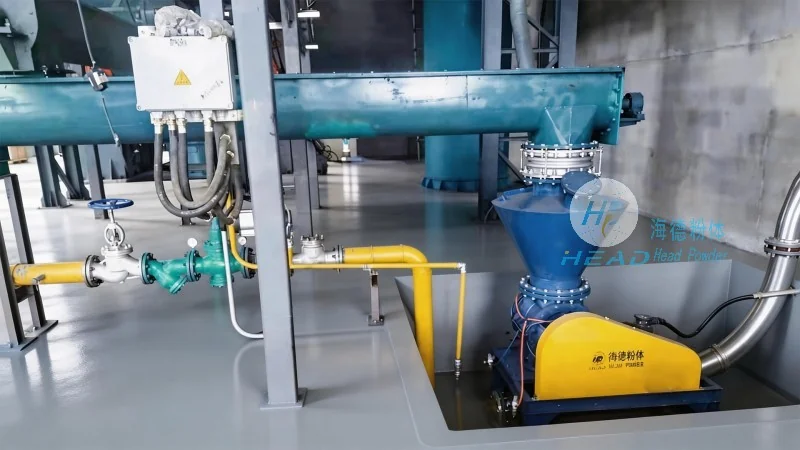
Application in Lithium-Ion Battery Manufacturing
In the context of lithium-ion battery manufacturing, pneumatic conveying systems are used at various stages, from raw material processing to the final cathode powder preparation. For example, after the cathode material is produced through chemical synthesis, it is conveyed from the reactor to storage silos using a pneumatic system. This ensures that the material is handled gently, preserving its particle size distribution and surface properties, which are critical for battery performance. The system also facilitates the integration of different production lines, allowing for seamless material transfer between processing stages, such as mixing, drying, and grinding. During the mixing stage, the pneumatic system can transport the cathode powder to the mixer, where it is combined with other components like conductive agents and binders. The dried and ground cathode material is then conveyed to the final packaging or storage area, ready for use in battery cell production. The system's ability to handle materials at different temperatures and moisture levels makes it suitable for various processing steps, ensuring that the cathode material remains in optimal condition throughout the manufacturing process.
About Shandong HeadPowder Engineering Co., Ltd.
Shandong HeadPowder Engineering Co., Ltd., commonly known as headpowder, is a leading engineering company specializing in material handling solutions for the lithium battery industry. With its headquarters located in Shandong, China, the company has established itself as a trusted provider of pneumatic conveying systems tailored to the specific needs of cathode material processing. Headpowder's expertise lies in designing and manufacturing systems that are efficient, reliable, and compliant with industry standards. The company's team of engineers and technicians work closely with clients to understand their production requirements and develop customized solutions that optimize material flow, reduce downtime, and enhance overall productivity. Headpowder's commitment to innovation and quality has enabled it to serve a wide range of clients, including battery manufacturers, research institutions, and material suppliers. The company's products are known for their durability, low maintenance costs, and ability to handle challenging materials like lithium-ion battery cathode powders. By leveraging advanced technology and rigorous testing, headpowder ensures that its systems meet the highest performance standards, contributing to the success of its clients in the competitive lithium battery market.