

Technical Analysis of Cement Additive Pneumatic Conveying Systems: Comparison of Positive Pressure a
For industries dealing with cement additives, efficient material handling is crucial to maintaining production efficiency and operational safety. Pneumatic conveying systems have emerged as a reliable solution, offering a dust-free and automated method to transport bulk materials. This article provides a technical analysis of two primary modes—positive pressure and negative pressure—used in cement additive pneumatic conveying systems, highlighting their operational principles, advantages, and applications.
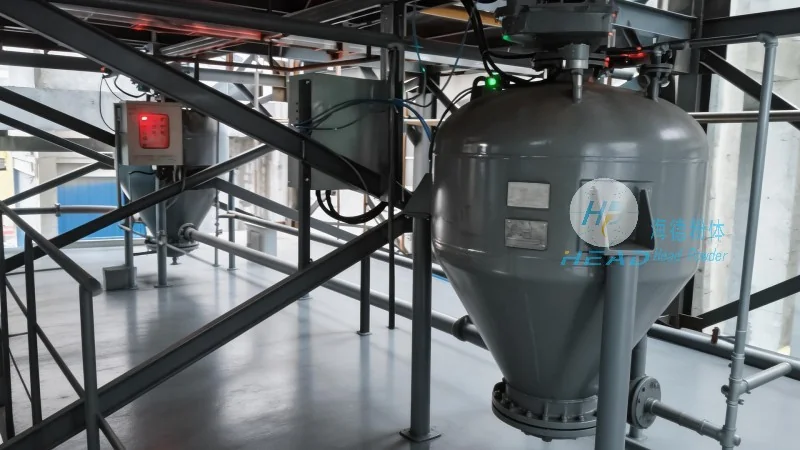
Company Overview: Shandong HeadPowder Engineering Co., Ltd.
HeadPowder, a leading engineering firm based in Shandong, China, specializes in the design, manufacturing, and installation of pneumatic conveying systems tailored for the cement industry. With years of experience, the company has developed expertise in optimizing material transport processes, ensuring that clients receive customized solutions that meet their specific operational needs. The company’s commitment to quality and innovation has positioned it as a trusted partner in the cement additive handling sector.
Positive Pressure Conveying: Working Principle and Advantages
Positive pressure conveying systems operate by generating high-pressure air or gas to move materials through a pipeline. In this mode, the conveying air is introduced under pressure, pushing the material forward. The system typically includes a blower, a hopper for material storage, and a pipeline network that directs the material to its destination. A key advantage of positive pressure systems is their ability to handle abrasive and corrosive materials, as the high-pressure air effectively breaks down agglomerates and prevents material buildup. Additionally, these systems are well-suited for long-distance and high-capacity transport, making them ideal for large-scale cement additive operations. The positive pressure mode also ensures consistent material flow, reducing the risk of blockages and improving overall system reliability.
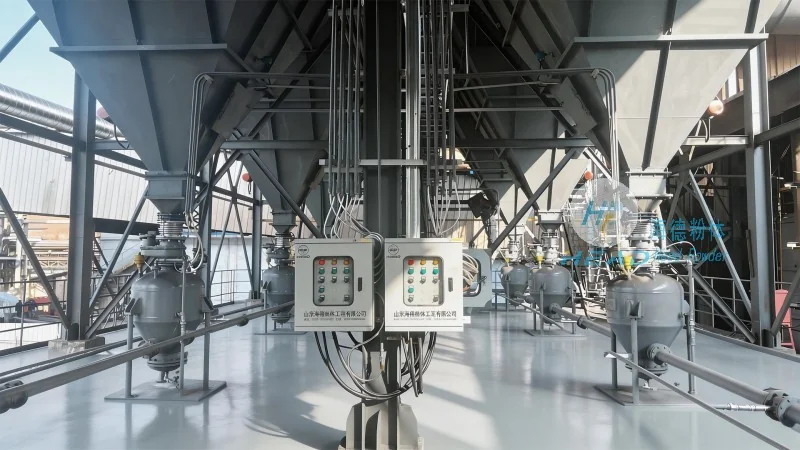
Negative Pressure Conveying: Working Principle and Advantages
Negative pressure conveying, also known as vacuum conveying, operates by creating a low-pressure environment within the pipeline, drawing material from the source into the system. The system uses a vacuum pump to create suction, which pulls the material through the pipeline. Unlike positive pressure systems, negative pressure systems are generally more suitable for shorter distances and lower material loads. A primary advantage of negative pressure is its gentler handling of delicate materials, as the lower air velocity reduces the risk of particle breakage. This mode is particularly effective for transporting fine powders and additives that require minimal disturbance. However, negative pressure systems may be less efficient for long-distance transport due to potential air leakage and energy consumption. The system’s design also necessitates careful consideration of dust containment and air filtration to maintain environmental compliance.
Key Considerations in Choosing Between Positive and Negative Pressure Systems
When selecting a pneumatic conveying system for cement additives, several factors must be evaluated to determine the most suitable mode. The first consideration is the distance and capacity requirements. Positive pressure systems are preferred for long-distance and high-capacity applications, while negative pressure is better suited for shorter distances and lower material loads. Material characteristics, such as particle size, density, and abrasiveness, also play a critical role. Abrasive materials benefit from the high-pressure air in positive pressure systems, whereas delicate additives may require the gentler handling of negative pressure. Additionally, operational costs and energy efficiency should be assessed. Positive pressure systems often have higher energy consumption due to the blower’s operation, whereas negative pressure systems may require more robust vacuum pumps. The system’s maintenance requirements and availability of space are also important factors. Positive pressure systems may need more space for the blower and storage hoppers, while negative pressure systems can be more compact. Ultimately, the choice between positive and negative pressure depends on the specific operational needs and constraints of the cement additive handling process.
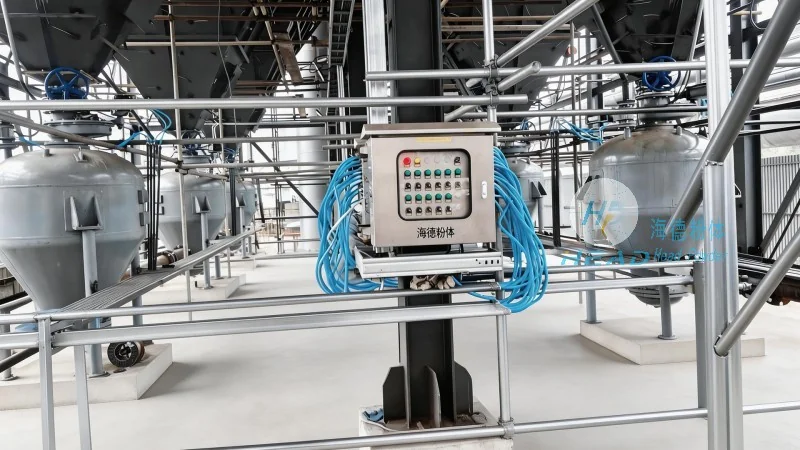
Applications in Cement Additive Handling
Pneumatic conveying systems are widely used in the cement industry for transporting various additives, including limestone, fly ash, and gypsum. These materials are essential for adjusting the properties of cement, such as setting time and strength. The choice of conveying mode depends on the additive’s characteristics and the plant’s layout. For example, a large cement plant with multiple storage silos and long transport distances may opt for a positive pressure system to ensure efficient material flow. In contrast, a smaller facility handling fine powders may prefer a negative pressure system to minimize particle damage. The systems are also used in blending operations, where additives are mixed with the main cement components to achieve the desired product specifications. By selecting the appropriate conveying mode, cement manufacturers can optimize their production processes, reduce downtime, and enhance product quality.
Conclusion and Recommendations
Both positive pressure and negative pressure pneumatic conveying systems offer effective solutions for transporting cement additives, each with its own set of advantages and limitations. Positive pressure systems are ideal for high-capacity, long-distance transport of abrasive materials, while negative pressure systems are better suited for shorter distances and delicate additives. When designing a pneumatic conveying system, it is essential to consider the material characteristics, operational requirements, and cost implications. Shandong HeadPowder Engineering Co., Ltd. provides customized solutions that integrate the most suitable conveying mode, ensuring optimal performance and reliability. By leveraging their expertise, cement manufacturers can enhance their material handling processes, improve operational efficiency, and maintain compliance with industry standards.