

Technical Analysis of Sulfur Powder Pneumatic Conveying Systems: Comparison of Positive Pressure and
In the industrial material handling field, sulfur powder as a common chemical raw material, its efficient and safe conveying method is crucial for production efficiency and operational safety. Pneumatic conveying technology, with its advantages of non-mechanical contact and flexible conveying, has become the mainstream solution for sulfur powder transport. This article will deeply analyze the technical principles of sulfur powder pneumatic conveying systems and compare the characteristics and applicable scenarios of positive pressure and negative pressure conveying modes, providing technical references for relevant enterprises.
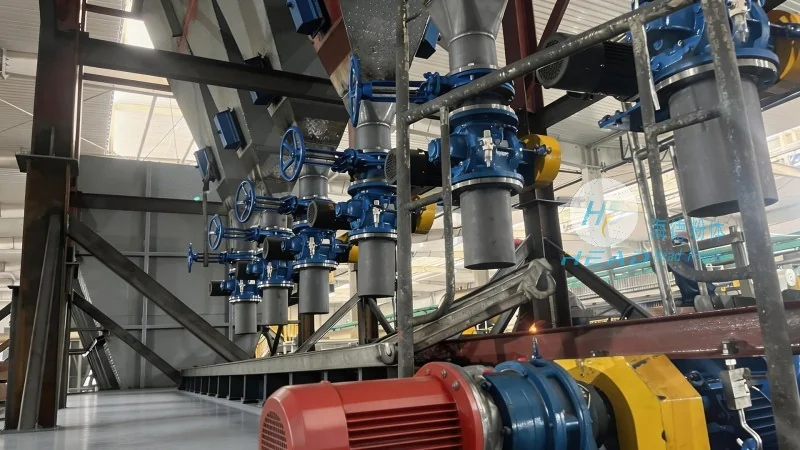
Overview of Sulfur Powder Pneumatic Conveying Systems
Sulfur powder pneumatic conveying systems use air flow to transport solid particle materials (such as sulfur powder) from one place to another, belonging to a type of fluid conveying technology. The system typically consists of feeding devices, conveying pipelines, air source equipment, separation equipment, and receiving devices. Its core is to suspend the material and convey it along the pipeline through the pressure or vacuum of the air flow. For sulfur powder, which is prone to caking and dusting, choosing an appropriate conveying mode is crucial, directly affecting conveying efficiency, system maintenance costs, and operational safety.
Technical Analysis of Positive Pressure Conveying Mode
Positive pressure conveying mode refers to the conveying system maintaining a pressure higher than atmospheric pressure inside the conveying pipeline, pushing the material from the feeding end to the receiving end through pressure difference. In sulfur powder pneumatic conveying, the positive pressure system typically uses compressed air as the air source, providing pressure through a fan or compressor. Positive pressure conveying has the following characteristics: first, the system pressure is high, capable of overcoming long-distance or high-resistance conveying needs, suitable for long-distance and high-flow conveying scenarios. Second, the positive pressure system has strong adaptability to materials, capable of conveying various granular materials including dust-prone sulfur powder. Additionally, the pipeline system of positive pressure conveying typically uses metal materials such as stainless steel or carbon steel to withstand high pressure. However, the positive pressure system also has some limitations, such as high sealing requirements; if sealing fails, it may lead to dust leakage, affecting environmental safety. At the same time, the system's operating cost is high because it needs to continuously provide compressed air, with high energy consumption. For sulfur powder transport, the positive pressure system performs excellently in handling large flow and long-distance conveying, ensuring continuous and stable conveying.
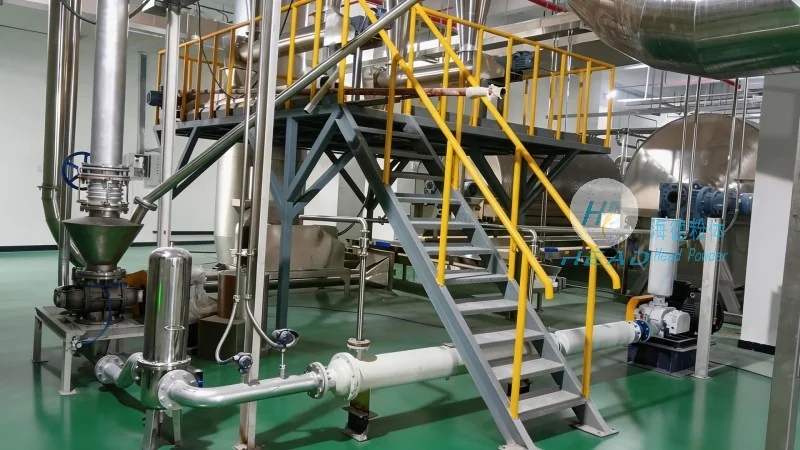
Technical Analysis of Negative Pressure Conveying Mode
Negative pressure conveying mode, on the other hand, forms a vacuum environment below atmospheric pressure inside the conveying pipeline, sucking the material from the feeding end and transporting it to the receiving end. The negative pressure system typically uses a vacuum pump as the air source to achieve material transport through suction. Compared with the positive pressure system, the negative pressure conveying has different technical characteristics. First, the negative pressure system has relatively limited adaptability to materials, typically suitable for conveying dry, non-adhesive, and non-caking materials, and may have blockage risks for caking sulfur powder. Second, the pipeline of the negative pressure system typically uses plastic or metal hoses to adapt to deformation under vacuum conditions. The advantages of negative pressure conveying lie in its low system pressure, relatively low sealing requirements, smaller operating noise, and lower energy consumption. However, the conveying distance of the negative pressure system is limited, typically suitable for short-distance or medium-distance conveying, and the vacuum degree may not meet long-distance conveying needs. Additionally, when handling sulfur powder, if the material has high moisture or severe caking, it may cause pipeline blockage, affecting conveying efficiency. Therefore, the negative pressure conveying mode is more suitable for small-flow, short-distance sulfur powder conveying scenarios, such as material transfer within a workshop.
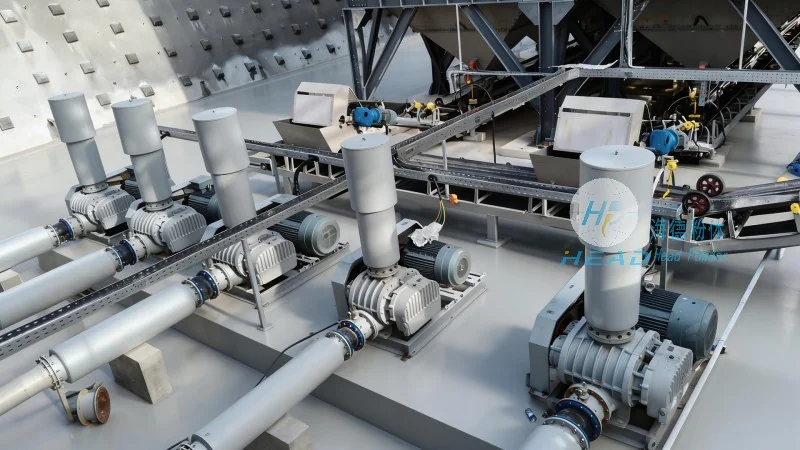
Comparison Analysis of Positive and Negative Pressure Conveying Modes
In sulfur powder pneumatic conveying systems, the positive and negative pressure conveying modes have their own advantages and disadvantages, and the choice of which mode depends on the specific application scenario. In terms of conveying distance and flow, the positive pressure system is more suitable for long-distance, high-flow sulfur powder conveying, effectively overcoming the limitations of terrain and pipeline resistance. The negative pressure system is suitable for short-distance, low-flow conveying needs. In terms of system cost and energy consumption, the negative pressure system has lower energy consumption and lower operating costs due to its lower pressure, while the positive pressure system has higher energy consumption but higher system reliability. In terms of material adaptability, the positive pressure system has stronger adaptability to dust-prone sulfur powder, effectively preventing dust leakage. The negative pressure system may increase friction between the material and the pipeline inner wall under vacuum conditions, accelerating material wear. In terms of operational safety, if the positive pressure system's sealing fails, it may lead to dust leakage affecting operators' health. The negative pressure system reduces dust leakage by sucking the material into the pipeline. Overall, for large-scale, long-distance sulfur powder conveying in industrial production, the positive pressure conveying mode has more advantages. For small-scale, short-distance conveying needs, the negative pressure conveying mode is more economical and practical. In actual applications, enterprises should comprehensively consider their production scale, conveying distance, material properties, and cost budget to choose the most suitable conveying mode, achieving the optimal performance of sulfur powder pneumatic conveying systems.
Technical Strength and Solutions of HeadPowder Engineering Company
Shandong HeadPowder Engineering Co., Ltd. (HeadPowder) as a professional sulfur powder pneumatic conveying system solution provider, has rich industry experience and technical strength. The company is dedicated to the research, design, manufacturing, and installation of pneumatic conveying systems, providing customized sulfur powder conveying solutions for the chemical, building materials, food, and other industries. HeadPowder's technical team has profound industry knowledge, capable of designing systems that meet positive or negative pressure conveying modes according to customers' actual needs, optimizing system parameters to improve conveying efficiency. The company uses advanced materials and processes to ensure the corrosion resistance, wear resistance, and sealing of the conveying system, meeting the conveying requirements of chemical materials like sulfur powder. In addition, HeadPowder provides comprehensive after-sales service and technical support, including system commissioning, maintenance and upkeep, and fault elimination, ensuring the long-term stable operation of the conveying system. For customers needing positive or negative pressure conveying modes, HeadPowder can provide full-process services from solution design to system installation, helping customers achieve efficient and safe conveying of sulfur powder. The company always focuses on customer needs as the orientation, drives innovation with technology, and is committed to providing high-quality sulfur powder pneumatic conveying system solutions for customers, helping customers improve production efficiency and competitiveness.