

Operation Process and Working Principle of a Clay Powder Material Pneumatic Conveying Line
Shandong HeadPowder Engineering Co., Ltd. specializes in providing advanced solutions for material handling, particularly in the processing of fine powders like clay powder. The pneumatic conveying line is a critical equipment for efficiently transporting such materials over long distances or within industrial facilities. This article delves into the operation process and working principle of a typical clay powder pneumatic conveying system, highlighting its efficiency, reliability, and the technical aspects that make it suitable for various industrial applications.
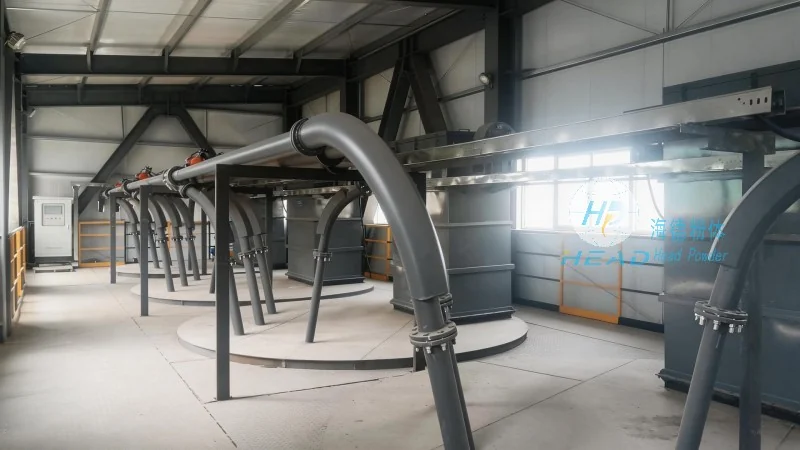
Company Overview: HeadPowder
HeadPowder, as the name suggests, is a leading engineering company based in Shandong, China. With a strong focus on innovation and quality, the company has established itself as a trusted provider of material handling systems. The company’s expertise lies in designing, manufacturing, and installing pneumatic conveying lines tailored to the specific needs of clients in industries such as chemical, food processing, and pharmaceuticals. By leveraging years of experience and cutting-edge technology, HeadPowder ensures that its systems meet the highest standards of performance and safety.
The Operation Process of the Pneumatic Conveying Line
The operation of a clay powder pneumatic conveying line involves several key steps that ensure the smooth and continuous transport of the material. The process begins with the loading of the clay powder into the hopper or feeder. The hopper is designed to hold a sufficient quantity of material to maintain a consistent flow. Once the material is loaded, the conveying system starts by generating a flow of air or gas through the pipeline. This is typically achieved using a positive displacement blower or a rotary lobe pump, which creates the necessary pressure to move the powder.
As the air flows through the pipeline, it picks up the clay powder particles, forming a dense phase or dilute phase mixture depending on the system design. The mixture then travels through the pipeline to the discharge point, which could be a storage silo, a processing unit, or another part of the production line. The discharge point is equipped with a valve or a rotary valve to control the flow of the material and prevent backflow. The system also includes a filter or a cyclone separator to remove any fine particles from the air before it is released back into the environment, ensuring compliance with environmental regulations.
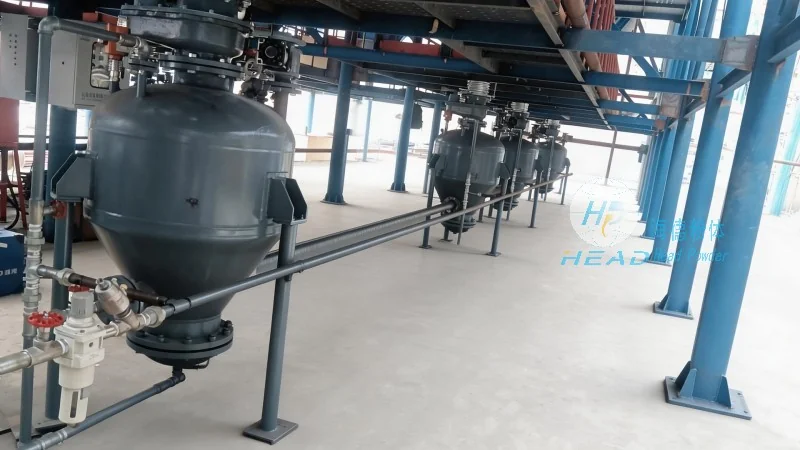
The Working Principle of the Pneumatic Conveying System
The working principle of a clay powder pneumatic conveying line is based on the fundamental concept of fluidization and transport of particulate materials using a gas stream. The system operates by creating a pressure differential between the inlet and outlet of the pipeline. The blower or pump provides the necessary pressure to overcome the resistance offered by the pipeline and the material being conveyed. The air velocity in the pipeline is maintained at a level that is sufficient to keep the powder particles suspended and moving forward.
In a dense phase conveying system, the air velocity is relatively low, and the powder is transported in a compacted form, which reduces the risk of particle degradation and increases the conveying capacity. In contrast, a dilute phase system uses higher air velocities, resulting in a more dispersed mixture of air and powder. The choice between dense phase and dilute phase depends on the specific characteristics of the clay powder, such as its particle size, moisture content, and flowability. For clay powders, which are often fine and prone to caking, a dense phase system is often preferred as it minimizes the risk of blockages and ensures a more stable flow.
Key Components and Their Functions
A pneumatic conveying line for clay powder typically consists of several key components, each playing a crucial role in the overall operation. The main components include the hopper or feeder, the air supply system (blower or pump), the pipeline system, the discharge valve, and the filtration system. The hopper is responsible for storing and feeding the clay powder into the system, ensuring a consistent supply of material. The air supply system generates the necessary pressure and flow rate to move the powder through the pipeline. The pipeline is made of materials such as stainless steel or plastic, depending on the chemical properties of the clay powder and the operating conditions. The discharge valve controls the release of the material from the pipeline, preventing backflow and ensuring accurate dosing. The filtration system removes any fine particles from the air, protecting the environment and maintaining the efficiency of the system.
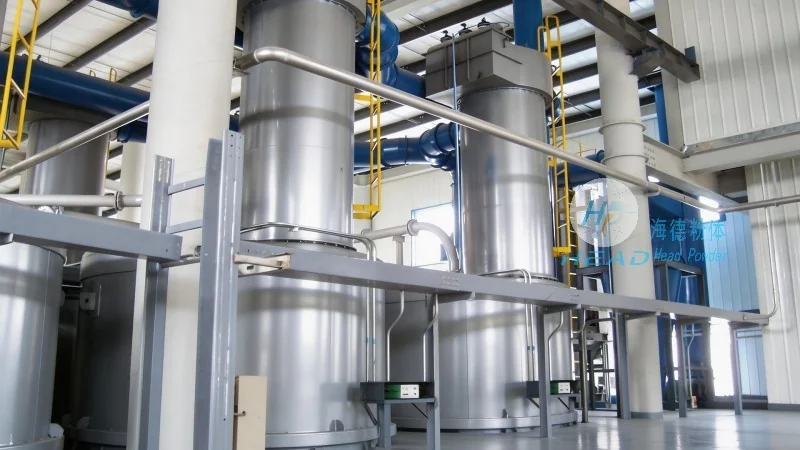
Advantages of Using a Pneumatic Conveying Line for Clay Powder
There are several advantages to using a pneumatic conveying line for transporting clay powder. One of the primary benefits is the ability to transport the material over long distances without the need for intermediate storage or transfer points. This reduces the risk of material degradation and contamination, which is critical for applications where the quality of the clay powder is essential. Additionally, the system is relatively compact and can be integrated into existing production lines, saving space and reducing installation costs. The use of air as the conveying medium also eliminates the need for mechanical components such as conveyor belts or buckets, which can be prone to wear and tear and require frequent maintenance.
Another advantage is the flexibility of the system, which can be adjusted to handle different types of clay powders with varying properties. The system can be configured as a dense phase or dilute phase system, depending on the specific requirements of the application. This flexibility allows HeadPowder to provide customized solutions that meet the unique needs of each client. Furthermore, the pneumatic conveying line is a closed system, which helps to maintain the purity of the clay powder and prevent exposure to contaminants or moisture from the environment.
Applications and Industries
The clay powder pneumatic conveying line is widely used in various industries where fine powders need to be transported efficiently. Some of the key applications include the chemical industry, where clay is used as a filler or pigment in the production of paints, plastics, and cosmetics. In the food processing industry, clay is used as a clarifying agent in the production of beverages and as a thickening agent in some food products. The pharmaceutical industry also utilizes clay powder in the formulation of drugs and as a filler in tablets. Additionally, the construction industry uses clay powder as a raw material in the production of bricks and other building materials.