

Operation Process and Working Principle of Chromium(III) Oxide Powder Conveying Equipment
Shandong HeadPowder Engineering Co., Ltd., a leading enterprise in the powder processing industry, specializes in the design, manufacturing, and supply of advanced conveying equipment for various fine powders. Among its product portfolio is the Chromium(III) Oxide Powder Conveying Equipment, a critical component for industries that handle this specific chemical compound. This article delves into the operation process and working principle of this equipment, highlighting its efficiency, reliability, and the technical aspects that make it a preferred choice for material handling applications.
Introduction to Chromium(III) Oxide and Its Handling Requirements
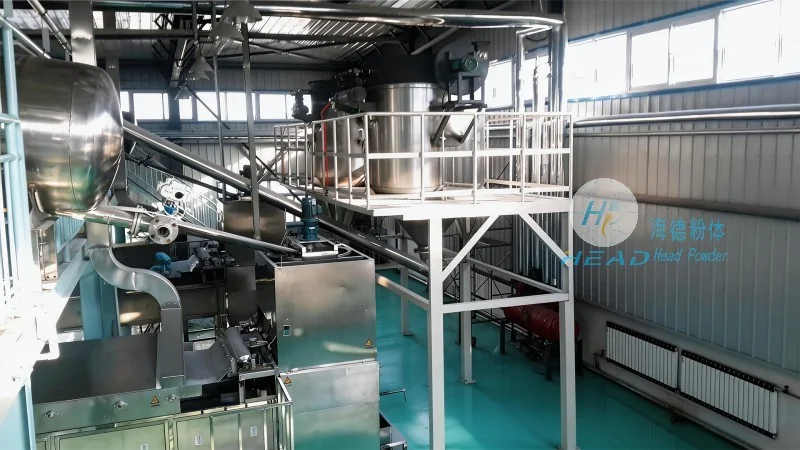
Chromium(III) oxide, also known as chromium sesquioxide, is a widely used inorganic compound with applications in pigments, catalysts, and electronic materials. Due to its fine particle size and chemical properties, handling this powder requires specialized equipment to ensure safety, minimize dust generation, and maintain product integrity. The conveying equipment designed for chromium(III) oxide must address challenges such as particle agglomeration, static electricity, and the need for precise flow control.
Working Principle of the Powder Conveying Equipment
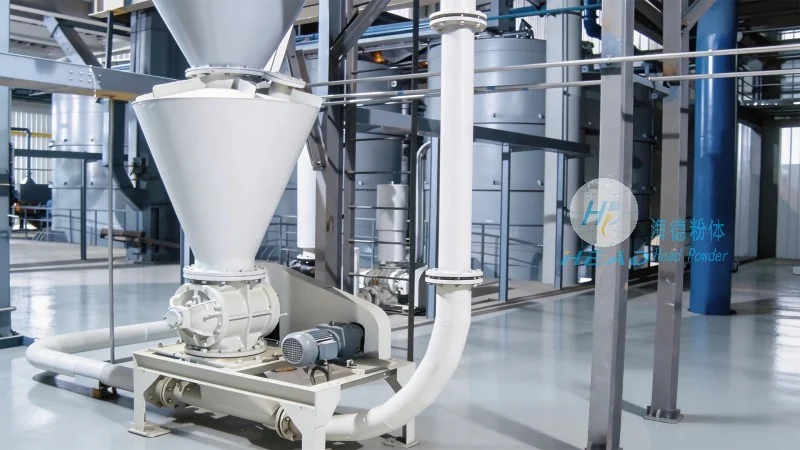
The Chromium(III) Oxide Powder Conveying Equipment typically operates on the principle of pneumatic or mechanical conveying, depending on the specific design. For this application, a pneumatic conveying system is often employed, which uses compressed air to transport the powder from the source to the destination. The system consists of several key components, including a hopper for material storage, a feeder to control the flow rate, a conveying line with appropriate ductwork, and a receiver for the discharged material. The hopper is equipped with a discharge valve and sometimes a vibration device to prevent material bridging and ensure smooth flow. The feeder, usually a rotary valve or a screw feeder, regulates the amount of powder released into the conveying line, maintaining a consistent flow rate. The conveying line is designed with smooth, non-porous surfaces to minimize particle abrasion and prevent contamination. The receiver, often a storage tank or a processing vessel, collects the conveyed powder, completing the material transfer process.
Operation Process: Step-by-Step Guide
The operation of the Chromium(III) Oxide Powder Conveying Equipment follows a systematic sequence to ensure safe and efficient material handling. The process begins with the preparation phase, where the hopper is filled with the chromium(III) oxide powder. The hopper is then sealed to prevent dust leakage and equipped with a level indicator to monitor the material volume. Next, the system is started by activating the compressed air supply and the feeder. The feeder gradually releases the powder into the conveying line, and the compressed air propels the particles through the ductwork. The conveying line is designed with bends and transitions that minimize pressure loss and maintain the flow velocity. The receiver is positioned to collect the powder, and the system is monitored for any pressure fluctuations or flow interruptions. The operation continues until the hopper is empty or the required amount of powder has been transferred. The system is then shut down by first stopping the feeder and then the compressed air supply, followed by the discharge of any remaining material from the receiver. Proper maintenance procedures, such as cleaning the hopper and ductwork, are performed to prevent material buildup and ensure long-term performance.
Key Features and Advantages of the Equipment
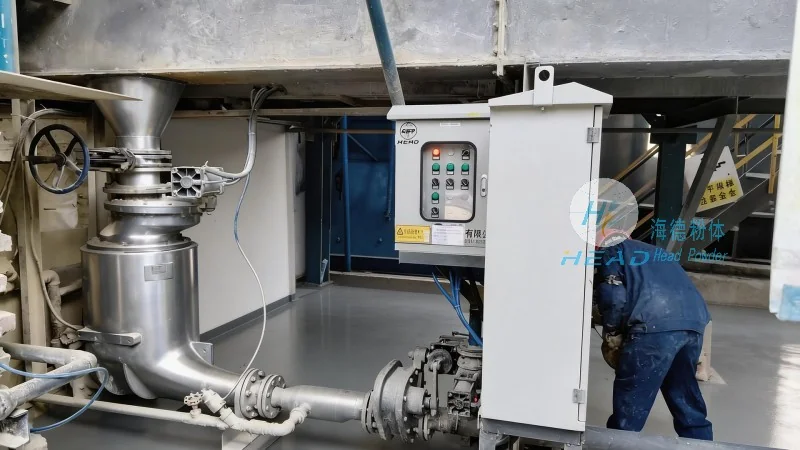
The Chromium(III) Oxide Powder Conveying Equipment from Shandong HeadPowder Engineering Co., Ltd. offers several advantages that make it suitable for handling this sensitive powder. Firstly, the equipment is designed with dust-tight components to minimize the release of fine particles into the environment, ensuring compliance with environmental regulations and worker safety. The use of smooth, non-stick surfaces in the hopper and conveying line reduces particle adhesion and prevents clogging, which is crucial for maintaining consistent flow rates. The system is equipped with static elimination devices, such as grounding straps or ionizers, to prevent static buildup that could cause sparks or material electrostatic discharge. Additionally, the equipment features adjustable flow control mechanisms, allowing operators to fine-tune the powder flow rate according to the processing requirements. The compact design of the equipment saves space in industrial facilities, making it suitable for both new installations and retrofitting existing systems. The robust construction and use of high-quality materials ensure long service life and minimal maintenance, reducing downtime and operational costs.
Application and Industry Impact
The Chromium(III) Oxide Powder Conveying Equipment is widely used in industries that require the handling of fine powders, including the chemical, pigment, and electronics sectors. In the chemical industry, the equipment is used to transport chromium(III) oxide for the production of pigments and catalysts, where precise dosing and minimal contamination are critical. In the pigment industry, the equipment ensures that the powder is delivered to mixing and processing equipment without degradation, maintaining the quality of the final product. In the electronics industry, the equipment is used for the production of electronic components, where the purity and particle size of the chromium(III) oxide are essential for the performance of the end products. The efficient and reliable operation of the equipment contributes to increased productivity and reduced material waste in these industries, making it a valuable asset for manufacturers.
Conclusion
Shandong HeadPowder Engineering Co., Ltd. provides advanced Chromium(III) Oxide Powder Conveying Equipment that combines efficient material handling with safety and environmental compliance. The equipment operates on a well-defined principle of pneumatic conveying, with a systematic operation process that ensures consistent and reliable powder transfer. Key features such as dust-tight design, static elimination, and adjustable flow control make it suitable for handling sensitive powders like chromium(III) oxide. The equipment is widely used in various industries, contributing to improved productivity and product quality. As a leading supplier in the powder processing industry, Shandong HeadPowder Engineering Co., Ltd. continues to innovate and provide solutions that meet the evolving needs of its customers.