

Operation Process and Working Principle of Ore Powder Pneumatic Conveying System Equipment
HeadPowder, a leading provider of industrial pneumatic conveying solutions, specializes in the design, manufacturing, and installation of ore powder pneumatic conveying systems. These systems are essential for efficiently transporting bulk materials like ore powders, powders, and granules over long distances with minimal maintenance and high reliability. This article delves into the operation process and working principle of such systems, highlighting key components and their functions.
Introduction to Ore Powder Pneumatic Conveying Systems
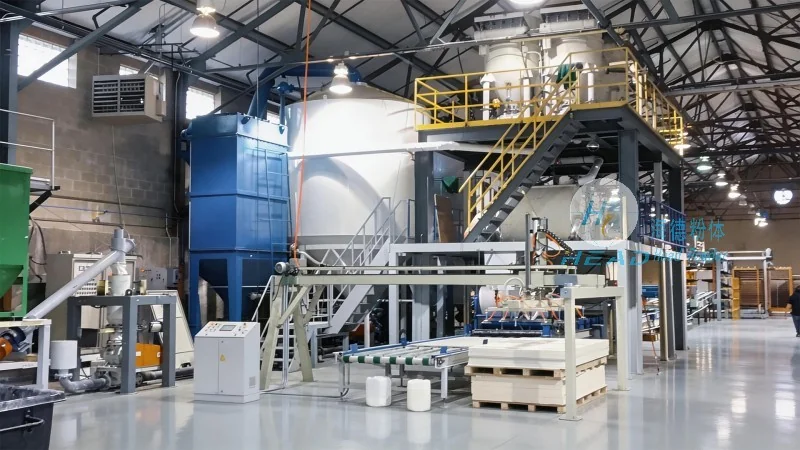
Ore powder pneumatic conveying systems are engineered to transport dry bulk materials through a pipeline using air or gas as the conveying medium. Unlike mechanical conveying methods, which rely on belts, screws, or buckets, pneumatic systems utilize pressure or vacuum to move materials, offering advantages such as flexibility in layout, reduced material degradation, and the ability to handle fine powders that are difficult to transport mechanically. HeadPowder's systems are tailored to meet the specific needs of mining, chemical, and other industrial sectors, ensuring optimal performance and efficiency.
Key Components of the Pneumatic Conveying System
The ore powder pneumatic conveying system consists of several critical components that work in tandem to achieve efficient material transport. These components include the material hopper, feeder, air compressor or vacuum pump, conveying pipeline, control valves, and the receiving hopper. Each component plays a vital role in the overall operation, and their proper integration ensures smooth and reliable material handling.
Material Hopper and Feeder
The material hopper is the initial storage unit where ore powder is loaded before being fed into the system. It is designed to hold a sufficient quantity of material to maintain a consistent flow rate. The feeder, typically a rotary valve or a screw feeder, regulates the discharge of material from the hopper into the conveying pipeline. The feeder ensures a controlled and steady supply of material, preventing overloading or underloading of the system, which could lead to inefficiencies or equipment damage.
Air Compressor or Vacuum Pump
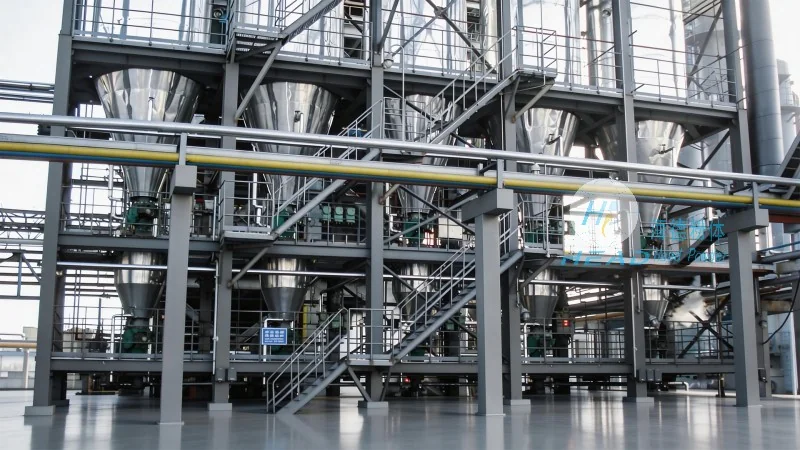
The air compressor or vacuum pump is the heart of the pneumatic conveying system, responsible for generating the pressure or vacuum required to move the material through the pipeline. In pressure systems, the compressor increases the air pressure to a level sufficient to push the material along the pipeline. In vacuum systems, the pump creates a negative pressure that draws the material into the pipeline. HeadPowder uses high-efficiency compressors and pumps that are energy-efficient and durable, minimizing operational costs and downtime.
Conveying Pipeline and Control Valves
The conveying pipeline is a network of pipes that transports the ore powder from the feeder to the receiving hopper. The pipeline is typically made of materials such as stainless steel or plastic, chosen for their resistance to corrosion and wear from the abrasive ore powder. Control valves, including check valves, isolation valves, and pressure relief valves, are installed along the pipeline to regulate the flow of air and material, prevent backflow, and ensure safe operation. These valves allow operators to control the speed and direction of material transport, making the system adaptable to different production requirements.
Receiving Hopper and Material Discharge
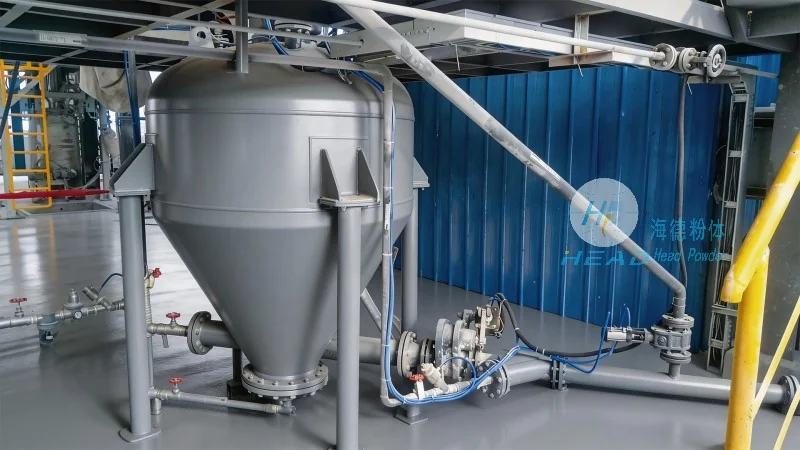
The receiving hopper is the final storage unit where the ore powder is deposited after being conveyed through the pipeline. It is designed to collect the material and provide a controlled discharge mechanism, such as a rotary valve or a gate valve, to release the material into the next processing stage. The receiving hopper also serves as a buffer to smooth out any fluctuations in the material flow rate, ensuring a consistent supply to downstream equipment. HeadPowder's receiving hoppers are equipped with level sensors and alarms to monitor the material level and prevent overfilling or underfilling.
Operation Process of the Ore Powder Pneumatic Conveying System
The operation of the ore powder pneumatic conveying system follows a sequential process that ensures efficient and continuous material transport. The process begins with the loading of ore powder into the material hopper. The feeder then regulates the discharge of material into the conveying pipeline. Simultaneously, the air compressor or vacuum pump generates the necessary pressure or vacuum to move the material. The material is then transported through the pipeline, guided by the control valves, to the receiving hopper. The receiving hopper collects the material and discharges it as needed. This cycle repeats continuously, maintaining a steady flow of ore powder throughout the production process.
Working Principle of the Pneumatic Conveying System
The working principle of the ore powder pneumatic conveying system is based on the fundamental physics of fluid dynamics and particle motion. In a pressure system, the air compressor increases the air pressure in the pipeline, creating a high-pressure zone that pushes the ore powder particles along the pipeline. The ore powder particles are suspended in the air stream, and their movement is governed by the pressure differential between the hopper and the receiving hopper. In a vacuum system, the vacuum pump creates a low-pressure zone that draws the ore powder particles into the pipeline, where they are carried by the air flow. The key to efficient conveying is maintaining a sufficient air-to-material ratio, which ensures that the particles are fully suspended and transported without settling or clogging the pipeline. HeadPowder's systems are optimized to achieve the ideal air-to-material ratio for different ore powder types, maximizing conveying efficiency and minimizing energy consumption.
Advantages of Ore Powder Pneumatic Conveying Systems
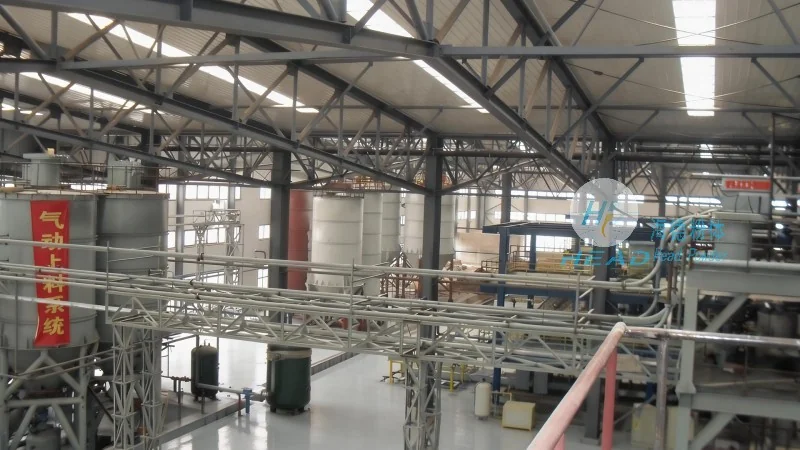
Ore powder pneumatic conveying systems offer several advantages over traditional mechanical conveying methods. These advantages include flexibility in layout, as the pipeline can be installed in various configurations to suit the plant layout. The systems are also capable of handling fine and abrasive materials that are difficult to transport mechanically, without causing material degradation or equipment wear. Additionally, pneumatic systems are relatively low in maintenance, as they have fewer moving parts compared to mechanical systems. HeadPowder's systems are designed to minimize downtime and maintenance costs, ensuring high availability and reliability. The systems also provide better control over material flow, allowing operators to adjust the conveying rate as needed to match production demands.
Applications and Industries
Ore powder pneumatic conveying systems are widely used in various industries, including mining, chemical, food, and pharmaceuticals. In the mining industry, these systems are used to transport ore powders from crushers and mills to storage silos or processing plants. In the chemical industry, they are used to convey powders such as cement, flour, and chemicals. The food industry uses pneumatic systems to transport food powders like sugar, flour, and spices, ensuring hygiene and minimal contamination. HeadPowder's systems are tailored to meet the specific requirements of each industry, ensuring compliance with safety and quality standards.
Conclusion
Ore powder pneumatic conveying systems are essential equipment for efficiently transporting bulk materials in industrial applications. HeadPowder's systems are designed with advanced technology and engineering expertise to ensure high performance, reliability, and efficiency. By understanding the operation process and working principle of these systems, users can optimize their material handling processes and reduce operational costs. HeadPowder continues to innovate and provide cutting-edge pneumatic conveying solutions to meet the evolving needs of the industrial sector.