

Principle and Working Scenario Characteristics of Air-Driven Conveying for Latex Powder Materials
Latex powder, as a critical raw material in diverse industrial sectors, demands efficient and reliable transportation methods to ensure seamless production workflows. Air-driven conveying, also known as pneumatic conveying, has become a preferred solution for moving latex powder due to its ability to handle fine powders while preserving product integrity. This article delves into the fundamental principles of air-driven conveying for latex powder and outlines the distinct characteristics of its operational scenarios.
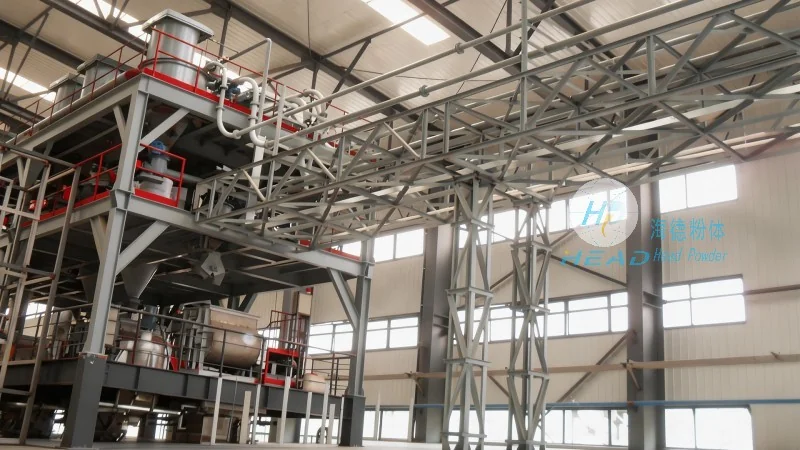
Principle of Air-Driven Conveying for Latex Powder
The core principle of air-driven conveying involves utilizing air as the medium to transport solid particles, such as latex powder, through a pipeline system. Two primary operational modes exist: suction (negative pressure) and pressure (positive pressure) conveying. In suction conveying, a vacuum is created at the material inlet to draw the powder into the pipeline, with the air-powder mixture then transported to the discharge point. This approach is particularly suitable for applications where the material source is at a higher elevation or when the conveying distance is relatively short. Conversely, pressure conveying employs compressed air to push the powder through the pipeline, making it ideal for longer distances and when the material source is at a lower level. The selection between these modes depends on factors like the powder's physical properties, required conveying distance, and system energy efficiency.
For latex powder, which is often fine and prone to agglomeration, the design of the conveying system must address several critical aspects. First, maintaining an optimal air velocity is essential to prevent particle deposition and ensure consistent flow. Typically, the air velocity is kept above the minimum fluidization velocity of the powder to keep it in suspension. Second, the pipeline design—including duct size, shape, and bends—plays a crucial role in minimizing pressure drop and energy consumption. Smooth, straight pipelines with appropriate transitions are vital to avoid powder buildup and sustain system efficiency. Additionally, the use of filters and separators at the discharge end is essential to separate powder from the air stream and prevent contamination or material loss.
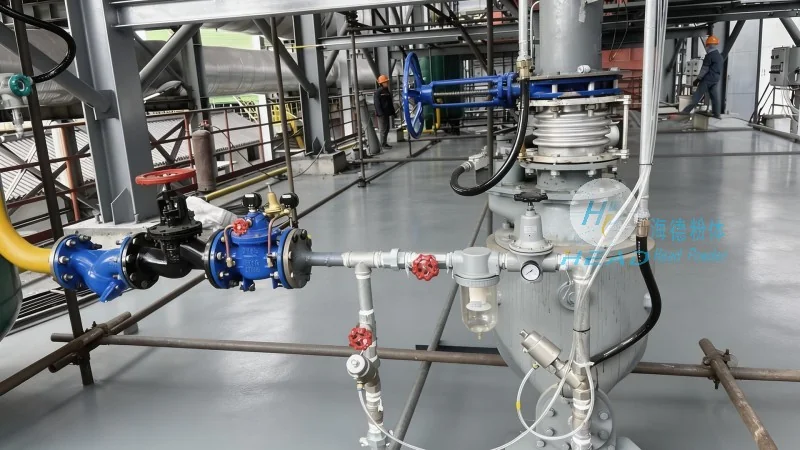
Working Scenario Characteristics of Air-Driven Conveying for Latex Powder
The operational scenarios of air-driven conveying for latex powder vary significantly based on industrial applications and operational requirements. In the rubber industry, latex powder is commonly used as a raw material in tire, glove, and other rubber product manufacturing. The conveying system must handle large volumes while preserving material quality. This often involves multi-stage systems combining suction and pressure modes to cover longer distances and overcome elevation changes. The system must also prevent moisture or contaminant introduction, as these affect final product properties.
In the chemical and pharmaceutical sectors, latex powder serves as an additive or raw material in product formulation. Here, the conveying system must adhere to strict hygiene and safety standards. This includes stainless steel components, sealed pipelines, and advanced filtration to ensure powder purity and prevent external contamination. The scenario may also involve integration with mixers or reactors, requiring precise control over flow rate and timing.
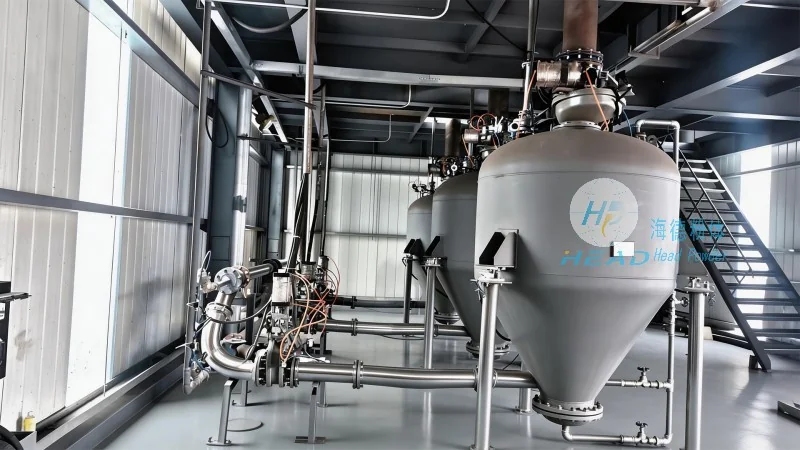
In the agricultural and food industries, latex powder is used as a coating or additive. The conveying system prioritizes food safety and regulatory compliance. This involves non-toxic, easy-to-clean materials and closed-loop systems to prevent cross-contamination. Gentle handling is crucial to avoid powder damage or degradation, especially for sensitive applications.
Key Features and Advantages of Air-Driven Conveying Systems for Latex Powder
When evaluating air-driven conveying systems for latex powder, key features and advantages emerge. First, the system offers layout flexibility and easy integration with existing production lines, adapting to volume or process changes without major modifications. Second, it provides precise control over flow rate and timing, critical for consistent product quality. This is achieved via variable speed drives and control valves regulating air pressure and flow. Third, the system is compact, requiring less floor space than traditional mechanical methods, suitable for facilities with limited space.
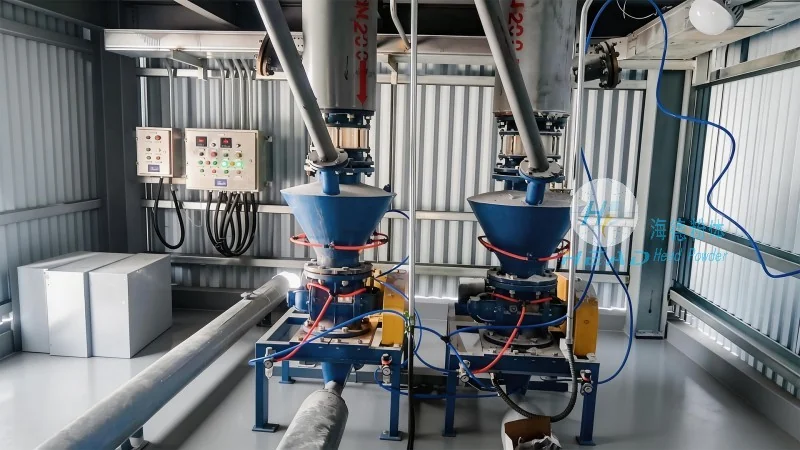
Another advantage is handling fine, abrasive powders like latex powder without excessive component wear. Appropriate materials (stainless steel or high-grade plastics) ensure durability and minimal maintenance. Closed-loop operation reduces material loss, improving efficiency—especially valuable for high-value latex powder to minimize waste and costs.
Conclusion
Air-driven conveying represents a highly effective method for transporting latex powder across various industries. By understanding its principles and scenario characteristics, industries can optimize systems to meet operational needs. Advanced control and material integration, exemplified by companies like Shandong HeadPowder Engineering Co., Ltd. (based in China), enhance performance and reliability. As latex powder demand grows, sophisticated air-driven solutions remain critical for maintaining production efficiency and product quality.