

Working Principle and Features of Low-Pressure Powder Handling Systems Equipment
Shandong HeadPowder Engineering Co., Ltd., commonly known as headpowder, specializes in the design, manufacturing, and supply of advanced low-pressure powder handling systems. With a focus on precision and efficiency, the company has established itself as a leading provider in the industry, serving clients with reliable solutions for various powder processing needs. Headquartered in Shandong, China, the company leverages its expertise to deliver high-quality equipment tailored to meet the demands of modern industrial applications.
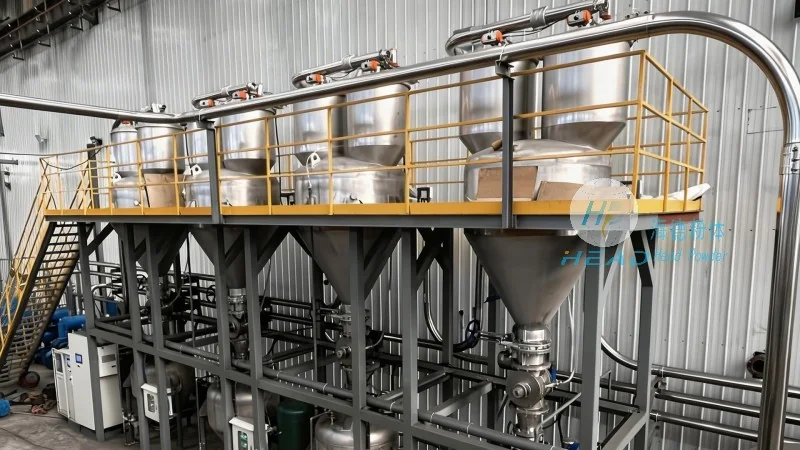
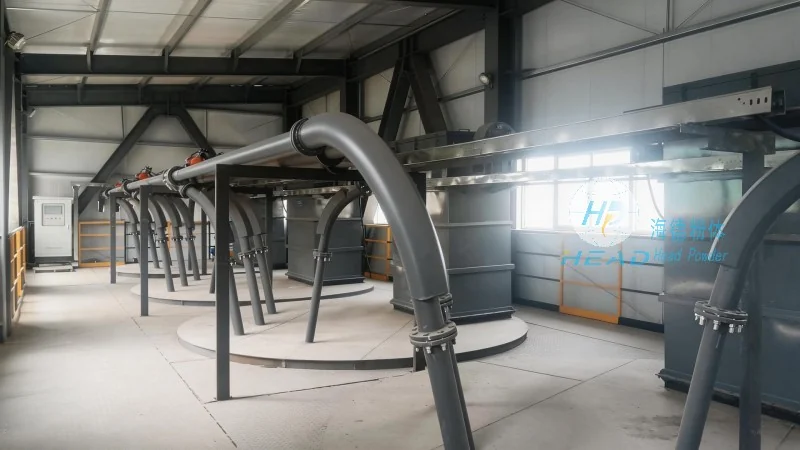
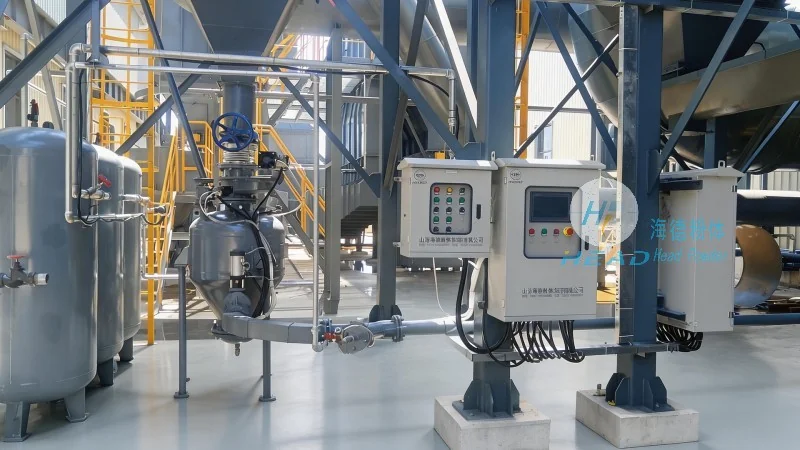
Working Principle of Low-Pressure Powder Handling Systems
Low-pressure powder handling systems operate on the principle of creating a slight negative pressure or vacuum within the system to draw and transport powders from a source to a destination. Unlike high-pressure systems that rely on forceful compression, low-pressure methods utilize gentle air flow to move materials, minimizing product degradation and ensuring a clean, efficient process. The system typically consists of a hopper, a conveyor, and a control unit. The hopper holds the powder, while the conveyor uses a fan or blower to generate the necessary airflow. As the air flows through the system, it carries the powder particles along, directing them to the desired output point. This method is particularly effective for handling delicate or sensitive powders, as it reduces the risk of particle breakage and contamination. Low-pressure powder handling systems operate by creating a controlled airflow that draws powder from a storage hopper into a conveying line. The process begins with the powder being fed into the hopper, where it is held under a slight vacuum. A fan or blower then generates a low-pressure environment, causing the air to flow through the system and carry the powder particles along. The conveyor system, which may include tubes or ducts, transports the powder to the target location, such as a processing unit or storage bin. The control unit monitors the airflow and pressure, ensuring consistent and reliable operation. This method is particularly effective for handling powders that are prone to caking or agglomeration, as the gentle airflow prevents the formation of clumps and maintains the powder's flowability. The system's design allows for easy adjustment of the airflow rate, enabling precise control over the powder's movement and preventing overloading or underloading of the conveying line.
Key Features of Low-Pressure Powder Handling Systems
Low-pressure powder handling systems offer several distinct advantages that make them ideal for a wide range of applications. First, they provide gentle handling of powders, which is crucial for maintaining product quality and integrity. The low air pressure used in these systems prevents excessive particle stress, ensuring that the powder remains in its original state without degradation. This is particularly important in industries like pharmaceuticals, where the integrity of the powder is critical for product efficacy. Second, these systems are highly efficient in terms of energy consumption, as they require less power to operate compared to high-pressure alternatives. This makes them cost-effective and environmentally friendly. Third, low-pressure systems are versatile and can handle a variety of powder types, from fine powders to bulk materials. They are also easy to install and maintain, with simple components that require minimal downtime for repairs. Additionally, the systems are designed for safety, with features such as dust collection and explosion-proof options to protect operators and the environment. These features make them suitable for use in industries like pharmaceuticals, food processing, and chemical manufacturing, where product purity and safety are paramount. Low-pressure powder handling systems exhibit several key features that enhance their performance and usability. One of the primary features is the gentle handling of powders, which is essential for preserving the quality of sensitive materials. The low air pressure used in these systems minimizes particle impact and friction, reducing the risk of particle degradation, such as crushing or breaking. Another notable feature is the energy efficiency of low-pressure systems. By operating at lower pressures, they consume less electricity compared to high-pressure systems, leading to lower operational costs and reduced environmental impact. The systems also offer flexibility in terms of material handling, as they can accommodate a wide range of powder types, including fine powders, bulk powders, and even sticky or cohesive materials. This versatility makes them suitable for various applications, from food processing to chemical manufacturing. Additionally, low-pressure systems are designed with safety in mind, incorporating features like dust collection systems to prevent airborne contamination and explosion-proof components to mitigate fire risks. These safety features ensure that the equipment operates in compliance with industry regulations and protects both personnel and the environment. The ease of maintenance is another advantage, as the components are simple and accessible, allowing for quick repairs and minimal downtime. Overall, low-pressure powder handling systems provide a reliable, efficient, and safe solution for powder transportation, making them a preferred choice in many industrial settings.