

Working Principle and Features of Rubber Granule Pneumatic Conveying Systems
Rubber granules are widely used in various industrial applications, from manufacturing to recycling. The efficient and reliable transportation of these granules is crucial for maintaining production efficiency and quality control. Pneumatic conveying systems have emerged as a preferred solution for handling rubber granules due to their ability to transport materials in a closed system, minimizing contamination and dust exposure. This article explores the working principle and key features of rubber granule pneumatic conveying lines, providing insights into how these systems operate and their advantages in industrial settings.
The Working Principle of Rubber Granule Pneumatic Conveying
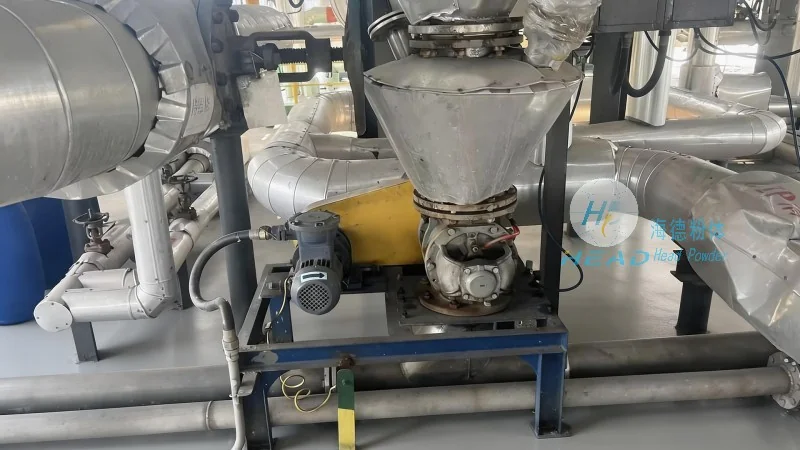
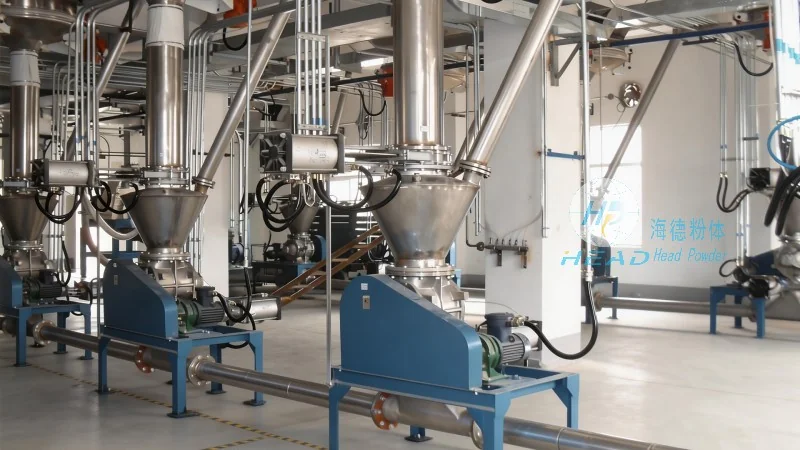
In a typical rubber granule pneumatic conveying setup, the system includes a hopper for material storage, a feeder to control the flow rate, a conveying line (usually made of stainless steel or other corrosion-resistant materials to handle rubber particles), and a receiver for the discharged material. The hopper is equipped with a rotary valve or a gate valve to regulate the material discharge. The feeder, often a screw or a rotary valve, ensures a consistent flow of rubber granules into the conveying line. The conveying line is connected to the hopper and the receiver, with appropriate fittings and elbows to direct the material flow. The receiver collects the rubber granules and may include a dust collection system to ensure environmental compliance.
The operation begins when the compressed air is introduced into the conveying line. In pressure conveying, the air is fed from a compressor and is directed into the hopper, creating a pressure that pushes the rubber granules through the line. The air and material mixture travels through the pipeline, with the air providing the necessary force to overcome friction and gravity. The receiver is positioned at the end of the line, and as the material reaches it, the air is separated from the granules, often using a cyclone or a filter. The separated air is then discharged, while the rubber granules are collected in the receiver. In vacuum conveying, a vacuum pump creates a negative pressure in the conveying line, drawing the rubber granules from the hopper into the line. The material is then transported to the receiver, where the vacuum is broken and the granules are discharged.
Key Features and Advantages of Rubber Granule Pneumatic Conveying Systems
Rubber granule pneumatic conveying systems offer several advantages that make them ideal for industrial applications. One of the primary features is their ability to transport materials in a closed system, which minimizes dust and contamination. This is particularly important for rubber granules, as they can be fine and easily airborne, leading to health and safety issues if not properly contained. The closed system also helps maintain the quality of the rubber granules, preventing them from being exposed to moisture or other environmental factors that could affect their properties.
Another key feature is the flexibility and scalability of pneumatic conveying systems. These systems can be easily adapted to different production requirements, such as varying the flow rate or the distance of material transport. The conveying lines can be extended or modified to accommodate changes in production volume or layout. This flexibility makes pneumatic conveying a cost-effective solution for industries that experience fluctuations in demand or need to expand their operations.
Efficiency is another significant advantage of rubber granule pneumatic conveying. The systems can transport rubber granules at high speeds and with minimal energy consumption compared to traditional methods like belt conveyors or bucket elevators. The use of air as the conveying medium allows for a continuous and uninterrupted flow of material, reducing downtime and increasing overall productivity. Additionally, the systems can handle a wide range of rubber granule sizes and shapes, from fine powders to larger chunks, making them versatile for various applications.
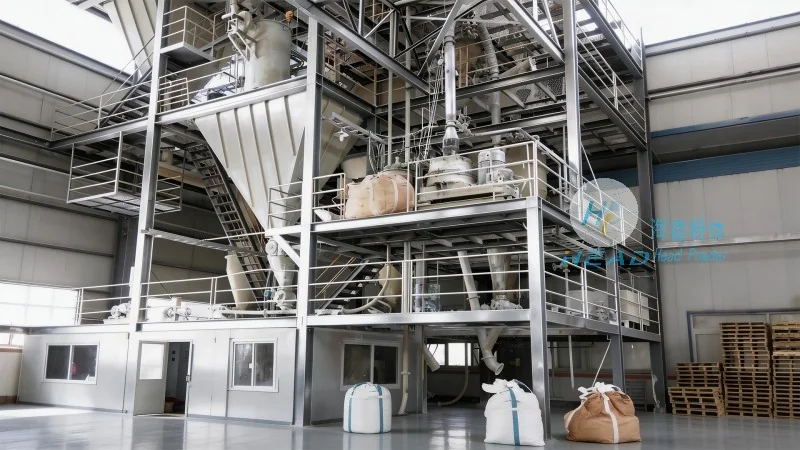
Cleanliness and hygiene are also important features of these systems, especially in industries where the rubber granules are used for manufacturing products that require high standards of purity. The closed system prevents the material from coming into contact with the environment, reducing the risk of contamination. The use of stainless steel or other corrosion-resistant materials in the construction of the conveying line further enhances the hygienic properties of the system.
About Shandong HeadPowder Engineering Co., Ltd.
Shandong HeadPowder Engineering Co., Ltd., commonly known as HeadPowder, is a leading manufacturer of pneumatic conveying systems and related equipment. With a focus on innovation and quality, HeadPowder provides customized solutions for various industrial applications, including rubber granule handling. The company's expertise in material handling technology ensures that their systems are efficient, reliable, and tailored to meet the specific needs of their clients. HeadPowder's commitment to customer satisfaction and technical excellence has made them a trusted partner in the industry, delivering high-performance pneumatic conveying systems that enhance production efficiency and product quality.