

Working Principle and Characteristics of Perlite Pneumatic Conveying
Perlite, a lightweight, porous volcanic rock, is widely used in various industrial applications due to its excellent thermal insulation and fire-resistant properties. The pneumatic conveying system for perlite is a critical component in material handling, enabling efficient and safe transport of this lightweight material. This article explores the working principle and key characteristics of perlite pneumatic conveying systems, providing insights into their operational efficiency and practical applications.
Working Principle of Perlite Pneumatic Conveying
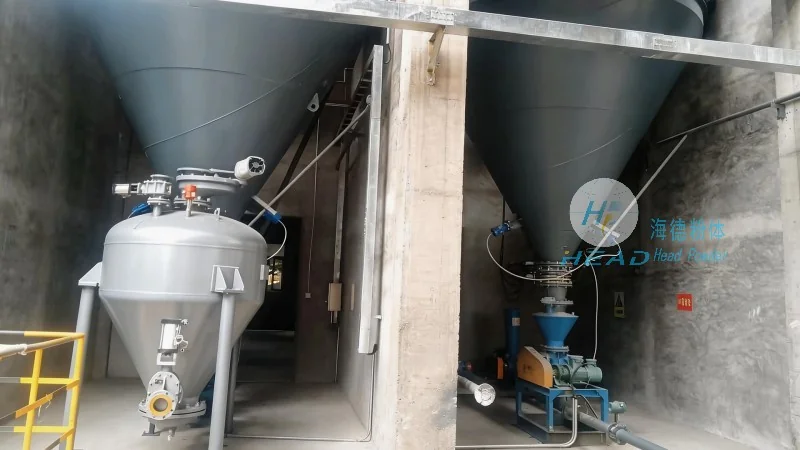
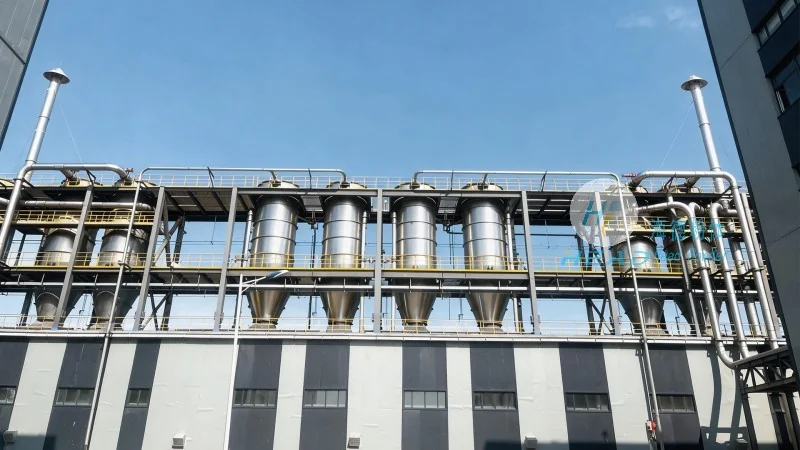
The core of a perlite pneumatic conveying system is the air flow that transports the perlite particles. The system typically operates under positive pressure, where a blower or compressor generates a high-velocity air stream. As the air moves through the conveying line, it picks up perlite particles, creating a dense mixture known as a "slurry" or "conveying stream." The air velocity is carefully controlled to ensure that the perlite particles remain suspended without settling or clogging the system. The conveying line may include components such as inlets, elbows, and expansion chambers to guide the material flow smoothly. At the discharge end, a separator or cyclone separates the perlite from the air, allowing the material to be deposited in the desired location while the air is either recirculated or vented to the atmosphere. The entire process relies on the balance between air velocity, particle size, and system pressure to achieve optimal conveying performance.
Key Characteristics of Perlite Pneumatic Conveying Systems
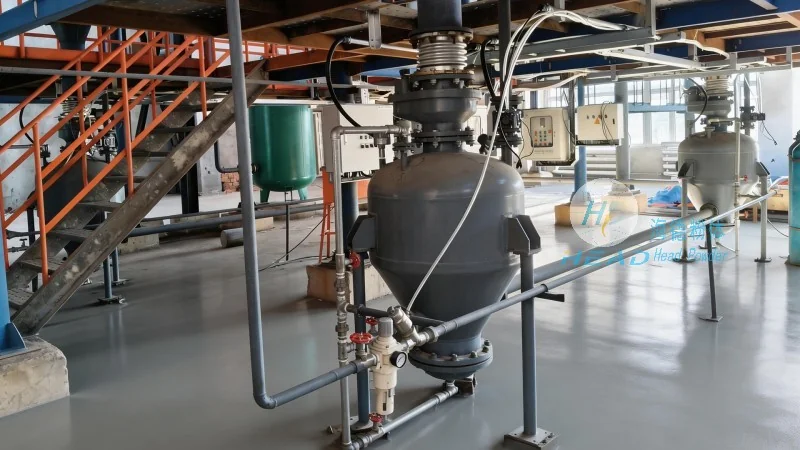
Several distinct characteristics define perlite pneumatic conveying systems, making them suitable for specific industrial needs. First, the system's efficiency in handling lightweight materials like perlite is significantly higher compared to traditional mechanical conveying methods. The air-based transport reduces friction and wear on equipment, extending the lifespan of components such as pipes and valves. Additionally, the system offers flexibility in terms of layout, as the conveying line can be arranged in various configurations to accommodate different plant layouts and material flow paths. This adaptability is particularly valuable in facilities where space is limited or where material needs to be transferred between multiple locations. Another important characteristic is the system's ability to handle a wide range of particle sizes and moisture contents. Perlite particles vary in size, from fine powders to larger granules, and the pneumatic system can effectively convey all these variations without the need for additional processing steps. The system also provides a dust-free operation, as the air is filtered and the material is contained within the conveying line, reducing the risk of dust exposure and environmental contamination. Furthermore, the system's energy efficiency is a notable advantage, as the air flow can be optimized to minimize energy consumption while maintaining the required conveying capacity. This makes perlite pneumatic conveying an economical choice for long-distance or high-volume material transport.
Operational Advantages and Practical Applications
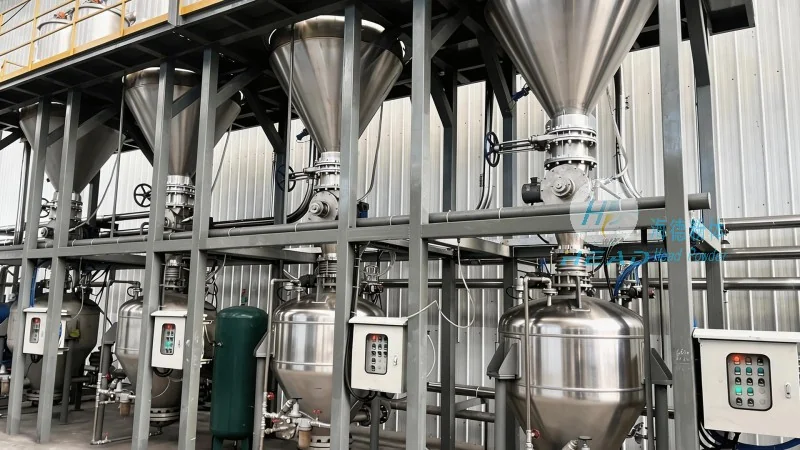
Implementing a perlite pneumatic conveying system offers several operational advantages that enhance productivity and safety in industrial settings. The system's ability to transport perlite without the need for manual handling reduces labor costs and minimizes the risk of workplace injuries associated with lifting or moving heavy loads. The automated nature of the system also ensures consistent material flow, reducing variability in product quality and batch-to-batch consistency. In terms of maintenance, the system's components are designed for easy access and replacement, allowing for quick repairs and minimizing downtime. This reliability is crucial for continuous production processes where interruptions can lead to significant losses. Practical applications of perlite pneumatic conveying include the transport of perlite from storage silos to processing equipment, such as mixers or extruders, in manufacturing facilities. The system can also be used to transfer perlite between different production lines or to deliver it to packaging areas. In construction and insulation industries, the system is often employed to supply perlite to insulation production lines, where it is mixed with other materials to create lightweight concrete or insulation boards. The versatility of the system makes it suitable for various industries, including construction, agriculture, and chemical processing, where perlite is used as a raw material or additive.