

What is a Barium Carbonate Powder Pneumatic Conveying System? And What Are Its Design Principles?
Barium carbonate is a widely used chemical compound in various industrial applications, and its handling often requires efficient and reliable transport methods. One such method is the pneumatic conveying system, which is particularly suitable for handling fine powders like barium carbonate. This article explores the concept of a barium carbonate powder pneumatic conveying system, detailing its design principles and operational mechanisms.
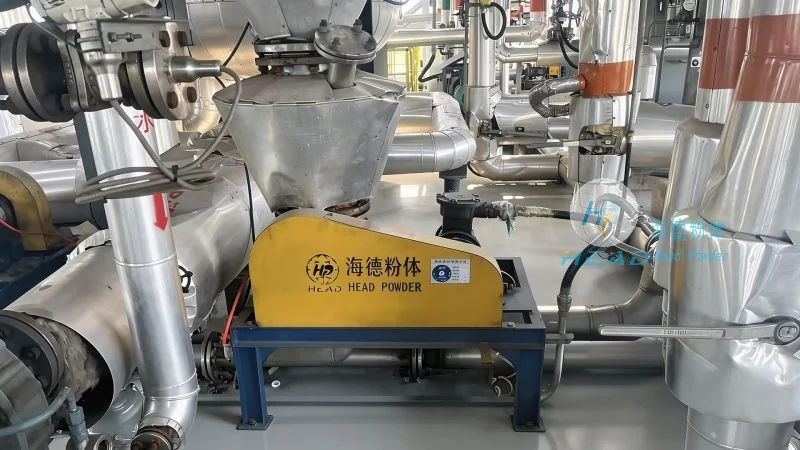
Understanding Pneumatic Conveying Systems
Pneumatic conveying systems utilize air or other gases to transport bulk materials, such as powders, granules, or small particles, from one location to another. These systems are preferred for applications involving hazardous or sensitive materials due to their enclosed and controlled environment, which minimizes dust exposure and ensures product integrity. The core components of a pneumatic conveying system typically include a material feed hopper, a conveying line (often with bends and fittings), a dust collector or filter, and a discharge outlet. The system operates by creating a pressure differential between the inlet and outlet, allowing the material to be carried by the moving air stream.
Key Design Principles for Barium Carbonate Powder Conveying
The design of a barium carbonate powder pneumatic conveying system must consider several critical factors to ensure optimal performance and safety. First, the system must be capable of handling the specific properties of barium carbonate, including its particle size distribution, density, and flow characteristics. Barium carbonate is a fine powder with a relatively high density, which influences the required air velocity and pressure to achieve effective transport. Engineers must calculate the appropriate air velocity to prevent particle settling or blockages in the conveying line. This is often determined through computational fluid dynamics (CFD) simulations or empirical formulas that relate particle size, density, and air velocity to the conveying capacity.
Second, the system design must address the potential for dust explosion hazards, as barium carbonate, like many other metal carbonates, can be a combustible dust under certain conditions. Therefore, the system incorporates explosion-proof components, such as spark-proof motors and flame arrestors, and may include inert gas purging to reduce the risk of ignition. The dust collection system, typically a cyclone or baghouse filter, is designed to capture fine particles and return them to the feed hopper, ensuring minimal loss and maintaining material purity.
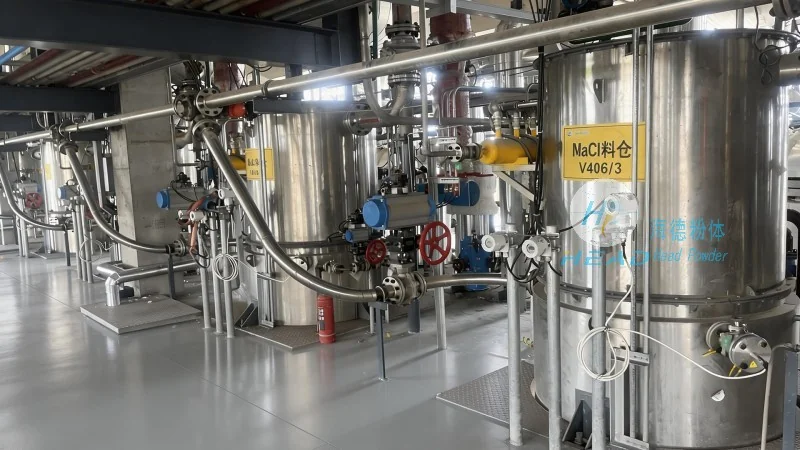
Components and Operational Mechanisms
The main components of a barium carbonate powder pneumatic conveying system include the material feed hopper, which stores the barium carbonate and feeds it into the conveying line. The hopper is equipped with a rotary valve or feeder to control the material flow rate, preventing overloading or underloading of the system. The conveying line is usually made of stainless steel or other corrosion-resistant materials to withstand the chemical properties of barium carbonate and prevent contamination. The line may include bends and fittings that are designed to minimize pressure drop and ensure smooth material flow. The discharge outlet is positioned at the receiving end, where the material is deposited into a storage bin or processing equipment.
The system operates by first feeding barium carbonate into the hopper. The rotary valve then releases the material into the conveying line at a controlled rate. Simultaneously, a blower or compressor generates high-pressure air, which is introduced into the line at the inlet. The air stream carries the barium carbonate particles through the line, overcoming the gravitational force and moving the material to the discharge point. At the receiving end, the air and material mixture enters a dust collector, where the air is filtered and the barium carbonate is separated and returned to the system. The clean air is then released or recirculated, depending on the system design.
Advantages of Pneumatic Conveying for Barium Carbonate
Implementing a pneumatic conveying system for barium carbonate offers several advantages over traditional methods like bucket elevators or belt conveyors. First, it provides a completely enclosed and dust-free environment, which enhances worker safety and product quality. The system reduces the risk of dust inhalation and contamination, which is critical for materials used in pharmaceutical or food industries. Second, pneumatic conveying systems are more flexible in terms of layout, as they can transport materials over longer distances and around obstacles with minimal modifications. This flexibility is particularly beneficial in industrial settings where space is limited or where the receiving location is not directly adjacent to the feed point.
Third, the system offers improved material handling efficiency. By controlling the air velocity and pressure, engineers can optimize the conveying rate, reducing energy consumption and increasing throughput. The enclosed design also prevents material degradation due to exposure to air or moisture, which is essential for maintaining the chemical properties of barium carbonate. Additionally, the system can be integrated with other processing equipment, such as mixers or reactors, allowing for a seamless flow of materials from one stage to the next.
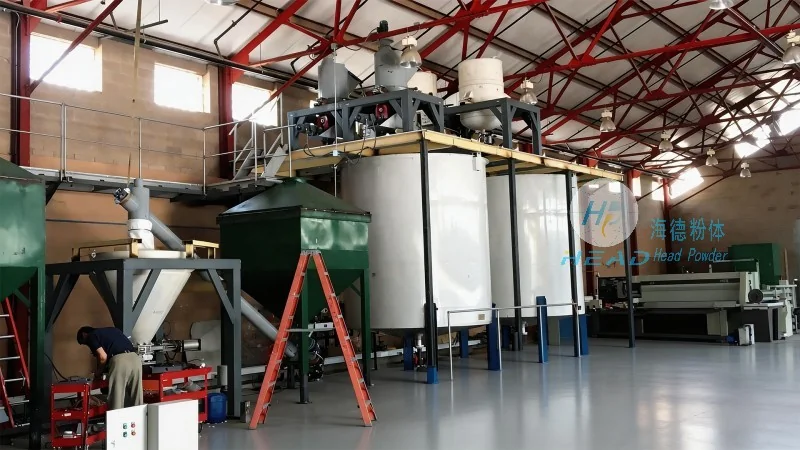
Application Examples and Industry Use Cases
Barium carbonate powder pneumatic conveying systems are commonly used in various industries where barium carbonate is a key raw material. One major application is in the production of barium sulfate, which is used as a pigment in paints and coatings. The system efficiently transports barium carbonate from storage to the reaction vessel, ensuring consistent feed rates and preventing material buildup. Another application is in the pharmaceutical industry, where barium carbonate is used as an antacid or in the production of other pharmaceutical compounds. The enclosed and controlled environment of the pneumatic system maintains the purity of the material, which is critical for pharmaceutical applications.
In the chemical industry, barium carbonate is used as a precursor for other barium compounds, such as barium chloride or barium nitrate. The pneumatic conveying system allows for the safe and efficient transport of barium carbonate to the production line, where it is reacted with other chemicals to form the desired products. The system's ability to handle fine powders without clogging or blockages makes it ideal for these applications, where consistent material flow is essential for maintaining production efficiency.
Conclusion
A barium carbonate powder pneumatic conveying system is a sophisticated and efficient solution for handling this critical chemical compound. The design principles, which consider material properties, safety requirements, and operational efficiency, ensure that the system operates reliably and safely. By leveraging pneumatic conveying technology, industries can improve their material handling processes, enhance product quality, and reduce operational risks. As a leading provider in this field, Shandong HeadPowder Engineering Co., Ltd. specializes in designing and manufacturing customized pneumatic conveying systems tailored to the specific needs of barium carbonate applications, ensuring optimal performance and compliance with industry standards.