

Comparative Analysis of Positive Pressure and Negative Pressure Conveying for Phosphate Iron
Phosphate iron is a critical material in various industrial applications, and its efficient handling through pneumatic conveying systems is essential for maintaining production efficiency and safety. This article provides a detailed comparison of two primary pneumatic conveying methods: positive pressure conveying and negative pressure conveying, focusing on their applications, advantages, and limitations in the context of phosphate iron handling. The analysis is presented by Shandong HeadPowder Engineering Co., Ltd., a leading provider of engineering solutions for material handling systems.
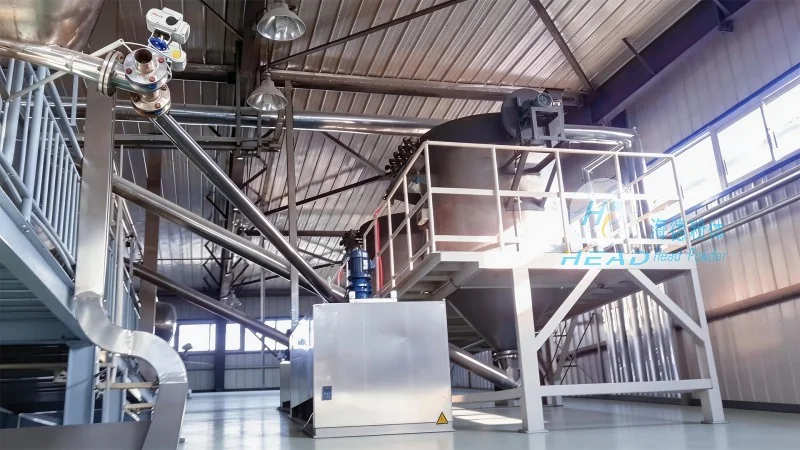
Introduction to Pneumatic Conveying Systems
Pneumatic conveying systems are widely used in industries to transport bulk materials like powders and granules over short to medium distances. These systems utilize air or gas to move materials through a pipeline network, eliminating the need for mechanical components such as belts or buckets. For phosphate iron, which is often handled as a fine powder or granular material, pneumatic conveying offers advantages in terms of speed, flexibility, and reduced contamination compared to traditional methods like bucket elevators or screw conveyors.
Positive Pressure Conveying: Working Principle and Applications
Positive pressure conveying, also known as pressure pneumatic conveying, operates by blowing air or gas into the conveying line under pressure. The material is fed into the system at the inlet, where it is mixed with the pressurized air stream and transported to the discharge point. This method is particularly effective for conveying materials that are prone to caking or agglomeration, as the high-pressure air helps to break up clumps and maintain a consistent flow. In the context of phosphate iron, positive pressure conveying is commonly used in applications where the material needs to be transported from a central storage silo to multiple processing units or where the material is sensitive to moisture or air exposure.
Negative Pressure Conveying: Working Principle and Applications
Negative pressure conveying, or vacuum pneumatic conveying, works by creating a vacuum in the conveying line, which draws the material from the source into the system. The material is typically fed into a hopper or feeder, where it is drawn into the pipeline by the vacuum created by a fan or vacuum pump. This method is often preferred for applications where the material needs to be transported from a low-level source to a higher destination, as the vacuum helps to pull the material upward. For phosphate iron, negative pressure conveying is commonly used in scenarios where the material is being transferred from a ground-level storage bin to a processing facility located at a higher elevation, or where the material is sensitive to air ingress, as the system is sealed and prevents contamination.
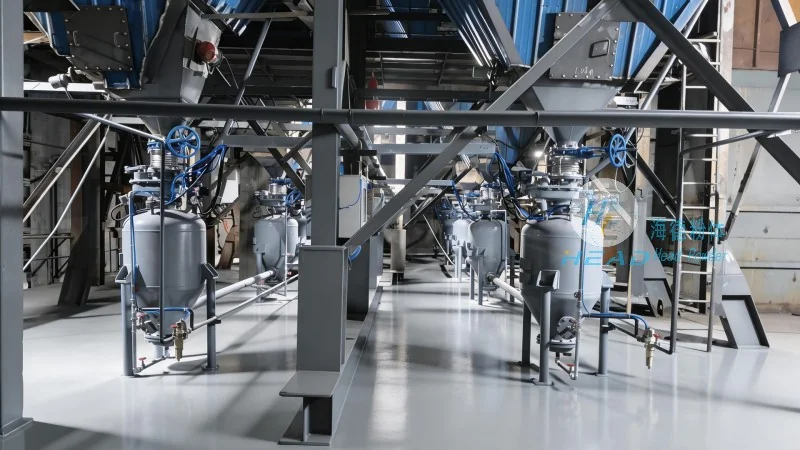
Key Differences Between Positive and Negative Pressure Conveying
While both positive and negative pressure conveying are effective for phosphate iron handling, they differ significantly in terms of system design, energy consumption, and operational requirements. Positive pressure systems require a compressor to generate the necessary pressure, which can be more energy-intensive compared to negative pressure systems. However, positive pressure systems are generally more suitable for long-distance or high-volume conveying, as they can maintain a consistent flow rate over longer distances. Negative pressure systems, on the other hand, are more energy-efficient for short-distance or low-volume conveying, as they rely on the vacuum created by a fan, which consumes less power. Additionally, positive pressure systems are better suited for materials that are prone to dust explosion hazards, as the system is closed and prevents the release of dust into the atmosphere. Negative pressure systems, while effective for dust control, may require additional filtration systems to prevent dust from escaping the pipeline.
Advantages and Limitations of Each Conveying Method
Positive pressure conveying offers several advantages for phosphate iron handling, including higher conveying velocities, which can reduce system size and cost. The high-pressure air also helps to break up agglomerates, ensuring a consistent flow rate and preventing blockages in the pipeline. However, positive pressure systems have limitations, such as higher energy consumption and the potential for dust explosion risks if not properly designed with explosion-proof components. Additionally, positive pressure systems may require more maintenance due to the higher stress on components like the compressor and pipeline fittings.
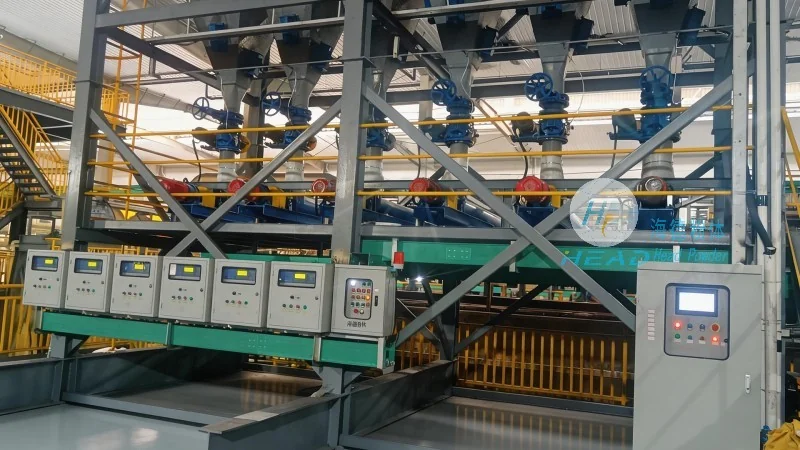
Negative pressure conveying, while more energy-efficient, has its own set of advantages and limitations. The primary advantage is lower energy consumption, which can reduce operational costs over time. The sealed system also provides better dust control, making it suitable for applications where dust exposure is a concern. However, negative pressure systems have limitations, such as lower conveying velocities, which may require larger pipelines to achieve the same flow rate as positive pressure systems. Additionally, negative pressure systems are more susceptible to blockages due to the lower air velocity, which can lead to system downtime if not properly maintained.
Selection Criteria for Phosphate Iron Conveying Systems
When selecting a pneumatic conveying system for phosphate iron, several factors must be considered to ensure optimal performance and efficiency. The first consideration is the distance and volume of material to be conveyed. For short distances and low volumes, negative pressure conveying may be more suitable due to its lower energy consumption. For long distances or high volumes, positive pressure conveying is generally preferred due to its higher conveying velocities and ability to maintain a consistent flow rate. The second consideration is the material characteristics, such as particle size, moisture content, and dust explosion potential. Materials that are prone to agglomeration or dust explosion hazards may require positive pressure systems with explosion-proof components. The third consideration is the operational environment, including the need for dust control or the presence of other industrial equipment. If dust control is a priority, negative pressure systems with sealed hoppers and filtration systems may be more appropriate. Finally, the cost of the system, including initial investment and ongoing maintenance, should be evaluated to ensure it aligns with the budget and operational requirements of the facility.
Conclusion
In conclusion, both positive pressure and negative pressure conveying are effective methods for handling phosphate iron, with each method offering unique advantages and limitations. The choice between the two depends on several factors, including the distance and volume of material to be conveyed, the material characteristics, and the operational environment. By understanding the differences between these two systems, industrial facilities can select the most appropriate pneumatic conveying solution to ensure efficient, safe, and cost-effective handling of phosphate iron. Shandong HeadPowder Engineering Co., Ltd. specializes in designing and manufacturing customized pneumatic conveying systems tailored to the specific needs of phosphate iron handling applications, providing reliable solutions for industrial clients in China and beyond.