

Introduction to Equipment and Structural Principle Explanation of Lime Pneumatic Conveying Systems
HeadPowder, a professional manufacturer based in Shandong, China, specializes in the design, production, and supply of advanced pneumatic conveying systems for lime and similar bulk materials. This article provides an overview of the key equipment components, structural principles, and operational mechanisms of such systems, highlighting their efficiency and reliability in industrial applications.
Key Equipment Components of Lime Pneumatic Conveying Systems
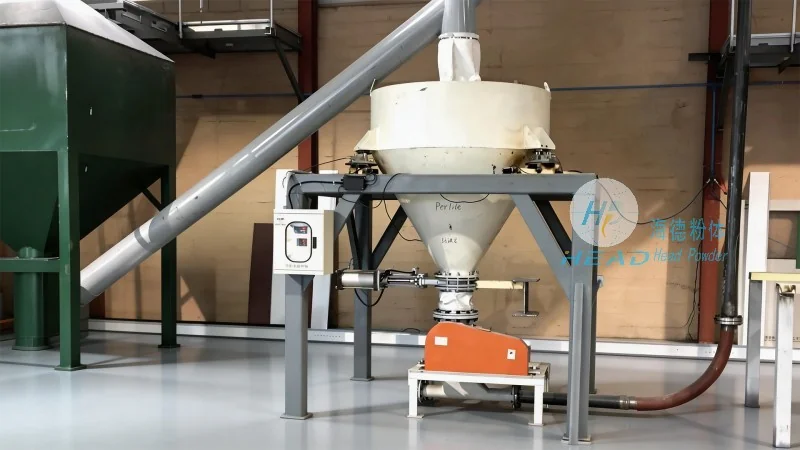
The core components of a lime pneumatic conveying system typically include a hopper, a feeder, a conveying pipeline, a separator, and a dust collector. Each component plays a crucial role in the overall system performance. The hopper is designed to store and feed the lime material, ensuring a consistent supply to the feeder. The feeder, often a rotary valve or a screw feeder, controls the material flow rate and maintains a stable pressure within the system. The conveying pipeline, usually made of stainless steel or other corrosion-resistant materials, transports the lime particles through the system. The separator, such as a cyclone or a bag filter, separates the conveyed material from the air stream, preventing material loss and ensuring clean air discharge. The dust collector, equipped with filters or other filtration systems, captures any residual dust, ensuring compliance with environmental regulations.
Structural Principles and Operational Mechanisms
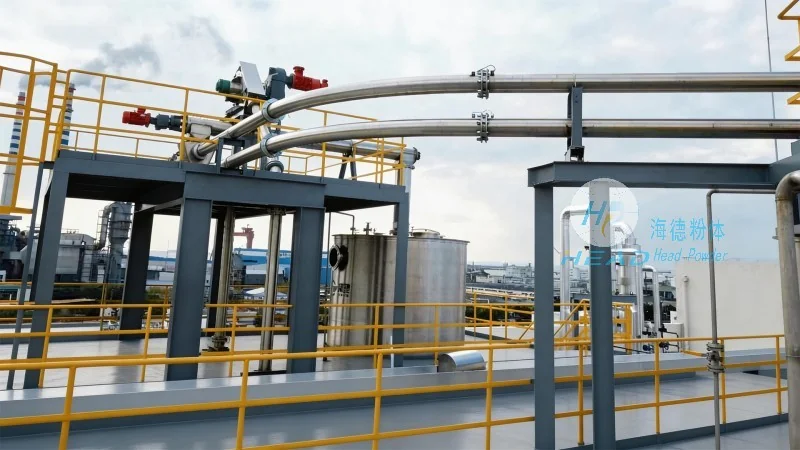
The structural principle of a pneumatic conveying system is based on the use of air as the conveying medium. The system operates by creating a pressure difference between the hopper and the discharge point. When the feeder starts, the material is introduced into the pipeline along with the air stream. The air velocity is maintained at a level sufficient to keep the material suspended and transported to the destination. The system can be categorized into two main types: positive pressure systems and negative pressure systems. Positive pressure systems use a blower to generate high-pressure air, pushing the material through the pipeline. Negative pressure systems use a vacuum pump to create a low-pressure environment, drawing the material into the pipeline. Both systems are designed to handle different material characteristics and application requirements, ensuring efficient and reliable material transport.
Advantages of Lime Pneumatic Conveying Systems
Compared to traditional mechanical conveying methods, lime pneumatic conveying systems offer several advantages. First, they provide a dust-free and clean operation environment, reducing the risk of material contamination and improving workplace safety. Second, the system is compact and flexible, allowing for easy installation and integration into existing production lines. Third, the conveying process is continuous and automated, reducing labor costs and increasing production efficiency. Fourth, the system can handle a wide range of material sizes and moisture contents, making it suitable for various industrial applications. Additionally, the system is energy-efficient, with lower power consumption compared to other conveying methods. These advantages make lime pneumatic conveying systems an ideal choice for industries such as cement, steel, and chemical manufacturing, where efficient and reliable material transport is critical.
Application Examples and Industry Impact
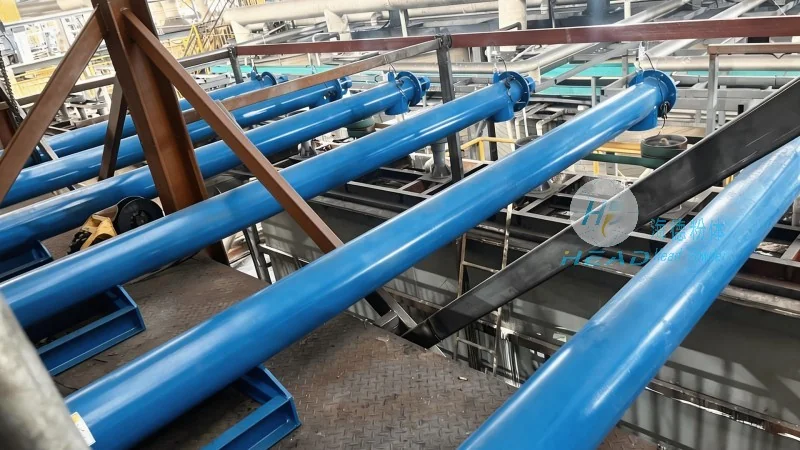
Lime pneumatic conveying systems are widely used in various industrial sectors. In the cement industry, they are used to transport raw materials and finished products, improving the overall production efficiency. In the steel industry, they are used to convey lime for desulfurization and other processes, ensuring the quality of the steel products. In the chemical industry, they are used to transport lime for various chemical reactions, enhancing the production of chemical products. The adoption of these systems has significantly improved the efficiency and safety of industrial operations, reducing material loss and environmental pollution. As industries continue to seek more efficient and sustainable solutions, the demand for advanced pneumatic conveying systems is expected to grow, further driving the development of such technologies.