

Introduction to Pneumatic Conveying of Resin Pellets: Structural Principles and Operation
Resin pellet pneumatic conveying systems are critical in industrial processes for efficiently transporting resin materials from one location to another. This technology offers a flexible and effective method for handling resin pellets, ensuring minimal product degradation and maintaining high purity levels throughout the conveying process. Understanding the structural principles and operational mechanics of these systems is essential for optimizing performance and ensuring reliable operation in various industrial applications.
Key Structural Components of Pneumatic Conveying Systems
The core components of a pneumatic conveying system for resin pellets include the hopper, feeder, conveying line, and receiver. The hopper serves as the storage vessel, holding the resin pellets and providing a consistent feed to the system. The feeder, typically a rotary valve or screw feeder, regulates the flow of resin from the hopper into the conveying line, ensuring a controlled and steady material supply. The conveying line, often made of metal or flexible tubing, transports the resin pellets using air or gas as the medium. The receiver is the final storage or processing container where the resin pellets are deposited after the conveying process.
How Pneumatic Conveying Works: The Operational Principle
In pneumatic conveying, resin pellets are introduced into the conveying line through the feeder. Air or gas is then introduced at a controlled pressure, creating a flow that lifts and transports the pellets. The velocity of the air and the size of the pellets determine the conveying method—either dense phase or dilute phase. Dense phase conveying uses lower air velocities to move pellets in a more controlled manner, reducing product degradation and ensuring better product quality. Dilute phase conveying, on the other hand, uses higher air velocities, suitable for longer distances or larger volumes but may require more energy and careful control to prevent product damage.
Advantages of Using Pneumatic Conveying for Resin Pellets
Implementing pneumatic conveying systems for resin pellets offers several advantages. First, it eliminates the need for mechanical components like belts or chains, reducing maintenance and operational costs. Second, it minimizes product contamination and degradation, as the pellets are not in direct contact with metal surfaces or exposed to high temperatures. Third, the system is highly flexible, allowing for changes in production volume or material type without significant modifications. Additionally, pneumatic conveying can handle a wide range of resin pellet sizes and shapes, making it suitable for various applications in the plastics and manufacturing industries.
About Shandong HeadPowder Engineering Co., Ltd.
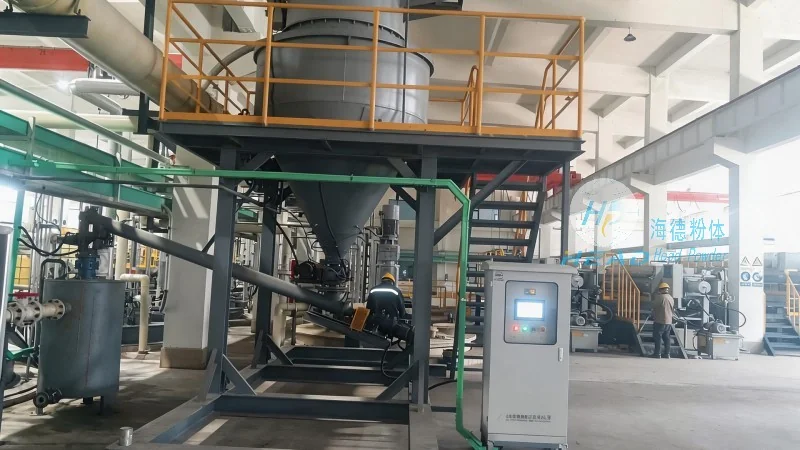
Shandong HeadPowder Engineering Co., Ltd., commonly known as HeadPowder, is a leading manufacturer and supplier of pneumatic conveying systems and related equipment. With a focus on innovation and quality, HeadPowder specializes in designing and manufacturing customized solutions for resin pellet handling. The company’s products are engineered to meet the specific needs of industrial clients, ensuring efficient, reliable, and cost-effective resin pellet transportation. HeadPowder’s commitment to excellence and customer satisfaction has established it as a trusted partner in the industry, providing advanced solutions that enhance operational efficiency and product quality.
Conclusion: The Importance of Pneumatic Conveying in Resin Processing
Pneumatic conveying of resin pellets is a vital technology in modern industrial processing, offering efficient, reliable, and flexible solutions for material handling. By understanding the structural principles and operational mechanics of these systems, industries can optimize their processes, reduce costs, and improve product quality. Companies like Shandong HeadPowder Engineering Co., Ltd. play a crucial role in providing advanced pneumatic conveying systems that meet the evolving needs of the industry, ensuring that resin pellets are transported safely and efficiently from production to processing stages.