

Operation Process and Working Principle of Mineral Particle Material Pneumatic Conveying Lines
HeadPowder, a leading manufacturer based in Shandong, China, specializes in the design, production, and installation of advanced pneumatic conveying systems for mineral particle materials. This article provides a detailed overview of the operation process and working principle of such systems, highlighting the key components, operational steps, and technical aspects that ensure efficient and reliable material transport.
Overview of Pneumatic Conveying Systems for Mineral Particle Materials
Pneumatic conveying systems are widely used in the mineral processing industry to transport dry, free-flowing particles such as powders, granules, and fine materials. These systems utilize air or other gases to move materials from one location to another, eliminating the need for mechanical components like belts or buckets. The primary advantage of pneumatic conveying is its ability to handle a wide range of particle sizes and densities while maintaining low maintenance costs and high efficiency.
Key Components of a Pneumatic Conveying Line
The pneumatic conveying system for mineral particle materials typically consists of several critical components that work in tandem to achieve effective material transport. These components include:
- Feeder: The feeder is responsible for introducing the mineral particles into the conveying line at a controlled rate. It ensures a consistent flow of material, preventing blockages and maintaining system stability.
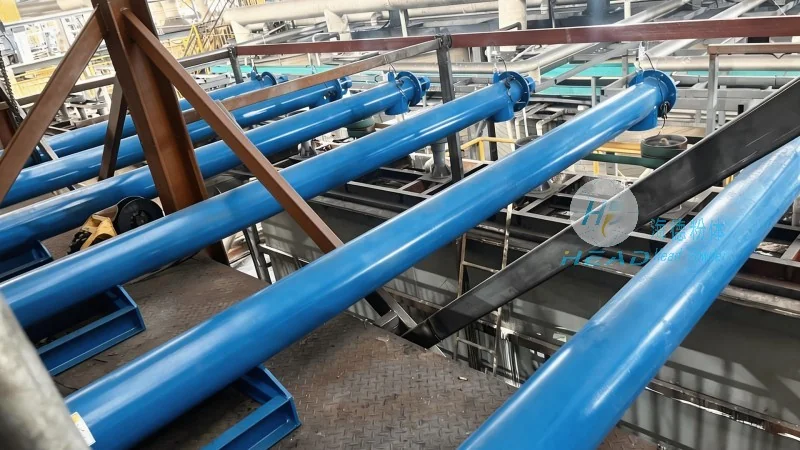
- Conveying Pipe: The main pipeline through which the air and particles travel. The pipe is usually made of stainless steel or other corrosion-resistant materials to withstand the abrasive nature of mineral particles.
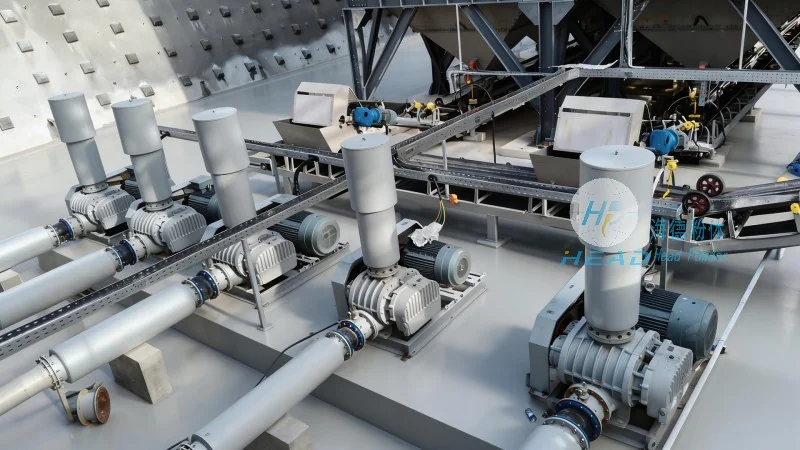
- Air Supply System: This system generates and regulates the airflow, typically using a blower or compressor. The air pressure and flow rate are crucial for maintaining the desired conveying velocity and preventing material deposition.
- Control Valves: Valves are used to regulate the air flow and material discharge, allowing for precise control over the conveying process. They can be automated to respond to changes in material flow or system pressure.
- Receiver: The receiver is the terminal where the conveyed material is deposited. It is designed to handle the material efficiently, often with a hopper or silo to store the received particles.
Working Principle of the Pneumatic Conveying Process
The working principle of a pneumatic conveying system involves the creation of a high-velocity air stream within the conveying pipe. When the feeder introduces mineral particles into the pipe, the air flow entrains the particles, lifting them and transporting them along the pipe. The air velocity must be sufficient to overcome the gravitational force acting on the particles and to maintain a stable suspension. The system operates by alternating between phases of material loading and air flow, ensuring continuous and uninterrupted transport.
Operation Process of a Pneumatic Conveying Line
The operation process of a pneumatic conveying line for mineral particle materials can be broken down into several sequential steps, each designed to ensure optimal performance and safety:
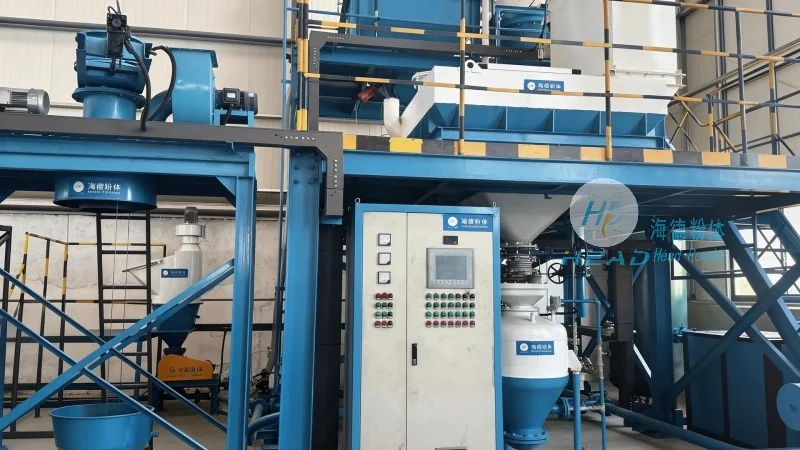
- System Preparation: Before starting the operation, the system is prepared by checking the air supply, ensuring all valves are in the correct position, and verifying that the feeder and receiver are ready to receive or discharge material. This step also involves checking for any blockages or leaks in the conveying pipe.
- Start-up: The air supply system is activated, and the blower or compressor is started. The air flow is gradually increased to the desired operating pressure. Simultaneously, the feeder is activated to introduce the mineral particles into the conveying line. The system is monitored to ensure that the particles are being properly conveyed and that the air pressure and flow rate are stable.
- Conveying Phase: Once the system is stable, the material is continuously fed into the pipe, and the air flow maintains the particles in suspension. The conveying process continues until the required amount of material has been transported to the receiver. The system operates continuously, with the feeder and air supply working in sync to maintain a consistent flow rate.
- Shutdown: When the conveying operation is complete, the feeder is stopped first to prevent any residual material from being discharged. The air supply is then gradually reduced to a low pressure to allow the remaining particles to settle and be collected. Finally, the system is turned off, and the conveying pipe is inspected for any remaining material or blockages.
- Maintenance: Regular maintenance is essential to ensure the long-term reliability of the pneumatic conveying system. This includes cleaning the feeder and pipe, checking for wear and tear on components, and replacing any worn parts. Proper maintenance helps to prevent system failures and extends the lifespan of the equipment.
Advantages and Applications of Pneumatic Conveying Systems
Pneumatic conveying systems offer several advantages over traditional mechanical conveying methods, making them ideal for mineral particle material transport. These advantages include:
- Efficiency: The systems can transport materials over long distances with minimal energy consumption, making them cost-effective for large-scale operations.
- Flexibility: Pneumatic conveying systems can be easily adapted to different material types and processing requirements, allowing for versatile application in various industries.
- Low Maintenance: The absence of moving parts in the conveying pipe reduces the need for frequent maintenance, resulting in lower operational costs.
- Sanitary and Clean: The enclosed system prevents contamination and dust emissions, making it suitable for food and pharmaceutical industries.
HeadPowder's pneumatic conveying systems are widely used in the mineral processing industry, including applications such as transporting coal, cement, limestone, and other mineral powders. The company's expertise in designing and manufacturing these systems ensures that clients receive reliable and efficient solutions tailored to their specific needs.