

Operation Process and Working Principle of Nanopowder Material Handling Systems
Shandong HeadPowder Engineering Co., Ltd., commonly known as HeadPowder, is a professional manufacturer and supplier based in Shandong, China. The company specializes in the design, development, and implementation of advanced material handling systems, particularly for handling nanopowders and fine powders with high precision and efficiency. This article provides a detailed overview of the operation process and working principle of their nanopowder material handling systems, highlighting the key components, functional steps, and technical aspects that ensure reliable and effective material transport.

Overview of Nanopowder Material Handling Systems
A nanopowder material handling system is engineered to transport and process nanoscale powders, which are typically defined as particles with at least one dimension less than 100 nanometers. These materials are often used in industries such as pharmaceuticals, electronics, and advanced materials due to their unique properties. The system designed by Shandong HeadPowder Engineering Co., Ltd. integrates multiple components to ensure safe, controlled, and efficient handling of these delicate materials. The core of the system includes feeding mechanisms, conveying equipment, control systems, and safety features that work in tandem to achieve optimal performance.
Key Components of the Nanopowder Material Handling System
The nanopowder material handling system developed by HeadPowder consists of several critical components that are carefully selected and integrated to meet the specific requirements of nanopowder handling. These components include:
- Feeding Unit: This component is responsible for the initial intake of nanopowders from storage containers or raw material sources. It typically features a hopper or a rotary valve that can handle powders with low flowability, ensuring a consistent and controlled feed rate. The feeding unit is designed to minimize particle agglomeration and maintain the integrity of the nanopowders.
- Conveying Equipment: The system utilizes specialized conveying equipment, such as pneumatic conveying systems or screw conveyors, to transport the nanopowders from the feeding unit to the processing or storage areas. Pneumatic conveying is often preferred for nanopowders due to its ability to handle fine particles without causing excessive friction or particle breakdown. The conveying system is equipped with pressure regulation and flow control mechanisms to maintain a stable transport rate.
- Control System: A sophisticated control system is integrated into the nanopowder material handling system to monitor and regulate the operation of all components. This system includes sensors for level detection, pressure monitoring, and flow rate measurement, as well as a programmable logic controller (PLC) that processes the sensor data and adjusts the system parameters in real-time. The control system ensures that the operation remains within safe limits and optimizes the performance of the entire system.
- Safety Features: Given the sensitivity of nanopowders and the potential health hazards associated with their handling, the system incorporates multiple safety features. These include dust extraction systems to capture airborne particles, explosion-proof designs for pneumatic components, and interlocks to prevent unauthorized access during operation. The safety features are designed to comply with relevant industry standards and regulations, ensuring the protection of both personnel and the environment.
Operation Process of the Nanopowder Material Handling System
The operation of the nanopowder material handling system follows a systematic process that ensures the efficient and safe transport of nanopowders. The process can be broken down into several key steps:
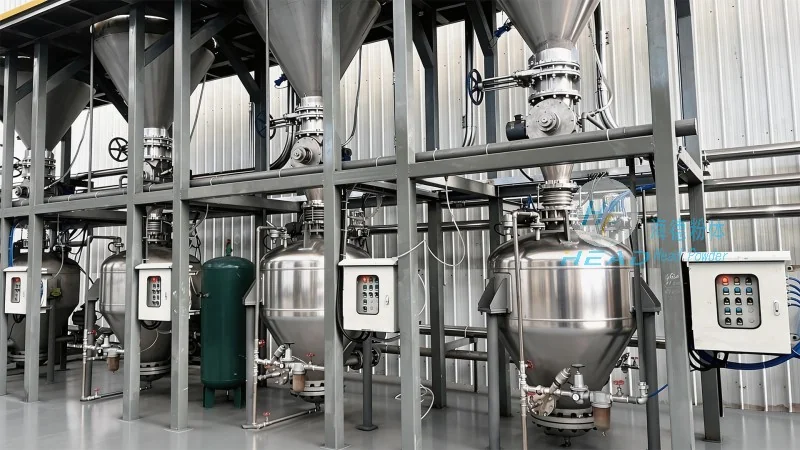
- Initial Preparation: Before the system starts operation, the feeding unit is checked to ensure that it is properly filled with nanopowders. The storage containers are sealed to prevent contamination, and the conveying lines are cleared of any blockages or debris. The control system is then initialized, and all sensors are calibrated to ensure accurate readings.
- Feeding and Conveying: Once the system is ready, the feeding unit begins to discharge the nanopowders into the conveying line. The pneumatic conveying system generates a controlled airflow that lifts the powders and transports them through the pipeline. The flow rate is adjusted based on the material properties and the desired transport speed. The conveying process continues until the target amount of nanopowders has been moved to the processing or storage location.
- Processing and Storage: At the destination point, the nanopowders are discharged into a processing vessel or storage container. The control system monitors the level of the material in the container and stops the conveying process once the desired volume is reached. The system may also include additional processing steps, such as mixing or blending, depending on the application requirements.
- System Shutdown and Maintenance: After the transport operation is complete, the system is shut down in an orderly manner. The conveying lines are purged to remove any remaining powders, and the feeding unit is emptied. Routine maintenance is performed to check for wear and tear on components, replace filters, and calibrate sensors. This maintenance schedule ensures the long-term reliability and performance of the system.
Working Principle of the Nanopowder Material Handling System
The working principle of the nanopowder material handling system is based on the principles of fluidization and pneumatic transport. The system utilizes a combination of mechanical and pneumatic forces to move the nanopowders through the conveying line. The key working principles are as follows:
Pneumatic Conveying: The primary method of transport in the system is pneumatic conveying, which involves the use of compressed air to move the powders. The compressed air is introduced into the conveying line at a controlled pressure, creating a flow that lifts the powders and transports them to the destination. The airflow velocity is maintained above the minimum fluidization velocity of the nanopowders to prevent particle settling and ensure smooth transport.
Fluidization: In some parts of the system, the nanopowders may be fluidized, meaning they are suspended in a gas stream and behave like a fluid. This fluidization helps to prevent particle agglomeration and ensures uniform mixing of the powders. The fluidization process is achieved by adjusting the airflow rate and pressure to maintain a stable fluidized bed.
Pressure Regulation: The system includes pressure regulation mechanisms to maintain a consistent pressure throughout the conveying line. This is crucial for preventing pressure drops that could lead to particle blockages or uneven flow. The pressure is monitored by sensors and adjusted by the control system to ensure optimal performance.
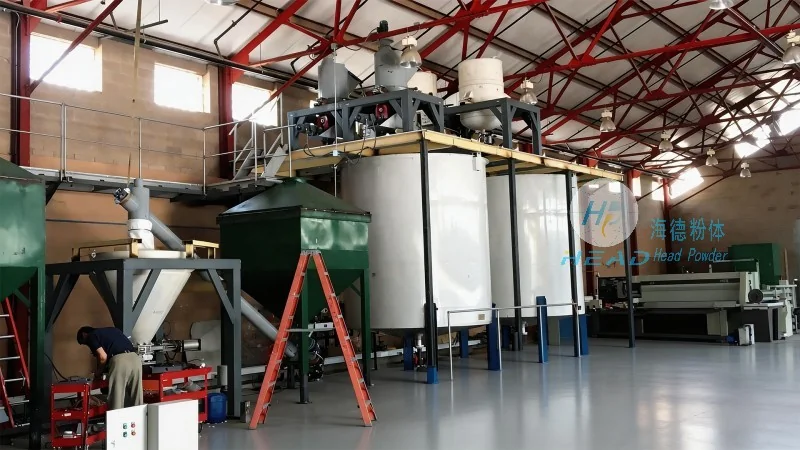
Control and Feedback: The entire operation is controlled by a feedback loop that monitors the system parameters and adjusts the inputs accordingly. The sensors provide real-time data on flow rate, pressure, and level, which is processed by the PLC to make adjustments to the airflow, feeding rate, and other parameters. This closed-loop control ensures that the system operates efficiently and safely.
Advantages and Applications
The nanopowder material handling system developed by Shandong HeadPowder Engineering Co., Ltd. offers several advantages that make it suitable for various industrial applications. These advantages include:
- High Precision and Efficiency: The system is designed to handle nanopowders with high precision, ensuring minimal loss and consistent quality. The controlled feeding and conveying processes result in efficient material transport with low energy consumption.
- Safe and Environmentally Friendly: The integrated safety features and dust extraction systems minimize the risk of exposure to nanopowders and prevent environmental contamination. The system complies with industry standards for safety and environmental protection.
- Customizable and Scalable: The system can be customized to meet the specific requirements of different applications, including varying material types, flow rates, and processing needs. It can also be scaled up or down to accommodate different production volumes.
- Reliable and Durable: The components are made from high-quality materials and are designed for long-term operation. Regular maintenance and proper operation ensure the reliability and durability of the system.
Applications of the nanopowder material handling system include the pharmaceutical industry for handling active pharmaceutical ingredients (APIs), the electronics industry for producing nanoscale components, and the advanced materials industry for processing nanocomposites. The system's ability to handle delicate nanopowders with precision and safety makes it an essential tool for these industries.