

The Operation Process and Working Principle of Light Calcium Powder Conveying
Light calcium powder, also known as precipitated calcium carbonate (PCC), is a widely used industrial material in various sectors including plastics, paper, and coatings. The efficient and reliable transport of this fine powder is crucial for maintaining production efficiency and product quality. This article provides an in-depth look at the operation process and working principles of light calcium powder conveying systems, with a focus on the technical aspects and practical applications.

Company Profile: Shandong HeadPowder Engineering Co., Ltd.
HeadPowder, the professional manufacturer behind these advanced conveying solutions, is a leading company in the powder handling industry. With years of experience and a commitment to innovation, HeadPowder specializes in designing and manufacturing high-performance equipment for powder transport. The company’s headquarters is located in Shandong, China, where its team of experts develops cutting-edge technologies tailored to meet the diverse needs of clients worldwide.
The Operation Process of Light Calcium Powder Conveying
The operation process of light calcium powder conveying typically involves several key steps to ensure smooth and continuous material transport. The first step is the feeding stage, where the light calcium powder is fed into the conveying system from a storage silo or hopper. This is usually achieved using a rotary valve or a screw feeder, which controls the flow rate of the powder to maintain a consistent feed. The powder then enters the conveying line, which may consist of a pipeline or a flexible hose, depending on the system design. The conveying medium, often air or a combination of air and mechanical force, propels the powder through the line. The system may include intermediate storage or blending units to adjust the powder’s moisture content or to mix it with other additives. Finally, the powder is discharged at the destination point, such as a processing plant or a storage tank. Throughout the process, sensors and control systems monitor the flow rate, pressure, and temperature to ensure optimal performance and prevent blockages or other issues.
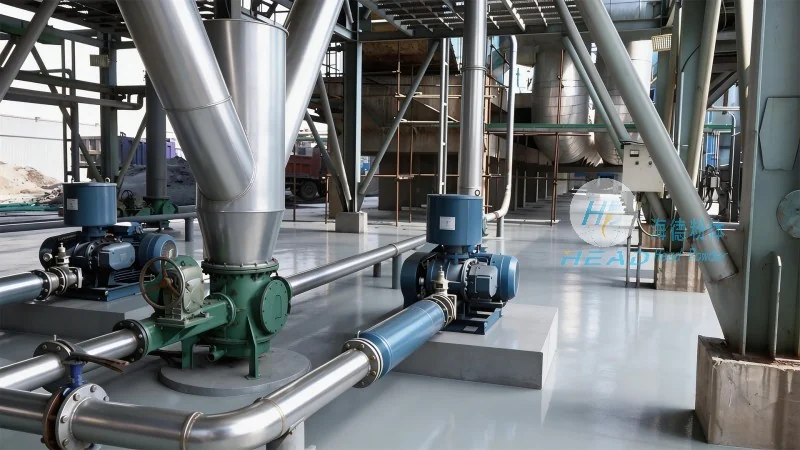
Working Principles of Light Calcium Powder Conveying
The working principles of light calcium powder conveying systems are based on the fundamental concepts of fluidization and pneumatic transport. The most common method is pneumatic conveying, which uses compressed air to move the powder particles through a pipeline. The powder is suspended in the air stream, forming a dilute or dense phase flow depending on the system design. In dilute phase conveying, the powder is dispersed in the air at a low concentration, allowing for high-speed transport over long distances. Dense phase conveying, on the other hand, uses higher air pressure and lower flow rates to move the powder in a more compact form, reducing the risk of particle degradation and improving system efficiency. The system may also incorporate mechanical components, such as screw conveyors or augers, to assist in the transport process, especially in cases where the powder has high moisture content or is prone to caking. The combination of pneumatic and mechanical forces ensures that the light calcium powder is transported safely and efficiently, minimizing material loss and maintaining product integrity.

Key Components and Their Functions
Several critical components work together to ensure the smooth operation of light calcium powder conveying systems. The feeder is responsible for controlling the flow rate of the powder from the storage silo, preventing overfeeding or underfeeding that could lead to system inefficiencies. The conveying line is typically made of stainless steel or other corrosion-resistant materials to handle the fine powder and prevent contamination. The air compressor provides the necessary pressure to move the powder through the line, with adjustable pressure settings to accommodate different powder types and system requirements. The filter and separator are essential for removing any fine particles or moisture from the air stream, ensuring that the powder remains clean and free from contaminants. The control system monitors all parameters, including flow rate, pressure, and temperature, and adjusts the system settings in real-time to maintain optimal performance. These components are designed to work in harmony, ensuring that the light calcium powder is transported efficiently and reliably, with minimal downtime or maintenance.
Benefits and Applications
The efficient operation of light calcium powder conveying systems offers several benefits to industrial applications. First, it improves production efficiency by reducing the time and labor required for manual handling of the powder. Second, it maintains product quality by preventing contamination and degradation during transport. Third, it enhances safety by minimizing the risk of dust explosions or other hazards associated with fine powders. The systems are widely used in the production of plastics, where light calcium powder is used as a filler to improve the material’s strength and reduce costs. In the paper industry, the powder is used to enhance the whiteness and opacity of paper products. In the coatings industry, it is used as a pigment to improve the durability and appearance of coatings. Overall, the advanced conveying systems from HeadPowder provide a reliable and cost-effective solution for the transport of light calcium powder, supporting the growth and success of various industrial sectors.