

Operation Process and Working Principle of Lightweight Calcium Carbonate Pneumatic Conveying Lines
Lightweight calcium carbonate is a widely used industrial material, and efficient handling is crucial for its processing and distribution. Pneumatic conveying systems offer a reliable solution for transporting this material, ensuring minimal dust, reduced maintenance, and enhanced safety. This article explores the operation process and working principle of a lightweight calcium carbonate pneumatic conveying line, highlighting the key components and their functions.
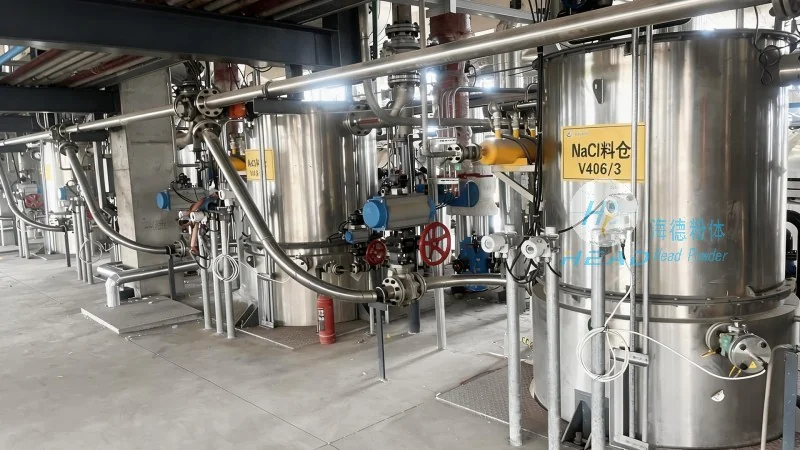
About Shandong HeadPowder Engineering Co., Ltd.
Shandong HeadPowder Engineering Co., Ltd. is a leading manufacturer and supplier of advanced material handling solutions. Based in Shandong, China, the company specializes in designing, manufacturing, and installing pneumatic conveying systems tailored to the needs of various industries, including chemical, pharmaceutical, and food processing. With a strong commitment to quality and innovation, HeadPowder provides customized solutions that optimize material flow and improve operational efficiency.
Overview of Pneumatic Conveying Systems
Pneumatic conveying systems use air or other gases to transport bulk materials like lightweight calcium carbonate through a network of pipes. These systems are preferred over traditional methods such as belt conveyors or bucket elevators due to their ability to handle fine powders without generating excessive dust or requiring complex machinery. The core components of a pneumatic conveying line include a material hopper, a feeder, a compressor, a conveying line, and a receiver.
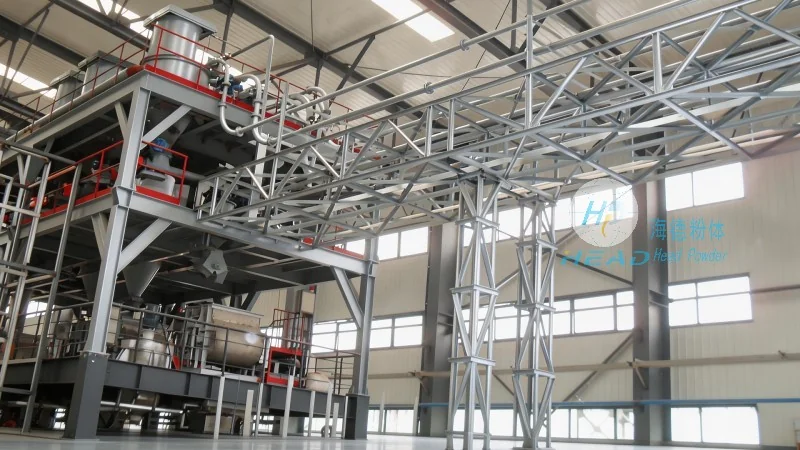
Operation Process of the Lightweight Calcium Carbonate Pneumatic Conveying Line
The operation of a lightweight calcium carbonate pneumatic conveying line involves several sequential steps that ensure smooth and continuous material transport. First, the material is stored in a hopper, which is equipped with a level indicator to monitor the material volume. The feeder, typically a rotary valve or a screw feeder, regulates the flow of calcium carbonate from the hopper into the conveying line. As the feeder opens, the material is drawn into the pipe by the airflow generated by the compressor.
The compressor, usually an air-driven or electric motor-driven unit, produces the necessary pressure and volume of air to move the material. The air is introduced into the conveying line at a specific pressure, creating a flow that propels the calcium carbonate particles forward. The conveying line is designed with appropriate bends and elbows to guide the material to the desired destination, such as a storage silo or a processing unit. The receiver, located at the end of the line, collects the material and allows it to settle before being discharged.
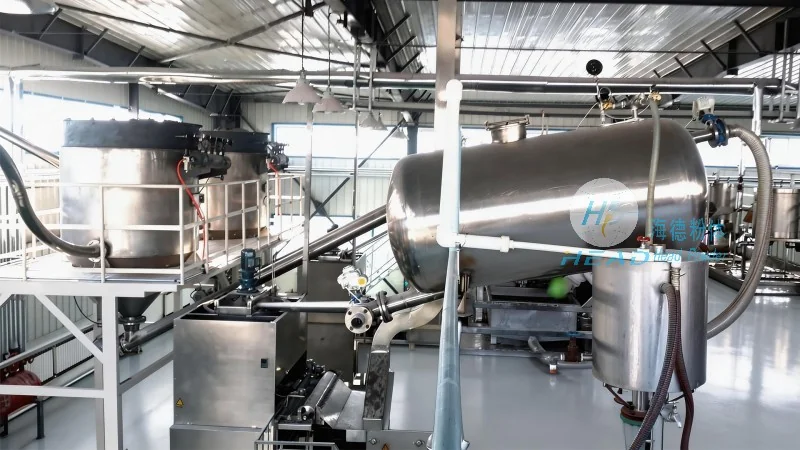
Working Principle of the System
The working principle of the pneumatic conveying system for lightweight calcium carbonate is based on the principle of fluidization and drag. When air is introduced into the conveying line at a high velocity, it creates a turbulent flow that lifts the calcium carbonate particles and carries them along the pipe. The particles are suspended in the air stream, moving as a dense phase or a dilute phase depending on the system design and operating conditions. The dense phase conveying, also known as positive pressure conveying, uses higher air velocities and pressures to transport the material in a compact form, reducing the risk of clogging and improving efficiency. The dilute phase conveying, or negative pressure conveying, uses lower air velocities and pressures, suitable for longer distances or more delicate materials.
Key Components and Their Functions
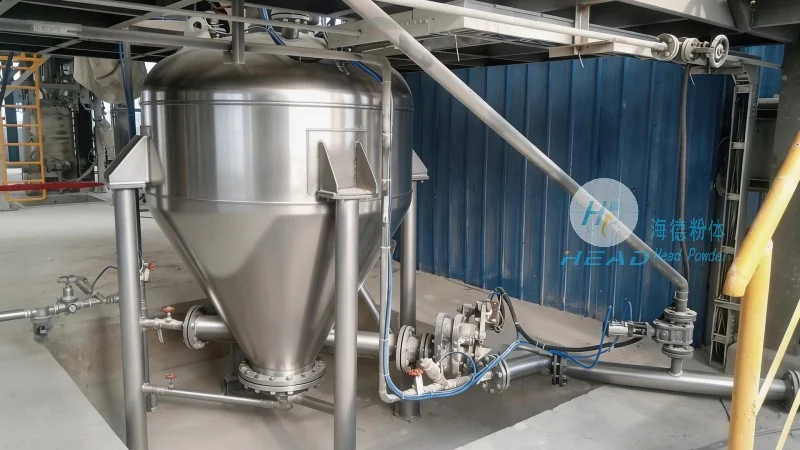
Each component of the pneumatic conveying line plays a critical role in the overall operation. The material hopper serves as a storage vessel, providing a consistent supply of calcium carbonate to the feeder. The feeder controls the rate of material discharge, ensuring a steady flow into the conveying line. The compressor generates the necessary air pressure and volume, while the conveying line transports the material from the feeder to the receiver. The receiver collects the material and allows it to settle, preventing air leakage and maintaining system efficiency. Additionally, filters and cyclones may be used to separate any entrained air from the material, ensuring a clean and dry product.
Advantages of Pneumatic Conveying for Lightweight Calcium Carbonate
Pneumatic conveying systems offer several advantages when handling lightweight calcium carbonate. Firstly, they minimize dust generation, which is crucial for maintaining a clean and safe working environment. Unlike belt conveyors, which can produce significant dust, pneumatic systems contain the material within the pipe, reducing the risk of inhalation or contamination. Secondly, these systems are highly flexible, allowing for changes in the material flow path without major modifications. This flexibility is particularly beneficial in industrial settings where production lines may need to be reconfigured. Thirdly, pneumatic conveying reduces maintenance costs compared to traditional methods, as there are fewer moving parts and less wear and tear on the equipment. Finally, the system is energy-efficient, as the air used for conveying can be recycled and reused, reducing energy consumption and operational costs.
Conclusion
In conclusion, the operation process and working principle of a lightweight calcium carbonate pneumatic conveying line are designed to provide an efficient, safe, and reliable method for transporting this material. With its ability to handle fine powders, minimize dust, and adapt to various industrial needs, the pneumatic conveying system is a preferred choice for many industries. Shandong HeadPowder Engineering Co., Ltd. specializes in providing customized pneumatic conveying solutions that meet the specific requirements of clients, ensuring optimal performance and long-term operational success.