

Principle and Working Scene Characteristics of Sodium Hydroxide Material Pneumatic Conveying Line
Shandong HeadPowder Engineering Co., Ltd., a professional manufacturer based in Shandong, China, specializes in the design, production, and installation of advanced material handling systems. Among their core offerings is the Sodium Hydroxide Material Pneumatic Conveying Line, a sophisticated solution tailored for the efficient and safe transportation of sodium hydroxide, a widely used chemical in various industrial applications.
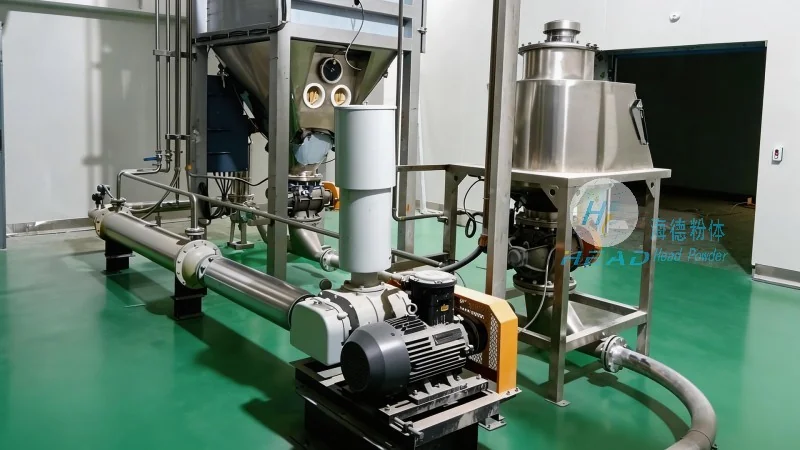
Overview of the Pneumatic Conveying System
The Sodium Hydroxide Material Pneumatic Conveying Line is engineered to handle the unique challenges associated with transporting sodium hydroxide, such as its hygroscopic nature, potential for dust generation, and the need for controlled temperature and pressure conditions. This system integrates state-of-the-art components, including high-efficiency blowers, specialized pipelines, and advanced control systems, to ensure reliable and consistent performance in demanding environments.
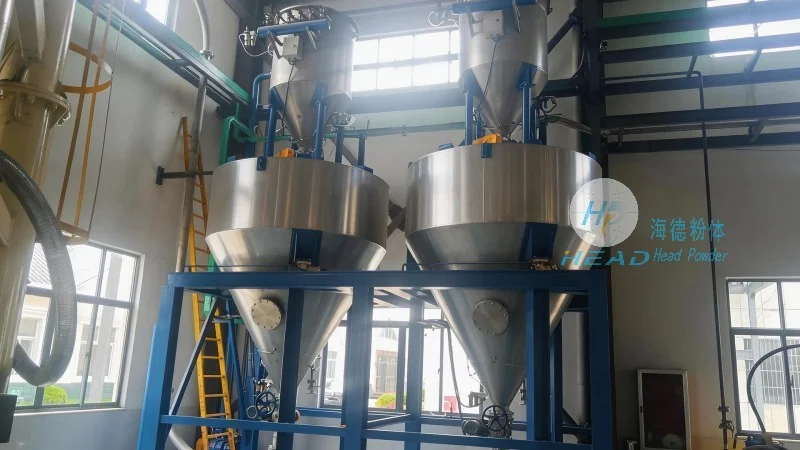
Principle of Operation
The core principle of the pneumatic conveying line is the use of compressed air or other gas to transport solid materials through a pipeline. In the case of sodium hydroxide, the system operates by creating a high-velocity airflow that lifts and propels the material particles through the pipeline. The design incorporates features like positive or negative pressure systems, depending on the specific application requirements, to optimize the conveying efficiency and minimize material degradation. The system also includes components such as feeders, cyclone separators, and dust collectors to manage the material flow and ensure proper separation of the conveyed material from the air.
Key Working Scene Characteristics
The Sodium Hydroxide Material Pneumatic Conveying Line is particularly suited for industrial settings where sodium hydroxide is processed or used, such as chemical plants, pharmaceutical manufacturing facilities, and water treatment facilities. Its design allows for seamless integration into existing production lines, enabling continuous material flow without the need for manual handling. The system is also adaptable to different operational scenarios, including long-distance conveying, vertical and horizontal transport, and handling of varying material densities and particle sizes.
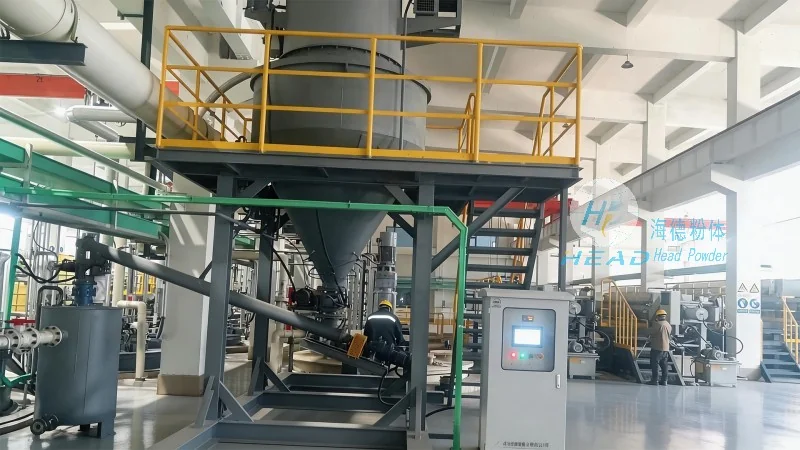
Advantages in Practical Applications
One of the primary advantages of this pneumatic conveying line is its ability to maintain the quality and integrity of sodium hydroxide during transportation. By minimizing exposure to air and moisture, the system reduces the risk of caking or degradation, which is critical for maintaining the material's effectiveness in downstream processes. Additionally, the system offers enhanced safety features, such as enclosed pipelines and automated control systems, to prevent dust emissions and ensure compliance with industrial safety regulations. The flexibility of the design also allows for easy scaling and customization to meet the specific needs of different production capacities and operational conditions.