

Common Rice Husk Ash Conveying Methods: A Comparison of Advantages and Disadvantages
When it comes to transporting rice husk ash, selecting the right conveying method is crucial for efficiency, cost-effectiveness, and operational safety. As a leading provider in the field, Shandong HeadPowder Engineering Co., Ltd. (hereinafter referred to as HeadPowder) offers insights into the common methods used for rice husk ash transportation, along with their respective advantages and disadvantages. This article aims to provide a comprehensive overview to help industries make informed decisions.
Overview of Rice Husk Ash and Conveying Challenges
Rice husk ash is a byproduct of the rice milling process, often used as a raw material in construction, agriculture, and industrial applications. Its handling requires specialized equipment due to its lightweight, dusty nature, and potential for creating dust clouds. Conveying systems must be designed to minimize material loss, prevent contamination, and ensure compliance with environmental regulations. The choice of conveying method depends on factors such as material characteristics, distance, volume, and budget.
1. Pneumatic Conveying System
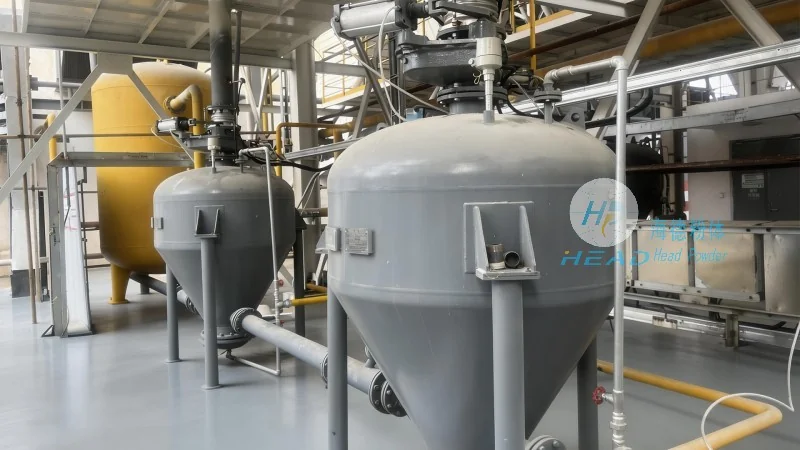
Pneumatic conveying, also known as air conveying, is a popular method for transporting rice husk ash due to its ability to handle fine powders and abrasive materials. This system uses compressed air to move the material through a pipeline. There are two main types: positive pressure and negative pressure. Positive pressure systems push the material forward with air, while negative pressure systems draw the material in using a vacuum. The advantages of pneumatic conveying include high efficiency, minimal material degradation, and the ability to transport materials over long distances without the need for multiple transfer points. However, it has significant drawbacks, such as high energy consumption, the need for specialized equipment, and potential for air leakage, which can lead to dust emissions and increased maintenance costs.
2. Screw Conveyor (Auger Conveyor)
Screw conveyors, or auger conveyors, are widely used for transporting bulk materials like rice husk ash in horizontal or slight incline applications. They consist of a rotating screw inside a tube, which pushes the material forward. Screw conveyors are known for their simplicity, low cost, and ability to handle a wide range of materials. They are particularly effective for short to medium distances and moderate volumes. The main advantages include low maintenance, minimal space requirements, and the ability to operate in various environments. However, they have limitations when dealing with very fine powders, as the material can stick to the screw and cause blockages. Additionally, screw conveyors are not suitable for long vertical lifts or high-temperature applications.
3. Belt Conveyor
Belt conveyors are a common choice for transporting rice husk ash over longer distances and at higher volumes. They consist of a continuous belt that moves over rollers or pulleys, carrying the material from one point to another. Belt conveyors are ideal for horizontal and slightly inclined routes, offering high capacity and efficiency. The advantages include high throughput, low energy consumption per tonne, and the ability to transport materials over long distances without intermediate transfers. They are also suitable for outdoor applications and can be easily integrated with other processing equipment. The disadvantages include higher initial costs compared to other methods, the need for regular maintenance to prevent belt wear and tear, and potential for material spillage if the belt is not properly aligned or maintained.
4. Hydraulic Conveying
Hydraulic conveying systems use water or other liquids to transport rice husk ash. The material is mixed with water to form a slurry, which is then pumped through pipelines. This method is particularly effective for transporting fine powders and abrasive materials over long distances. The advantages of hydraulic conveying include high efficiency, the ability to handle high volumes, and minimal dust generation. However, it has significant drawbacks, such as the need for additional equipment to separate the material from water, higher operating costs due to water usage and disposal, and potential environmental concerns related to water contamination. Hydraulic systems are also less common in industrial settings due to their complexity and maintenance requirements.
5. Bucket Elevator
Bucket elevators are vertical conveying systems that use buckets attached to a chain or belt to lift and transport materials. They are commonly used for vertical transport of rice husk ash, especially in applications where the material needs to be moved from a lower to a higher level. The advantages of bucket elevators include high vertical lifting capacity, minimal material degradation, and the ability to operate in dusty environments without the need for additional dust control measures. However, they have limitations when dealing with very fine powders, as the material can fall through the buckets and cause blockages. Additionally, bucket elevators are not suitable for horizontal transport and have higher initial costs compared to other vertical lifting methods.
Comparative Analysis and Recommendations
When choosing a conveying method for rice husk ash, it is essential to consider the specific requirements of the application. Pneumatic conveying is ideal for fine powders and long-distance transport, while screw conveyors are suitable for short to medium distances and moderate volumes. Belt conveyors are best for high-volume, long-distance horizontal transport, and bucket elevators are effective for vertical lifting. Hydraulic conveying is less common but can be used for high-volume, long-distance transport of fine materials. The choice should also consider factors such as energy consumption, maintenance costs, and environmental impact. For example, if the primary concern is minimizing dust emissions and material degradation, pneumatic conveying may be the best option. If cost and simplicity are the main priorities, a screw conveyor might be more appropriate. Ultimately, the optimal conveying method depends on a thorough evaluation of the material characteristics, operational needs, and budget constraints.
Conclusion
Transporting rice husk ash efficiently and safely requires careful consideration of the conveying method. Shandong HeadPowder Engineering Co., Ltd. specializes in providing customized conveying solutions tailored to the specific needs of clients. By understanding the advantages and disadvantages of each method, industries can select the most suitable system to enhance productivity, reduce costs, and ensure compliance with environmental regulations. Whether it's pneumatic, screw, belt, hydraulic, or bucket elevators, the right choice will depend on the unique requirements of the application. HeadPowder's expertise in rice husk ash handling ensures that clients receive reliable and effective conveying systems that meet their operational goals.