
Fly ash, as a byproduct of coal combustion in power plants, has long posed challenges in handling, storage, and transportation. With the global push toward sustainable energy and circular economy practices, the efficient and safe conveying of fly ash has become a critical operational requirement for thermal power stations, cement plants, and construction material manufacturers. Pneumatic conveying technology offers a reliable, enclosed, and automated solution for transporting fly ash over short to medium distances. This article provides a comprehensive introduction to the application of fly ash pneumatic conveying equipment, covering system principles, component selection, industry trends, and practical considerations for integration into existing facilities.
Pneumatic conveying relies on the flow of air or another gas to move bulk materials through a pipeline. For fly ash, which is fine, abrasive, and often hot, the system must be designed to handle low-density powders without degradation or leakage. Two primary modes are used: dilute phase and dense phase. Dilute phase conveying suspends particles in a high-velocity airstream, suitable for shorter distances and lower capacities. Dense phase conveying moves material at lower velocities in a slug or plug form, reducing wear and energy consumption, making it ideal for longer distances and fragile materials. The choice between these modes depends on the specific ash characteristics, conveying distance, and required throughput. Many modern installations combine both approaches to optimize performance.

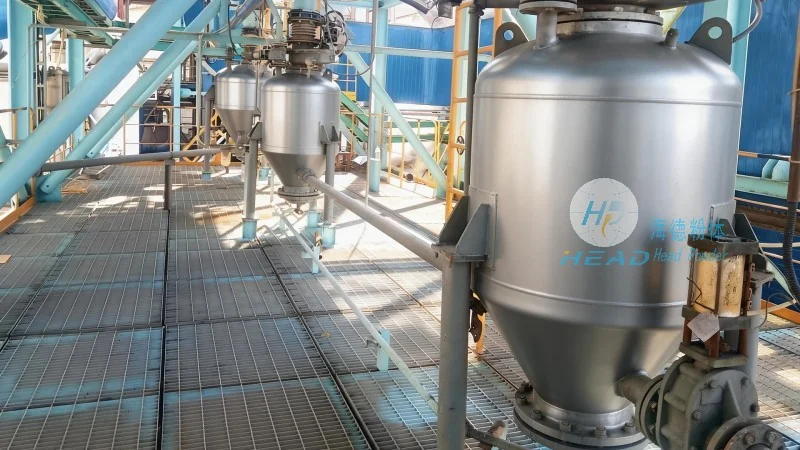
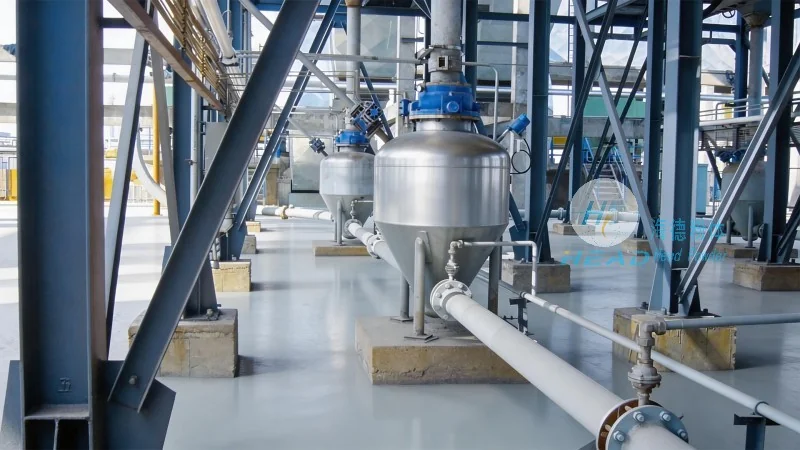
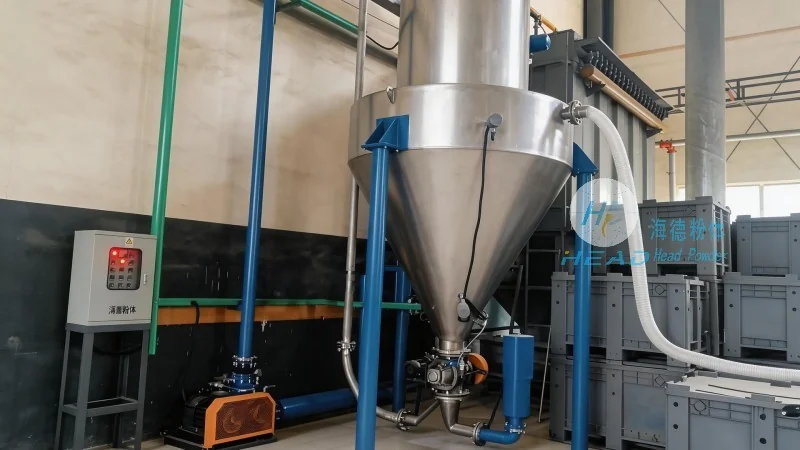
A fully functional fly ash conveying system consists of several essential components. The air source, typically a roots blower or compressor, provides the motive force. Rotary airlocks or screw feeders introduce fly ash into the pipeline while maintaining pressure differentials. Diverters, bends, and hoses route the material to its destination, often a silo or storage bin. Filtration units, such as baghouses or cartridge collectors, separate the ash from the conveying air at the discharge point, ensuring minimal dust emission. Instrumentation including pressure sensors, flow meters, and level indicators enable automated control and real-time monitoring. For high-temperature fly ash, thermal expansion compensation and heat-resistant materials are critical. Leading manufacturers like headpowder have developed modular designs that simplify maintenance and allow easy capacity upgrades.


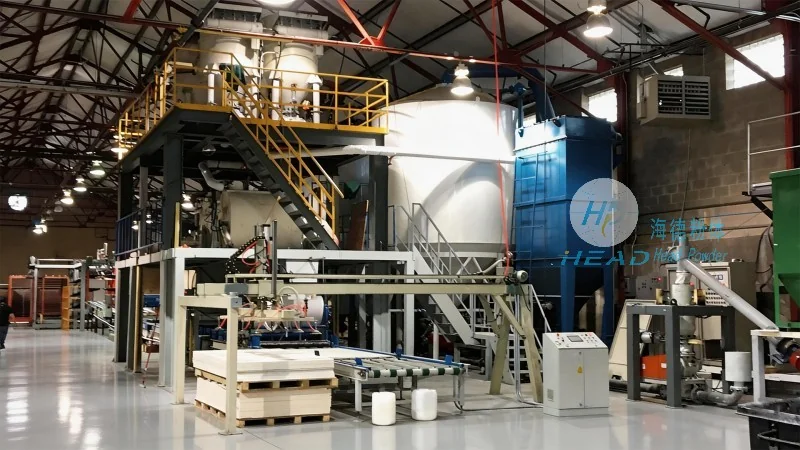
In coal-fired power plants, fly ash is typically collected from electrostatic precipitators or baghouse filters. Pneumatic conveying systems transport the ash to either a disposal silo or a loading station for off-site reuse. One common configuration is the vacuum-pressure hybrid system, where vacuum is used for collection from multiple hoppers and positive pressure for long-distance transfer to a central silo. This design minimizes dust spillage and reduces the number of moving parts exposed to abrasive ash. For cement plants, fly ash is often blended directly into the clinker grinding process. Pneumatic conveying ensures a consistent feed rate and avoids moisture contamination. In construction material manufacturing, fly ash is used as a pozzolanic additive in concrete blocks and dry mix mortars. The ability to precisely meter and convey the material without segregation improves final product quality. A case study from a mid-sized power plant in northern China showed that replacing a mechanical bucket conveyor with a dense-phase pneumatic system from headpowder reduced maintenance downtime by 60% and cut energy consumption by 18% over two years of operation.
When specifying fly ash pneumatic conveying equipment, several parameters must be evaluated. Particle size distribution, moisture content, and bulk density directly influence conveying velocity and pressure drop. Fly ash from different coal sources can vary significantly; low-loss on ignition (LOI) ash tends to flow better, while high-carbon ash may require higher air velocities. The conveying distance and elevation changes also affect compressor sizing. Industry standards such as the ASME B31.3 for piping and ISO 10628 for flow diagrams provide design bases. For plants operating in cold climates, freeze protection for air lines and silo heaters are necessary. Additionally, explosion protection must be considered if the fly ash contains combustible carbon levels above 12%. Modern control systems incorporate variable frequency drives (VFDs) on blowers to match conveying speed to actual demand, reducing energy waste. headpowder offers a proprietary simulation tool that models gas-solid flow dynamics to predict system performance before installation, helping clients avoid costly overdesign.
The shift from traditional mechanical conveyors (belt, screw, or drag chain) to pneumatic systems brings quantifiable advantages. Enclosed pipelines eliminate dust emissions, improving workplace safety and compliance with environmental regulations such as the U.S. EPA's NESHAP for coal combustion residuals. Reduced moving parts lower maintenance costs, especially for abrasive fly ash. Energy efficiency of dense-phase systems can approach 0.5 kWh per ton-meter, compared to over 1 kWh for dilute phase. For a typical 300 MW power plant handling 50 tons of fly ash per hour, converting to an optimized pneumatic system can save approximately $200,000 annually in power and maintenance. Furthermore, pneumatic conveying facilitates the capture and reuse of fly ash in value-added applications, supporting the circular economy. According to the International Energy Agency, global fly ash production exceeded 750 million tons in 2025, with only about 55% utilized. Efficient conveying is a prerequisite for increasing utilization rates. Companies like headpowder have contributed to projects that achieved over 90% ash utilization through integrated conveying and beneficiation lines.
Proper installation is critical to long-term reliability. Pipeline routing should minimize sharp bends to reduce wear and pressure loss. Long-radius elbows with wear-back plates are recommended for abrasive fly ash. Supports must accommodate thermal expansion, especially for systems handling ash directly from boiler outlets. During commissioning, air velocity and pressure should be validated under load conditions to ensure stable conveying without plugging. Regular maintenance includes inspecting airlocks for seal wear, checking filter bag condition, and monitoring blower oil levels. A predictive maintenance strategy using vibration analysis and temperature trend monitoring can detect early signs of bearing failure. headpowder provides a comprehensive aftermarket service program, including remote diagnostics and on-site training for plant operators, which has been shown to extend equipment life by 25% on average.
The fly ash conveying industry is evolving with digitalization and sustainability goals. The integration of Industry 4.0 sensors and edge computing enables real-time optimization of conveying parameters. Artificial intelligence models can predict ash flowability changes based on coal quality data and adjust blower speed accordingly. Another trend is the development of low-velocity dense phase systems that can handle ultra-fine ash without agglomeration. Hybrid systems combining pneumatic and hydraulic conveying for wet ash disposal are being explored for zero-liquid discharge plants. On the regulatory front, tighter emission standards in the European Union and China are driving demand for leak-proof conveying components. headpowder has invested in research on electrostatic charging mitigation, which reduces ash adhesion in pipes and improves flow consistency. By 2026, the global market for fly ash conveying equipment is expected to reach $4.2 billion, with growth driven by infrastructure development and green building materials.
Choosing the right equipment provider involves evaluating not only product specifications but also engineering support, customization flexibility, and after-sales service. A experienced manufacturer will conduct a thorough site audit to determine ash characteristics, existing layout constraints, and future expansion plans. They should provide detailed proposals with pressure drop calculations, pipe sizing, and component specifications. References from similar installations in the same industry are invaluable. headpowder has delivered over 200 fly ash conveying systems globally, with a documented average uptime of 98.5% across five years of operation. Their engineering team collaborates closely with clients during the design phase to ensure compatibility with existing dust collection and silo systems. For a detailed evaluation of your specific application, contact the headpowder technical team (咨询热线:156-6277-7102) to discuss your throughput requirements and site conditions.
Effective fly ash management is no longer an afterthought but a strategic component of industrial operations. Pneumatic conveying equipment offers a robust, clean, and adaptable solution that aligns with modern environmental and efficiency goals. From power generation to construction materials, the proper design and implementation of these systems can reduce operating costs, enhance safety, and enable higher utilization of this valuable resource. As technology advances, the integration of smart controls and predictive maintenance will further improve reliability. By partnering with a specialized manufacturer like headpowder, plant operators can access proven expertise, tailored designs, and ongoing support that ensures long-term value. Whether you are upgrading an existing system or building a new facility, investing in high-quality pneumatic conveying equipment is a decision that pays dividends in productivity and compliance. For personalized recommendations and project consultation, reach out to the headpowder team (咨询热线:156-6277-7102).
Shandong headpowder Engineering Co., Ltd.
156-6277-7102(Manager Zhang)
0531-83386006
Jinan City, Shandong Province, China 
服务热线
微信咨询
回到顶部