

Polyvinyl Chloride Chlorination Pneumatic Conveying Technology: Principles, Applications, and Development Trends
Polyvinyl chloride (PVC) chlorination is a chemical process that introduces chlorine atoms into the polymer chain, resulting in a modified material with enhanced properties. This modification improves the material's resistance to chemicals, UV radiation, and thermal degradation, making it suitable for demanding applications. Pneumatic conveying, a method of transporting bulk solids using air or gas as the conveying medium, offers advantages such as non-contact handling, reduced contamination, and the ability to transport materials over long distances. The combination of chlorinated PVC and pneumatic conveying has emerged as a key technology in industrial material handling, providing efficient and reliable solutions for transporting modified PVC materials. This article delves into the principles, practical applications, and future trends of this technology, highlighting its significance in modern industrial processes.
Principles of Pneumatic Conveying for Chlorinated PVC
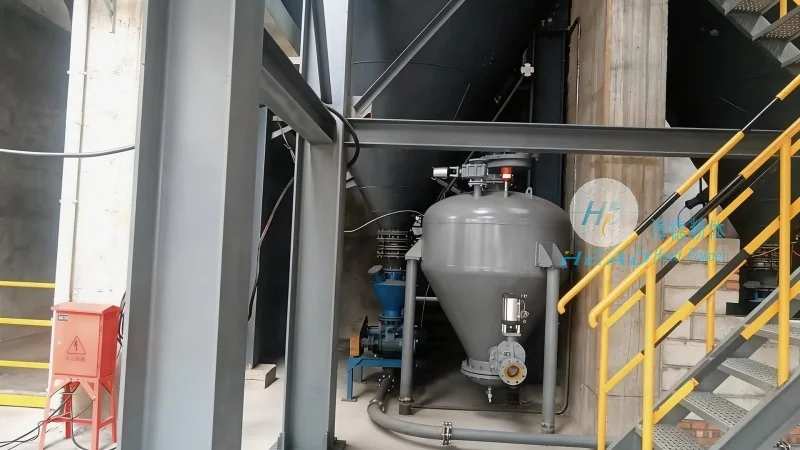
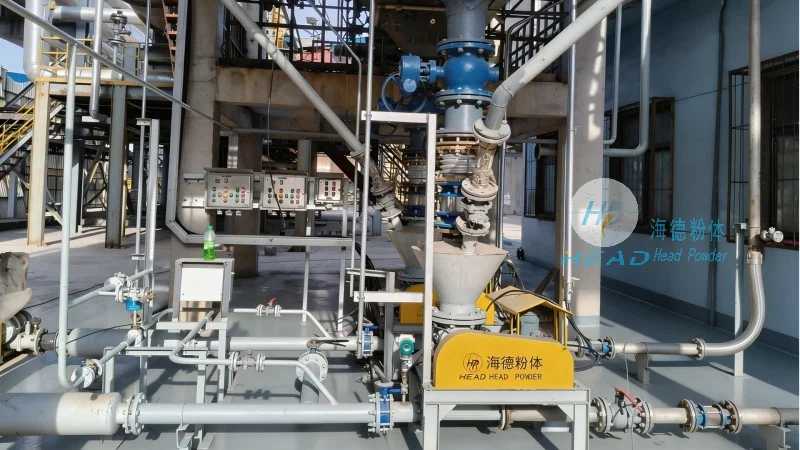
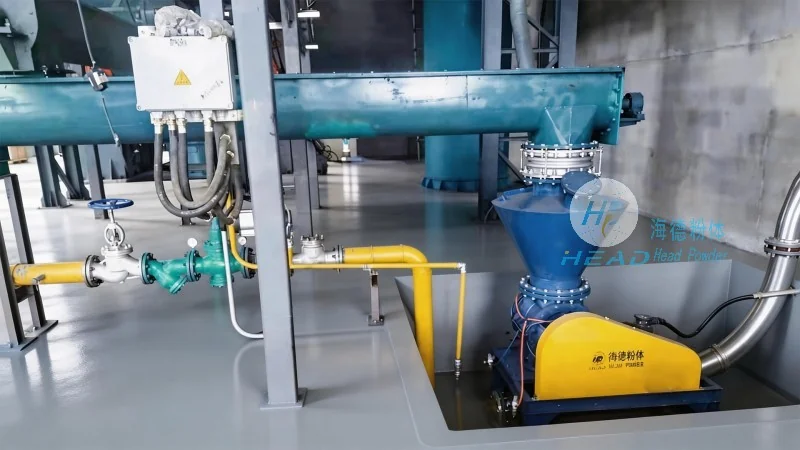
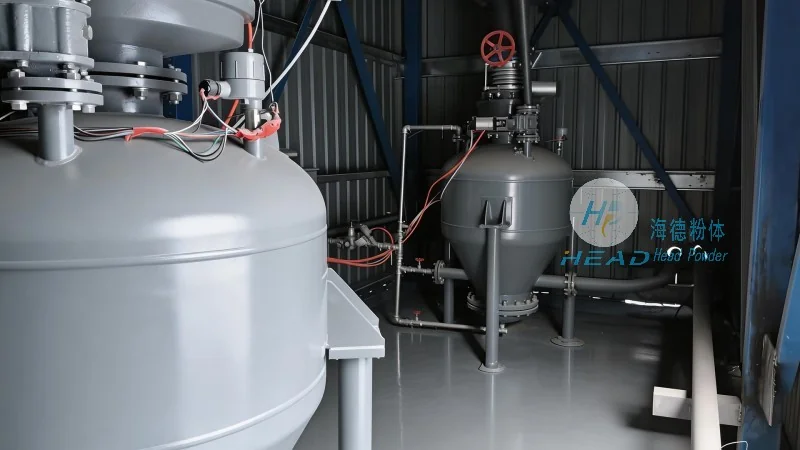
The core principle of pneumatic conveying involves creating a flow of air or gas that lifts and transports particulate materials through a pipeline. For chlorinated PVC, which is typically processed as a powder or granule, the conveying system must be designed to accommodate its specific physical characteristics. Key components of a pneumatic conveying system include the material feed hopper, air source (blower or compressor), conveying line, and discharge equipment. The system operates by generating sufficient air velocity to overcome the gravitational force acting on the PVC particles, ensuring stable and continuous flow. The choice between dilute-phase and dense-phase conveying depends on factors such as particle size, density, and the required material throughput. Dilute-phase systems use low air-to-material ratios, suitable for fine powders, while dense-phase systems employ higher air pressures to move larger particles with less air. The chlorination process affects the PVC's surface properties, influencing friction and flow behavior within the conveying line. Proper air pressure and flow rate management are critical to prevent material degradation, blockages, or excessive energy consumption. Additionally, the system must account for the potential for PVC particles to agglomerate, which can impact conveying efficiency and require anti-agglomeration measures.
Applications of Chlorinated PVC Pneumatic Conveying in Industry
Chlorinated PVC, due to its improved durability and chemical resistance, is widely utilized in various industrial sectors. Pneumatic conveying systems are integral to the efficient transport of chlorinated PVC powders and granules in manufacturing processes. In the construction industry, chlorinated PVC is used to produce pipes, fittings, and other building components. Pneumatic conveying facilitates the transport of raw chlorinated PVC from storage silos to production lines, ensuring consistent material supply and reducing downtime. The automotive industry relies on chlorinated PVC for manufacturing seals, gaskets, and electrical insulation components. Pneumatic systems deliver the material to manufacturing facilities, maintaining product purity by minimizing contact with external contaminants. In the chemical and pharmaceutical industries, chlorinated PVC is processed as an additive or raw material for specialized applications. Pneumatic conveying helps maintain the integrity of the material during transport, preventing contamination and ensuring compliance with industry standards. The versatility of chlorinated PVC also extends to applications in flooring, protective coatings, and electrical insulation, where pneumatic systems enable efficient material handling and processing.