
Quartz sand, as a fundamental industrial material, finds extensive application in the manufacturing of glass, ceramics, foundry molds, water filtration media, and high-purity silicon products. The efficient and reliable handling of quartz sand from raw material storage to processing points is a critical link in the production chain. Traditional mechanical conveying methods, while common, often face challenges such as high maintenance costs, product contamination, dust emissions, and limitations in layout flexibility. Pneumatic conveying, which utilizes a gas stream to transport bulk materials through pipelines, has emerged as a preferred technology for quartz sand handling in modern industrial facilities. The global pneumatic conveying systems market was estimated to reach approximately USD 6.2 billion in 2026, driven by the rising demand for automation and dust-free material transport in industries like glass manufacturing, solar panel production, and construction. Within this landscape, the selection of an appropriate pneumatic conveying system for quartz sand requires a thorough understanding of material properties, flow characteristics, system design parameters, and operational constraints. Headpowder, as a specialized engineering provider with years of application experience, offers tailored solutions that address these technical nuances while ensuring energy efficiency, product integrity, and long-term reliability. This article provides a comprehensive technical overview of quartz sand pneumatic conveying, covering key principles, system configurations, component selection, and practical engineering solutions, helping readers make informed decisions for their specific production environments.

Before designing a pneumatic conveying system for quartz sand, it is essential to characterize the material's physical and flow properties. Quartz sand is typically a free-flowing, granular material with a bulk density ranging from 1,200 to 1,600 kg/m³, depending on particle size distribution and moisture content. Particle sizes commonly fall between 0.1 mm and 2.0 mm, with typical median diameters around 0.3–0.8 mm for glass-grade sand. However, quartz sand can also contain fine dust particles below 50 microns, which significantly affect conveying behavior. Key properties influencing system design include:

Understanding these parameters allows engineers to select the appropriate conveying regime—dilute phase (high velocity, low pressure) or dense phase (low velocity, high pressure)—and to calculate the required air mass flow, pipeline diameter, and power consumption accurately. Headpowder employs advanced material characterization methods, including shear cell testing and fluidization analysis, to quantify these properties before system design, ensuring that the solution matches the customer's specific quartz sand grade.

Two primary pneumatic conveying modes are available for quartz sand: dilute-phase and dense-phase. Each offers distinct advantages and limitations, and the choice depends on factors such as conveying distance, required capacity, particle degradation tolerance, and budget.
Dilute-phase conveying operates at high gas velocities (typically 20–30 m/s) and low solids-to-air ratios. Quartz sand particles are suspended in the air stream and transported at relatively high speeds. This method is simple, cost-effective for short distances (up to 200–300 meters), and suitable for applications where slight particle attrition is acceptable. However, the high velocity increases pipe wear, dust generation, and energy consumption. For quartz sand, dilute-phase is commonly used for unloading bulk tankers or transferring material from storage silos to day bins when distances are moderate. The system typically employs positive displacement blowers or centrifugal fans, with a rotary valve or venturi feeder at the inlet.
Dense-phase conveying operates at low gas velocities (3–10 m/s) and high solids-to-air ratios, often using a slug or plug flow regime. A high-pressure air supply (up to 8–10 bar) pushes compacted plugs of quartz sand through the pipeline. The gentle flow minimizes particle degradation, dust generation, and pipe erosion, making it ideal for fragile grades of quartz sand or when maintaining particle size distribution is critical. Dense-phase systems can convey over long distances (300–1,000 meters) with lower specific energy per ton of material. However, they require more sophisticated controls, higher initial investment, and careful design to prevent pipeline blockages. For quartz sand with moisture content above 1%, dense-phase is generally more reliable because the lower velocity reduces air moisture condensation and product agglomeration.
Headpowder has delivered numerous dense-phase quartz sand systems for glass manufacturing plants where material integrity is paramount, achieving conveying capacities exceeding 40 tons per hour over 600 meters with less than 0.5% particle breakage. Selection between these regimes is not always binary—hybrid systems combining both principles are sometimes employed for multi-point distribution networks.
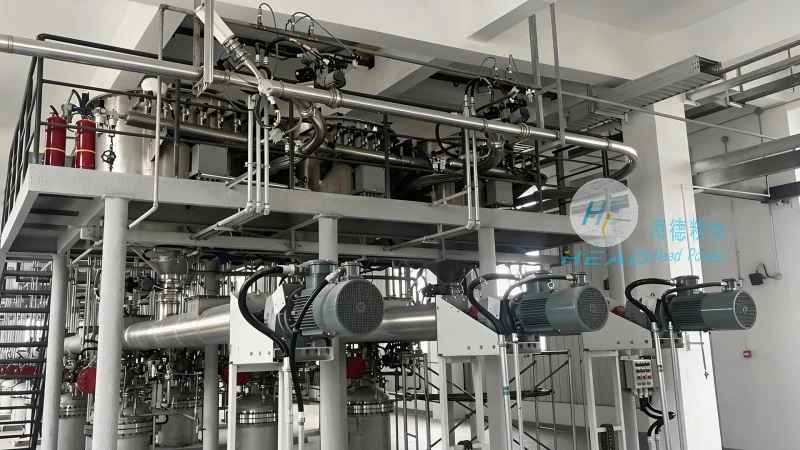
A well-designed pneumatic conveying system for quartz sand comprises several critical components that must be selected and sized correctly to ensure reliable operation.
Air supply and compression unit: Positive displacement blowers (Roots-type) are standard for dilute-phase systems, delivering moderate pressures up to 1 bar. For dense-phase conveying, screw compressors or reciprocating compressors providing 4–10 bar are used. Oil-free air is recommended to avoid contamination of quartz sand, especially for high-purity applications like solar-grade silicon feedstock. Headpowder specifies rotary lobe blowers with sound enclosures and variable frequency drives to match air supply with actual demand, reducing energy waste.
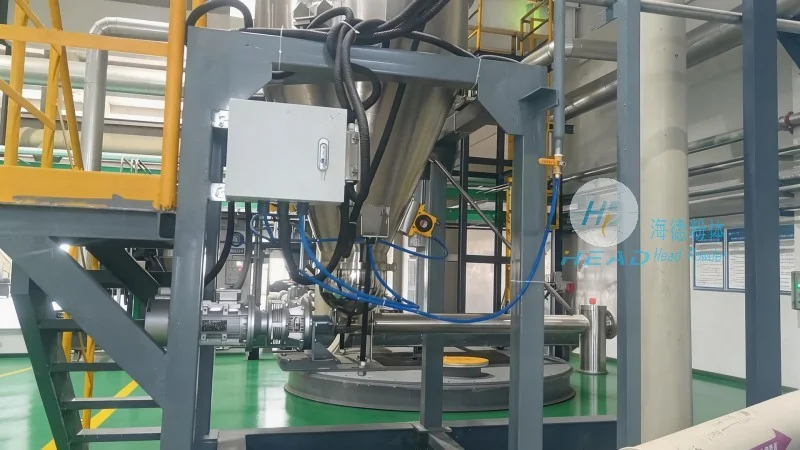
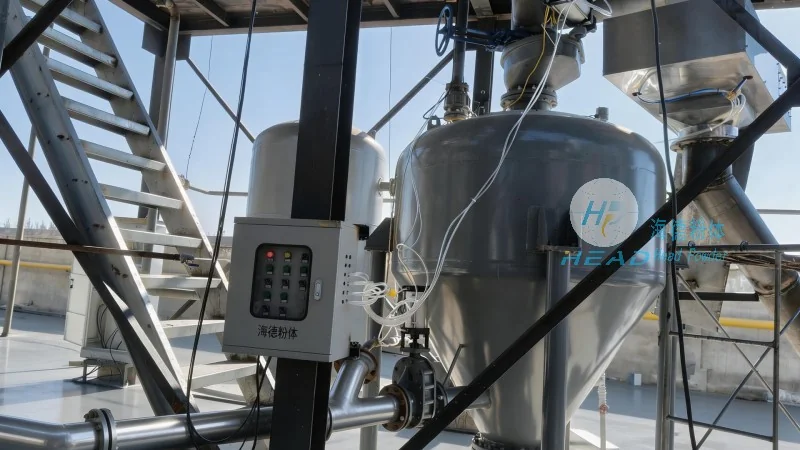
Feeding devices: Rotary airlocks (rotary valves) are the most common feeders for dilute-phase systems. They provide a positive seal between the high-pressure conveying line and atmospheric pressure while metering the quartz sand at a controlled rate. For abrasive quartz sand, the rotor vanes should be made from hardened materials or fitted with replaceable wear inserts. In dense-phase systems, blow tanks (pressure vessels) are used. A typical blow tank consists of a vessel with a top inlet for material loading and a bottom outlet connected to the conveying pipe; compressed air is introduced to fluidize and push the material. Headpowder offers blow tanks with multiple discharge configurations—top discharge, bottom discharge, and fluidized bottom discharge—to handle different sand grades and moisture levels.
Piping and bends: Abrasion is the primary concern when conveying quartz sand. Straight pipe sections should be constructed from wear-resistant materials such as ceramic-lined carbon steel (with alumina or zirconia inserts), hardened 400 Brinell steel, or polyurethane-lined pipe for lower pressure systems. Bends are especially prone to erosion; custom-fabricated mitered bends, long-radius bends, or impact-resistant blind tee bends are recommended. Headpowder uses proprietary ceramic-lined bends with a service life of 12–18 months under continuous operation, significantly reducing maintenance downtime compared to standard steel bends.
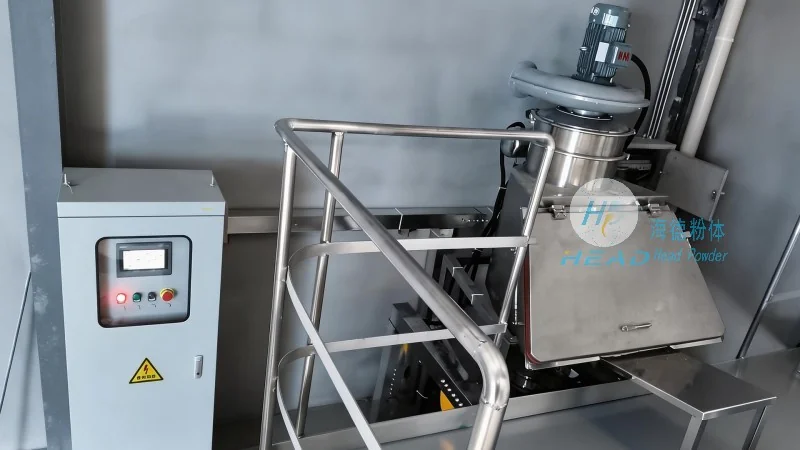
Separation and filtration equipment: At the destination, the quartz sand must be separated from the conveying air. Cyclone separators are used for bulk separation of coarse particles, achieving 95%–98% efficiency. Baghouse filters or cartridge filters are then employed to capture fine dust particles, ensuring air emissions comply with environmental regulations. Reverse-jet pulse cleaning systems maintain filter performance without interrupting operation. For food-grade or high-purity quartz sand, stainless steel filter housings with HEPA-grade final filters are available.
Control system: Modern pneumatic conveying systems rely on PLC-based controls with HMI interfaces for monitoring pressure, flow, temperature, and material level. Sensors such as pressure transmitters at critical points, flow meters (e.g., venturi or thermal mass), and level indicators in silos provide real-time data for automatic adjustments. Headpowder integrates IoT-ready controllers that allow remote diagnostics and predictive maintenance alerts, reducing unplanned downtime.
Several engineering parameters must be carefully evaluated during system design to balance performance, cost, and reliability.
Conveying distance and elevation: Longer distances and higher lifts require higher air pressures and velocities. For quartz sand, a rule of thumb is that dilute-phase systems can handle up to about 300 meters horizontally with a modest lift of 20–30 meters, while dense-phase systems can exceed 1,000 meters. Headpowder's project database includes a case where a dense-phase system conveyed quartz sand 850 meters with a total vertical lift of 55 meters for a leading float glass manufacturer, achieving a capacity of 35 t/h.
Pipeline diameter and velocity: Pipe diameter directly affects air velocity and pressure drop. Too small a diameter causes high velocity and excessive wear; too large a diameter leads to low velocity and particle settling. For dilute-phase quartz sand, velocities of 20–25 m/s are typical, while dense-phase operates at 4–8 m/s. Headpowder uses computational fluid dynamics (CFD) simulations to optimize pipe sizing for each specific project, accounting for the unique particle size distribution and pipe routing.
Air-to-material ratio: This ratio (kg air per kg solids) is a key design parameter. For dilute-phase conveying of quartz sand, a ratio of 1:5 to 1:15 is common; for dense-phase, ratios of 1:30 to 1:80 can be achieved. Lower ratios mean higher energy efficiency but also higher risk of pipeline blockage if not carefully controlled. Dynamic pressure sensors and automatic purge cycles are used to prevent and clear blockages.
System integration with existing facilities: Retrofitting a pneumatic conveying system into an existing plant layout often requires careful routing to avoid structural obstacles, headroom constraints, and interference with other equipment. Headpowder offers on-site survey services, including laser scanning of the facility, to create precise 3D models and ensure collision-free pipe routing.
Even well-designed systems may encounter operational issues over time. The most frequent challenges include:
To support customers, Headpowder provides comprehensive after-sales services, including performance audits, spare parts inventory management, and remote technical support. A recent example involved troubleshooting a glass sand conveying system in a container glass plant where recurring blockages were caused by elevated moisture during rainy seasons. By installing a heated air intake and upgrading the blow tank fluidization nozzles, the plant achieved 99.5% uptime over the following year.
Headpowder specializes in the design, fabrication, and installation of pneumatic conveying systems for bulk materials, with a particular focus on abrasive and fragile powders and granules like quartz sand. Over the past decade, the company has completed more than 200 projects globally, serving industries from glass manufacturing to specialty chemicals. Our engineering team follows a systematic methodology: starting with material characterization, then performing system simulation using proprietary software, followed by component selection from trusted global suppliers, and ending with factory acceptance testing and field commissioning. Each system is backed by a performance guarantee and a comprehensive training program for client operators. For example, a recent project for a quartz sand processing plant in Shandong involved a dual-line dense-phase system capable of conveying two different sand grades to four separate process bins with automatic switching. The system achieved an energy consumption of 0.8 kW·h per ton of material, a 30% improvement over the client's previous mechanical conveyor. By combining deep technical knowledge with hands-on industry experience, Headpowder delivers solutions that not only meet current production requirements but also allow for future expansion and automation upgrades. For any inquiries regarding quartz sand pneumatic conveying systems or to request a technical consultation, please reach out to our engineering team. (咨询热线:156-6277-7102)
Investing in a pneumatic conveying system for quartz sand is a long-term decision that affects production efficiency, product quality, and operational costs. While technology and components are important, the expertise of the system integrator often determines the ultimate success of the project. When evaluating potential partners, consider their track record with similar materials, their willingness to perform on-site material testing, the quality of their post-installation support, and their ability to provide customized solutions rather than off-the-shelf designs. Headpowder distinguishes itself through a commitment to continuous innovation—regularly updating design databases with field data from actual installations—and by maintaining an inventory of wear parts for rapid fulfillment. Whether you are building a new quartz sand processing line or upgrading an existing conveying network, a well-engineered pneumatic system can significantly reduce handling costs, improve workplace safety, and ensure the consistent quality of your end product. With the right technical partner, the transition to pneumatic conveying becomes a smooth and rewarding investment. Headpowder looks forward to assisting you in achieving your material handling goals with proven solutions that stand the test of time. (咨询热线:156-6277-7102)
Shandong headpowder Engineering Co., Ltd.
156-6277-7102(Manager Zhang)
0531-83386006
Jinan City, Shandong Province, China 
服务热线
微信咨询
回到顶部