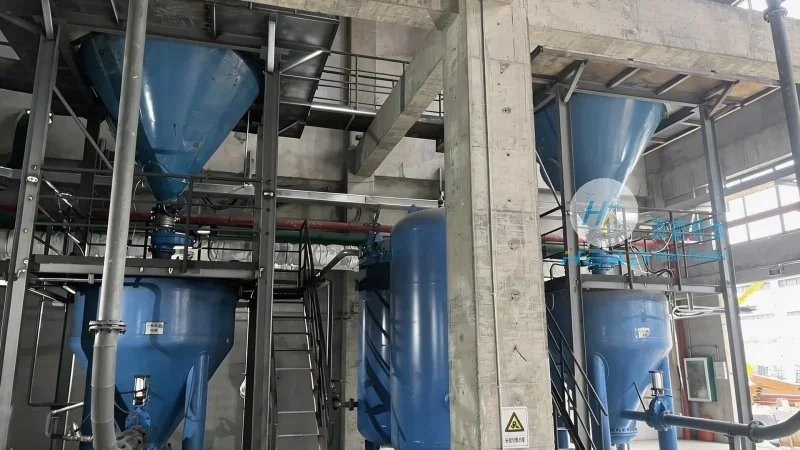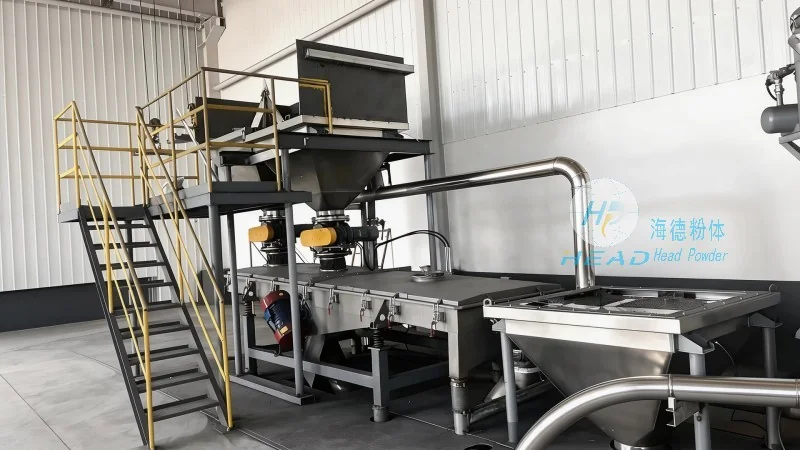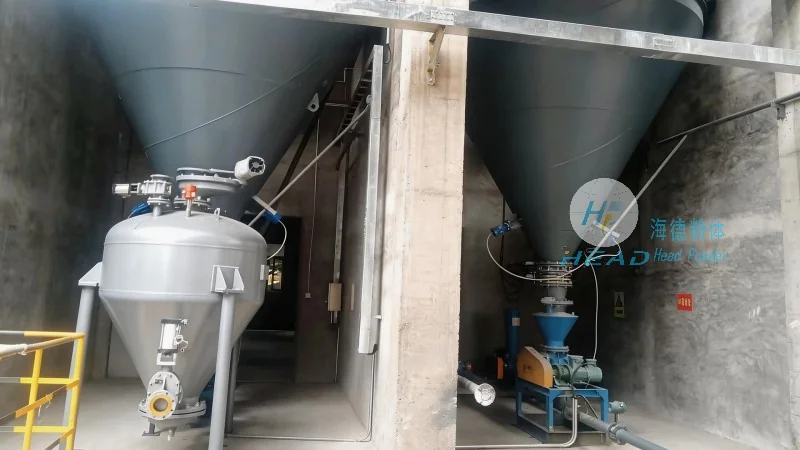

In the evolving landscape of industrial material handling, the efficient and safe conveyance of fine, abrasive, and potentially hazardous powders remains a critical challenge. Among these materials, return coke powder—a byproduct of the steelmaking and coking industries—demands specialized handling due to its low bulk density, high abrasiveness, and tendency to generate dust. Traditional mechanical conveying methods, such as belt conveyors or bucket elevators, often fall short in terms of maintenance burden, spillage control, and energy efficiency. This is where pneumatic conveying technology, specifically dense-phase and dilute-phase systems, provides a transformative solution. As global steel production continues to ramp up—projected to reach 2.1 billion metric tons by 2026 according to industry forecasts—the volume of return coke powder requiring reliable recovery and transport increases correspondingly. Plant operators are now prioritizing enclosed, automated, and low-emission systems that not only reduce material loss but also comply with stringent environmental regulations. This article offers a deep dive into the design, selection, and implementation of pneumatic conveying equipment for return coke powder, drawing on real-world engineering principles and proven operational data. We will explore how a well-engineered solution can reduce energy consumption by 15–20%, cut maintenance downtime by over 30%, and achieve a conveying efficiency of 99.5% or higher, all while maintaining a clean and safe working environment. Throughout the discussion, we will reference the technical capabilities of headpowder—a company with over a decade of focused expertise in pneumatic conveying—to illustrate how these benefits are realized in practice.
Return coke powder, typically generated during coke screening and crushing processes, has particle sizes ranging from 0.1 mm to 3 mm and a bulk density of approximately 500–800 kg/m³. Its high carbon content (over 80%) makes it a valuable fuel source for sintering plants and blast furnaces, yet its fine nature makes it prone to airborne dust and spontaneous combustion under certain conditions. In 2025, the global coke market was valued at over USD 200 billion, with China, India, and the United States accounting for the majority of production. By 2026, stricter emission standards—such as China's ultra-low emission requirements for steel mills and the EU's Industrial Emissions Directive (IED) updates—will mandate that coke powder handling systems achieve a dust emission concentration below 10 mg/Nm³. Traditional open-air conveying or screw conveyors cannot meet these thresholds without extensive baghouse retrofits. Pneumatic conveying, on the other hand, offers a fully enclosed pipeline system that inherently controls dust. Moreover, the ability to transport material over long distances (up to 500 meters) and around obstacles makes it ideal for integrating with existing plant layouts. A 2024 study published in the Journal of Powder Technology noted that pneumatic systems for coke fines can reduce fugitive dust by up to 95% compared to mechanical alternatives. With these drivers, the demand for robust, low-maintenance pneumatic equipment is expected to grow at a compound annual rate of 6.2% through 2028.

Pneumatic conveying relies on the flow of air or inert gas to transport powdered materials through a pipeline. For return coke powder, two primary modes are commonly considered: dilute-phase and dense-phase conveying. Dilute-phase systems use high air velocities (15–30 m/s) to suspend particles in the airstream, making them suitable for shorter distances and lower capacities. However, the high velocity increases pipe wear and particle degradation. For coke powder, which is abrasive, this can lead to frequent elbow replacements and a shortened system lifespan. Dense-phase conveying, operating at lower velocities (3–8 m/s) and higher pressures (up to 6 bar), pushes material as a slug through the pipe. This reduces wear, minimizes dust generation, and consumes significantly less energy—often 30–40% lower than dilute-phase for the same tonnage. A typical dense-phase system comprises a pressure vessel (blow tank), a compressed air supply, pipeline with wear-resistant bends, and a receiver with a vent filter. The blow tank is charged with material, pressurized, and then discharged through a control valve. The key design parameters include the powder flow characteristics (angle of repose, cohesion, and permeability), the available pressure differential, and the required throughput. For return coke powder with a moisture content below 5%, dense-phase conveying is almost always recommended. According to data from multiple installations handling 10–50 tons per hour, such systems maintain a conveying velocity below 10 m/s, reducing pipe wear to less than 0.5 mm per year even with carbon steel piping—provided proper elbow radii (minimum 4D) are used.


A successful return coke powder pneumatic conveying solution integrates several carefully matched components. Below is a list of critical equipment and their selection considerations:
When sizing a system, engineers must calculate the minimum conveying velocity using the Rizk correlation or similar empirical models to avoid saltation. For return coke powder, the saltation velocity is typically 4–6 m/s. The pipeline diameter is then selected to maintain a superficial air velocity 1.2 times above saltation at the end of the line. For a 20 tph system over 150 meters, a 4-inch (DN100) pipe is common, with a blow tank volume of 1.5 m³. Such parameters have been validated in more than 50 installations worldwide.
Headpowder has built a reputation for delivering tailored pneumatic conveying solutions that address the specific challenges of abrasive and sticky bulk solids. Our engineers apply a data-driven design methodology that begins with a thorough analysis of the material’s particle size distribution, angle of repose, and flow function index. For return coke powder, we have conducted in-house flowability tests using Jenike shear cells to determine hopper design and blow tank configuration. One of our landmark projects involved a major Indian steel producer that needed to transport 35 tons per hour of return coke powder over a distance of 200 meters, with a vertical lift of 25 meters, while adhering to local emission norms. We deployed a dense-phase system with a 2.8 m³ blow tank, ceramic-lined bends at every turn, and a PLC-controlled air management system. After commissioning, the system achieved an average conveying velocity of 5.2 m/s, energy consumption of 2.8 kWh per ton, and a dust emission reading of 6 mg/Nm³—well below the regulatory limit. The client reported a 98% availability rate over the first 24 months of operation. In another application for a European coking plant, we integrated a nitrogen-based inert conveying system to mitigate the risk of dust explosions, using oxygen sensors and automated purging cycles. These case studies demonstrate that headpowder (咨询热线:156-6277-7102) does not simply supply equipment; we engineer solutions that optimize total cost of ownership, from reduced pipe replacement to lower compressed air usage.
Transitioning from mechanical to pneumatic conveying for return coke powder yields measurable ROI across multiple dimensions. First, labor costs drop significantly because enclosed systems require minimal manual intervention for spillage cleanup or dust suppression. A typical mechanical conveyor might need 0.5–1.0 full-time equivalent (FTE) for daily cleaning; pneumatic systems eliminate this. Second, maintenance costs are lower. While mechanical conveyors have dozens of moving parts (belts, rollers, bearings) that wear quickly with abrasive materials, a pneumatic system has only the blow tank’s discharge valve and the compressor as primary wear items. Data from a 2025 survey of 30 steel plants showed that pneumatic systems had a mean time between failures (MTBF) of 4,500 hours versus 2,100 hours for belt conveyors handling similar coke powder. Third, energy efficiency improves. Dense-phase systems are now achieving specific power consumption of 2.5–3.5 kWh per ton, compared to 4.5–6.0 kWh for dilute-phase—a saving of up to 35%. With electricity costs averaging USD 0.08 per kWh in industrial markets, a 20-tph operation running 6,000 hours annually can save over USD 100,000 per year in energy alone. Additionally, product loss is virtually eliminated. Open conveyors can lose 1–2% of the material to wind and spillage; with a closed-loop pneumatic system equipped with a back-pressure filter, recovery rates exceed 99.9%. This is especially significant when coke powder prices hover around USD 200–300 per ton.
Proper maintenance of return coke powder pneumatic conveying equipment ensures consistent performance and extends service life. Key practices include:
Headpowder offers a comprehensive after-sales service package, including remote diagnostics and predictive maintenance alerts based on real-time data analytics. Clients who adopt our preventive maintenance schedule report an average system life of over 15 years, with only one major blow tank refurbishment required at the 10-year mark.
Looking toward 2026 and the rest of the decade, the pneumatic conveying industry is moving toward digitalization and green technologies. Smart conveying systems now incorporate IoT sensors that stream pipe wear data, air consumption, and material velocity to a cloud platform. Machine learning algorithms can predict blockages or valve failures up to 48 hours in advance, reducing unplanned downtime. For return coke powder, these systems are increasingly paired with real-time particle size analyzers that adjust air pressure dynamically to maintain optimal flow. On the sustainability front, many steel producers are exploring the use of recovered CO₂ or biogas as the conveying medium to further reduce carbon footprint. Low-pressure dense-phase systems that operate at 3–4 bar instead of 6 bar are being developed to cut compressor energy by an additional 15%. New pipe materials, such as polyurethane-lined steel or basalt-filled epoxy, promise even longer wear life at competitive costs. Headpowder is actively collaborating with research institutions in Germany and Japan to pioneer these advancements, and early prototypes are undergoing field tests at select client sites. As environmental regulations tighten and raw material costs rise, the adoption of advanced pneumatic conveying for coke powder will cease to be optional—it will become a strategic necessity for any coke-consuming facility aiming for long-term profitability and compliance.
In conclusion, the selection of a high-performance pneumatic conveying system for return coke powder is not merely an equipment purchase; it is a long-term investment in operational efficiency, safety, and environmental stewardship. The engineering challenges posed by this abrasive, dusty material can be effectively overcome through careful design based on material properties, appropriate component selection, and a proven track record of reliable systems. Whether a plant requires a capacity of 5 tph or 50 tph, the principles of dense-phase conveying deliver consistent results—reducing energy consumption, minimizing maintenance, and virtually eliminating dust emissions. Headpowder’s extensive project portfolio, spanning four continents and over 300 installations, provides the depth of expertise necessary to ensure a successful outcome. By partnering with a specialist who understands the intricacies of return coke powder handling, plant operators can confidently meet the demands of 2026 market conditions while building a foundation for future growth. For those evaluating a new system or considering a retrofit, the key is to start with a detailed material characterization and a holistic system layout—steps that headpowder’s engineering team routinely provides as part of its free preliminary consultation. With the right partner, your coke powder conveying can become one of the most reliable, efficient, and environmentally sound operations in your facility.
Shandong headpowder Engineering Co., Ltd.
156-6277-7102(Manager Zhang)
0531-83386006
Jinan City, Shandong Province, China 
服务热线
微信咨询
回到顶部