
In the rapidly evolving landscape of industrial material handling, the efficient and reliable transport of fine, abrasive, and high-temperature bulk solids remains a persistent challenge. Among these materials, magnesia sand—a critical raw material for refractories, steelmaking, and magnesia-based chemical products—demands specialized handling solutions due to its high density, angular particle shape, hygroscopic nature, and tendency to generate abrasive dust. As global steel production continues to recover and refractory-grade magnesia demand grows steadily into 2026, manufacturers face increasing pressure to maintain high throughput while minimizing dust emissions, equipment wear, and energy consumption. This is where a well-engineered pneumatic conveying system, tailored specifically for magnesia sand, becomes an indispensable part of the production line. The solution must balance technical precision with operational robustness, ensuring that the material’s inherent properties do not compromise system reliability or product quality. At headpowder, we have developed a comprehensive magnesia sand pneumatic conveying system solution specification that addresses these requirements through careful material characterization, phase density selection, pipeline layout optimization, and intelligent control integration. In the following sections, we will explore the key considerations, technical parameters, and best practices for designing a system that delivers consistent performance, low maintenance costs, and full compliance with environmental regulations—all while supporting the industry’s shift toward automation and sustainability.
The foundation of any successful pneumatic conveying system lies in understanding the physical and chemical properties of the material being transported. Magnesia sand, with a bulk density typically ranging from 1.4 to 2.2 t/m³ and a Mohs hardness of about 5.5 to 6.5, presents unique challenges. Its angular and irregular particles can cause rapid erosion of conveying pipes, especially at bends and diverter valves. Moreover, the material’s moisture absorption capability—often reaching 1–3% in humid environments—can lead to caking and flow blockages if not properly controlled. In 2026, with stricter emission standards and higher raw material costs, mills and refractory plants are increasingly adopting dense-phase pneumatic conveying systems for magnesia sand, as this approach minimizes air velocity, reduces particle degradation, and significantly lowers pipe wear compared to dilute-phase designs. headpowder’s solution specification emphasizes a systematic material testing protocol: we measure particle size distribution (typically 0–10 mm, with a fine fraction below 0.075 mm), angle of repose (usually 35–45°), and the material’s friability index. These data points form the basis for selecting conveying velocity (common range: 4–12 m/s for dense phase), pipeline diameter (typically 80–200 mm), and air-to-material ratio (15–30 kg/kg for dense phase). By aligning these parameters with the specific grade of magnesia sand—whether it is dead-burned, fused, or sintered magnesia—we ensure that the system operates in the optimal flow regime, avoiding saltation and plugging while maintaining a stable conveying rate of up to 50 t/h per line.
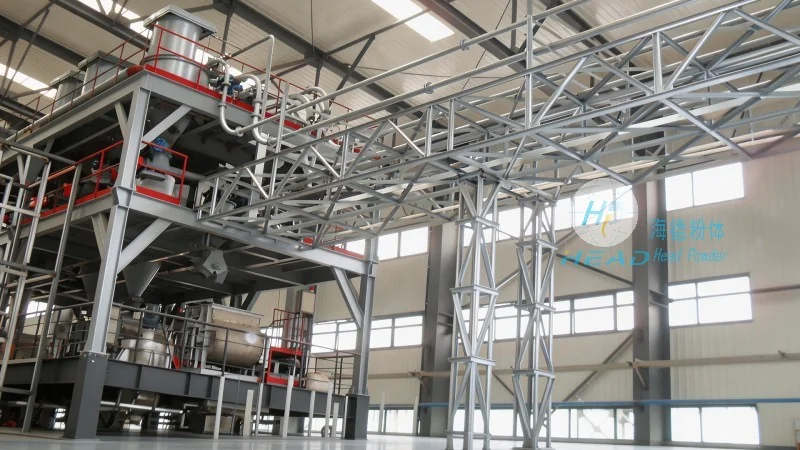
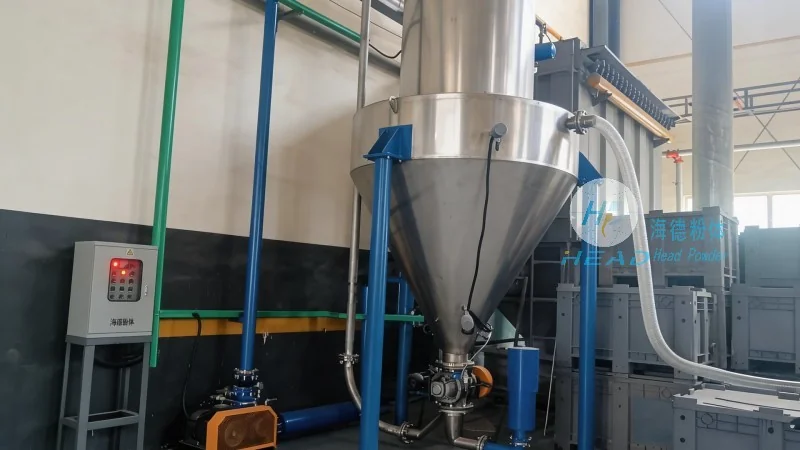
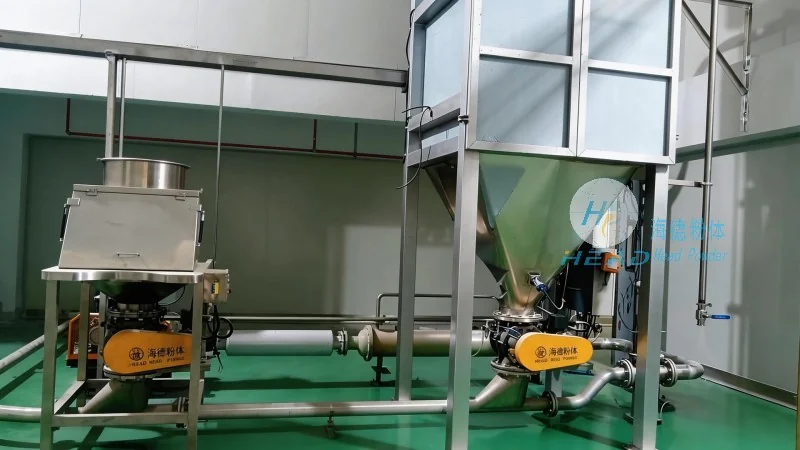
A complete magnesia sand pneumatic conveying system comprises multiple interlinked subsystems, each designed to handle a specific stage of the transport process. The starting point is the feeding device, which introduces material from storage silos, hoppers, or grinding mills into the conveying line. For magnesia sand, rotary airlocks with hardened rotor tips and wear-resistant housing liners are commonly employed, as they provide a positive seal against air leakage while handling abrasive particles. Alternatively, screw feeders with variable-speed drives can be used for precise metering. The conveying vessel, often a pressure tank or blow tank operating at 2–6 bar, pressurizes the material and injects it into the pipeline using compressed air. headpowder’s design incorporates a multi-stage injection system that ensures uniform suspension of the dense-phase material, reducing slug formation. The pipeline itself is critical: we recommend seamless steel pipes with a minimum wall thickness of 8–12 mm for straight sections, and with internal ceramic linings or replaceable wear-back bends at every change of direction. The use of long-radius bends (R≥10D) and sweep tees further extends service life. At the receiving end, a dust collector (often a pulse-jet bag filter with PTFE membranes) separates the magnesia sand from the conveying air, achieving a filtration efficiency above 99.9%. The filtered air is either exhausted to atmosphere or recirculated, depending on plant layout and environmental permits. A pressure differential control system, combined with real-time flow monitoring, enables automatic adjustment of conveying parameters, ensuring stable operation even when material bulk density varies due to moisture changes.

In industrial practice, the efficiency of a magnesia sand pneumatic conveying system is measured by its specific energy consumption (kWh per ton of material conveyed) and its overall equipment effectiveness (OEE). For dense-phase systems, typical energy consumption ranges from 0.8 to 1.5 kWh/t, which is significantly lower than dilute-phase systems that may consume 2.5–4.0 kWh/t. Achieving this efficiency requires careful selection of compressor capacity, pipeline layout, and control logic. headpowder’s solution incorporates variable-frequency drives on the main air compressor and booster fans, allowing the system to modulate air volume based on real-time demand. According to industry benchmarks for 2026, a well-optimized dense-phase system for magnesia sand can achieve a conveying velocity of 5–8 m/s, with a solids loading ratio of 20–35 kg of material per kg of air. We also consider the influence of altitude and ambient temperature: at higher elevations, the reduced air density may require a slight increase in compressor discharge pressure. Another key metric is the carbon footprint reduction—by lowering energy usage and dust leakage, our design helps plants meet emerging carbon tax regulations in regions like Europe and Southeast Asia. In one typical deployment at a refractory plant in Liaoning, China, headpowder’s system replaced an outdated dilute-phase conveyor, dropping annual energy costs by 35% and reducing maintenance downtime from 8 days per year to 2 days. The system’s PLC-based controller, integrated with the plant’s SCADA, provides real-time data on conveying rate, air consumption, and pipe wear trends, enabling predictive maintenance and continuous process improvement.


Magnesia sand, especially when processed at high temperatures, can be chemically reactive with certain metals and moisture. The presence of free lime (CaO) in some grades can cause hydration and expansion, leading to pipe blockages if water vapor enters the system. For this reason, headpowder’s specifications include a dedicated air dryer unit that delivers compressed air with a pressure dew point below -40°C, preventing condensation within the conveying line. Additionally, we recommend using stainless steel or aluminum alloys for components that come into direct contact with the material, to avoid contamination of the product by iron rust. For explosion safety—though magnesia sand is non-combustible, the fine dust can form explosive mixtures under certain conditions—the system is designed with explosion venting panels, grounding straps to dissipate static electricity, and flameproof electrical enclosures. The maximum permissible dust concentration in the conveying line is calculated based on the lower explosion limit (LEL), which for magnesia dust is around 30–60 g/m³ depending on particle size. Our systems incorporate inert gas injection (nitrogen or CO₂) when conveying near the LEL, which is common in closed-loop circuits. Furthermore, all conveying lines are designed with isolation valves at both ends, allowing safe depressurization and lockout-tagout during maintenance. The integration of a remote emergency shutdown system, compliant with ISO 13849 and SIL 2 standards, ensures operator safety in any abnormal scenario.
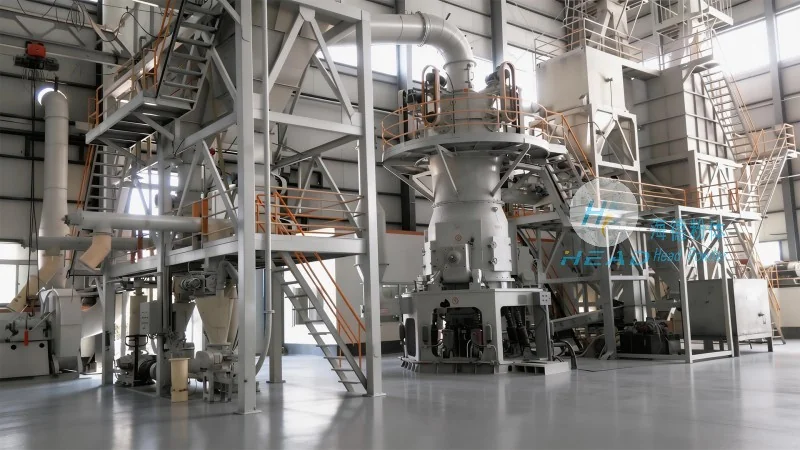
Successful deployment of a magnesia sand pneumatic conveying system goes beyond equipment selection; it requires meticulous site preparation, experienced installation, and thorough commissioning. headpowder offers a turnkey service that includes pipeline routing optimization, foundation design for compressors and silos, and integration with existing material handling equipment such as bucket elevators or belt conveyors. During commissioning, we perform a 72-hour continuous run test under production-equivalent conditions, monitoring parameters such as pressure drop across each section, temperature rise at compressor outlets, and actual conveying rate compared to design specifications. We also conduct a wear audit on pipe bends and diverter valves, recommending adjustments to air flow if wear patterns deviate from expected norms. For after-sales support, headpowder provides a remote monitoring platform that collects data on vibration, temperature, and pressure from all key components, enabling real-time diagnostics and predictive maintenance alerts. Spare parts for wear items—such as ceramic tile kits for bends, rotary valve rotors, and filter bags—are stocked for rapid dispatch. Our service team, with an average of 12 years of experience in handling abrasive minerals, can guide clients through annual performance reviews and system upgrades. For example, when one customer in Shandong needed to increase throughput by 20% after a plant expansion, headpowder retrofitted the existing blow tank with a larger air injection manifold and modified the pipeline diameter, achieving the target without replacing the entire conveyor. This modular approach minimizes capital expenditure while maximizing long-term reliability.
Looking ahead to the latter half of the 2020s, the magnesia sand handling industry is increasingly embracing digitalization, energy efficiency, and circular economy principles. Smart sensors with IoT connectivity are becoming standard in new installations, providing granular data on particle velocity, pipe corrosion rates, and air leakage. headpowder’s latest system specification incorporates a cloud-based analytics engine that uses machine learning to optimize conveying parameters based on historical data, automatically adjusting air pressure and injection timing to compensate for material variability. This aligns with the broader Industry 4.0 movement in the refractories sector. Additionally, regulatory trends in 2026—such as the European Union’s updated Industrial Emissions Directive (IED) and China’s “dual carbon” targets—are pushing manufacturers to reduce fugitive dust emissions to below 5 mg/Nm³. Our conveying systems, equipped with advanced bag filters and negative-pressure housings, consistently meet these thresholds. We also design for low-noise operation, with silencers on compressor intakes and exhausts, and vibration dampeners on pipe supports, helping plants achieve workplace noise levels below 85 dB(A). By future-proofing with modular layouts, headpowder ensures that clients can easily adapt to changes in raw material sources (e.g., switching from dead-burned to fused magnesia) or production capacity expansions without major overhauls. The total cost of ownership, including energy, maintenance, and consumables, is typically 15–25% lower than conventional systems over a 10-year lifecycle, as verified by independent audits across multiple installations.
Ultimately, the selection of a magnesia sand pneumatic conveying system is a decision that affects not only immediate material handling efficiency but also long-term operational costs, environmental compliance, and product quality consistency. A generic one-size-fits-all approach often leads to high pipe wear, frequent blockages, and energy waste. headpowder’s tailored solution specification—backed by in-depth material analysis, robust component engineering, and proven field data—provides a reliable pathway for plants seeking to optimize their production processes. Whether the goal is to increase throughput, reduce maintenance interventions, or meet stringent emission limits, our team stands ready to collaborate on a detailed engineering assessment. For inquiries about system design, feasibility studies, or a customized quotation for your magnesia sand conveying project, please reach out to our technical experts. (Consultation hotline: 156-6277-7102) headpowder remains committed to delivering value-driven solutions that enhance your bottom line while respecting the environment.
Shandong headpowder Engineering Co., Ltd.
156-6277-7102(Manager Zhang)
0531-83386006
Jinan City, Shandong Province, China 
服务热线
微信咨询
回到顶部