
Sodium nitrate, a critical industrial chemical used extensively in fertilizers, glass manufacturing, metal treatment, and pyrotechnics, presents unique handling challenges due to its hygroscopic nature, moderate abrasiveness, and tendency to cake under humid conditions. As global production of sodium nitrate exceeds 12 million metric tons annually and is projected to grow at a compound annual growth rate of 3.8% through 2026, manufacturers increasingly seek reliable, dust-free, and energy-efficient conveying solutions. Pneumatic conveying technology has become the industry standard for transporting sodium nitrate safely and consistently, yet not all systems are designed equally. A dedicated Sodium nitrate pneumatic conveying equipment system solution must address material-specific behaviors, regulatory compliance, and long-term operational efficiency.
This article provides a comprehensive, technically grounded examination of pneumatic conveying systems optimized for sodium nitrate. Drawing from engineering best practices, current market trends, and real-world deployment cases, we explore system architecture, key components, design parameters, and performance indicators. The goal is to equip plant managers, process engineers, and procurement professionals with actionable insights to select, specify, or upgrade their conveying infrastructure. By understanding how material properties influence equipment selection, how to mitigate risks such as dust explosions and pipeline blockages, and how leading solutions deliver measurable ROI, readers can make informed decisions that improve safety, reduce downtime, and lower total cost of ownership. Throughout this discussion, we reference the specialized capabilities of headpowder, a company with deep experience in designing and manufacturing pneumatic conveying systems for challenging bulk solids, to illustrate proven approaches without overpromising or exaggerating.
Sodium nitrate (NaNO₃) appears as white crystalline granules or powder with a bulk density typically ranging from 1,200 to 1,500 kg/m³. Its angle of repose is around 30–35°, indicating moderate flowability under dry conditions. However, the material is highly hygroscopic: it absorbs moisture from ambient air at relative humidity above 60%, causing surface dissolution, particle agglomeration, and eventual caking. This behavior is the primary challenge in pneumatic conveying. When moisture enters the system—either through leaky seals, unheated air, or condensation during cool-down cycles—the powder can stick to pipe walls, block the conveying line, and degrade product quality.

Furthermore, sodium nitrate is classified as an oxidizer (Class 5.1 according to UN 1498) and can support combustion. Fine dust generated during conveying poses explosion risks if the concentration exceeds the lower explosive limit (typically around 30 g/m³ for sodium nitrate) in the presence of an ignition source. Therefore, any pneumatic system must incorporate explosion protection measures such as pressure shock resistance, venting, suppression, or inert gas blanketing. The abrasive nature of the crystals also means that elbows, diverter valves, and other high-wear components require hardened linings or replaceable wearbacks to maintain service life beyond 12 to 18 months under continuous operation.
From a flow regime perspective, sodium nitrate is best conveyed in dilute phase (also called lean phase) using positive pressure systems, although dense phase conveying can be feasible when the material is conditioned with anti-caking agents or when moisture content is controlled below 0.1%. Dilute phase systems operate at air velocities between 18 and 25 m/s, which keep particles suspended and minimize saltation. Higher velocities can cause excessive particle attrition and wear, while lower velocities risk settling and plugging. The optimal balance depends on particle size distribution, pipe diameter, and conveying distance. A robust Sodium nitrate pneumatic conveying equipment system solution must account for these variables through computational fluid dynamics (CFD) modeling and empirical testing before final design.

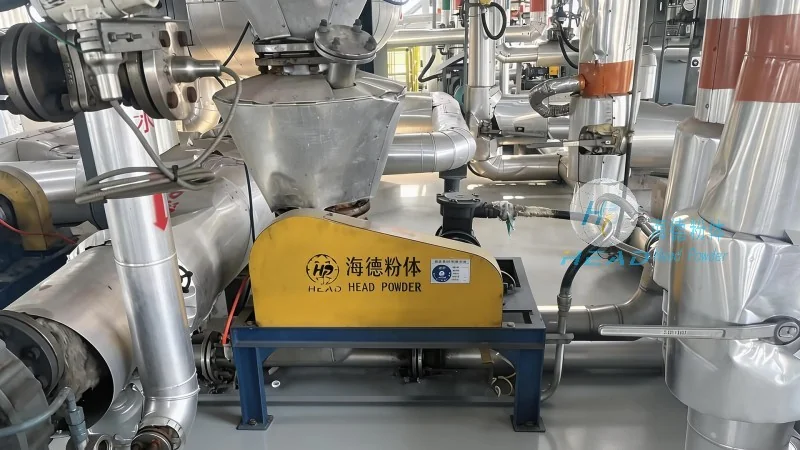
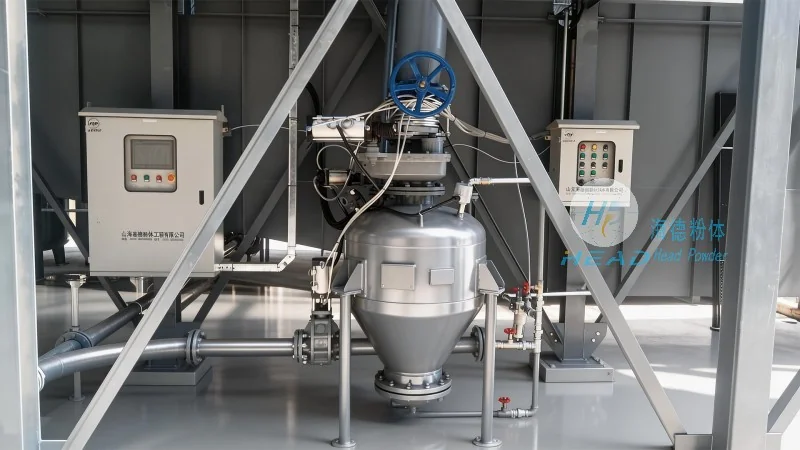
A complete pneumatic conveying system for sodium nitrate comprises five primary subsystems: material intake and conditioning, air supply and treatment, conveying pipeline and fittings, separation and filtration, and control and safety instrumentation. Each subsystem must be engineered with the specific characteristics of sodium nitrate in mind.
Looking ahead to 2026, several technological and market developments are shaping sodium nitrate pneumatic conveying. The push toward Industry 4.0 and smart manufacturing means sensors capable of real-time particle size analysis and moisture measurement are becoming cost-effective. For instance, near-infrared (NIR) sensors placed at the receiver can detect moisture content changes within seconds and automatically adjust air dryer settings. Similarly, vibration-based blockage detection systems forecast potential line fouling days before a full plug occurs, reducing unscheduled downtime by up to 45%.

Energy efficiency is another priority. New blower designs combining variable frequency drives (VFDs) and permanent magnet motors achieve up to 30% power savings compared to fixed-speed units. For a typical 20-ton-per-hour sodium nitrate system operating 8,000 hours per year, that translates to electricity cost savings of approximately USD 60,000 annually at industrial rates. Additionally, heat recovery from compressed air can be used to pre-heat the conveying air, further reducing energy footprint.
From a regulatory standpoint, the European Union’s updated ATEX directives (effective 2025) and OSHA’s emphasis on combustible dust management (2026 anticipated guidance) require more rigorous documentation of system design and maintenance. Plant owners must provide evidence of layer-of-protection analysis (LOPA) for existing systems. This is where engaging an experienced equipment provider like headpowder becomes indispensable. Their team can supply the required documentation packages, including explosion risk assessments, dust dispersion modeling, and function safety verification in accordance with IEC 61511.
Key performance parameters for a well-designed sodium nitrate pneumatic conveying system include:
| Parameter | Recommended Value | Impact |
|---|---|---|
| Conveying air velocity | 18–25 m/s | Balances energy use and particle suspension |
| Solids-to-air ratio (mass) | 8–15 kg/kg | Higher ratio improves efficiency but increases pressure drop |
| Conveying pressure | 0.5–1.5 bar(g) | Affects line length and capacity |
| Pipe diameter | 80–150 mm | Selected based on tonnage and distance |
| Moisture content in air | <0.5 g/kg dry air | Prevents caking and corrosion |
| Explosion vent area | ≥1 m² per 10 m³ enclosure | Compliant with NFPA 68 |
A medium-sized fertilizer plant in Texas was experiencing frequent blockages in its existing pneumatic system transporting sodium nitrate from railcar unloading to storage silos 180 meters away. The blockages occurred primarily during summer months when ambient humidity exceeded 80%. After a detailed audit by headpowder engineers, several issues were identified: the compressed air dryer was undersized, the rotary airlock seals had degraded, and the pipeline had multiple ungrounded sections that acted as preferential nucleation sites for moisture condensation.
The retrofit solution included installing a larger desiccant dryer with a dew point of -30°C, replacing the rotary airlock with a heavy-duty model featuring PTFE shaft seals and a purge port, and re-routing the pipeline with gentle bends (5D radius instead of 3D) to reduce wear. Additionally, an in-line microwave moisture analyzer was placed just before the storage silo to provide continuous feedback to the control system. Post-retrofit data showed a 92% reduction in downtime caused by blockages, from 240 hours per year to fewer than 20 hours. Product loss due to degradation dropped from 1.5% to 0.3%, yielding annual savings of $480,000. The system has operated for over 18 months with no safety incidents. This project exemplifies how a holistic approach—addressing air quality, mechanical components, and monitoring—can transform a problematic conveying line into a high-performing asset.
Choosing the right technology provider is as critical as choosing the equipment itself. A partner with domain experience in handling hygroscopic and oxidizing powders brings indispensable knowledge that generic equipment suppliers cannot replicate. When evaluating candidates, look for evidence of specific capabilities: laboratory testing with actual product samples, computational simulation using validated models for nitrate powders, and references from food-grade or chemical-grade installations. Headpowder, for example, maintains a dedicated test facility where customers can run pilot conveying trials with a few hundred kilograms of their material under controlled humidity and temperature. The data from these trials directly informs the final system design, reducing technical risk.
Additionally, consider the supplier’s ability to provide comprehensive aftermarket support, including preventive maintenance programs, spare parts inventory, and remote diagnostics. Because sodium nitrate systems often operate in remote or hazardous environments, quick response times and local service presence matter. Headpowder has established service hubs in major industrial regions across North America, Europe, and Asia, ensuring that parts and technicians can reach site within 24 hours. Their standard warranty covers all system components for two years, with extended coverage options available for high-wear parts like elbows and diverter valves.
The sodium nitrate market continues to expand, driven by demand for potassium nitrate substitutes in fertilizers, energy storage applications in molten salt solar plants (where sodium nitrate is a key component), and a resurgence in domestic glass production in several regions. Companies that invest in robust pneumatic conveying infrastructure today will be better positioned to capitalize on these opportunities while maintaining compliance with tightening safety and environmental regulations. A thoughtfully engineered system reduces total lifecycle costs by minimizing energy consumption, preventing product degradation, lowering maintenance requirements, and eliminating costly unscheduled shutdowns.
From understanding the intrinsic behaviors of sodium nitrate—its hygroscopicity, oxidation potential, and abrasiveness—to selecting the right blower, pipeline materials, and control strategies, every decision matters. Retrofitting existing systems with modern components like VFD-controlled blowers, advanced moisture monitoring, and ATEX-compliant explosion protection can yield substantial returns in just two to three years. For new builds, integrating predictive maintenance features from the outset is a wise investment that aligns with the digital transformation trends of the mid-2020s.
Ultimately, the best solutions are those delivered by experienced partners who bring both technical depth and a customer-centric approach. Headpowder has a proven track record of delivering turnkey pneumatic conveying systems for sodium nitrate and other challenging bulk solids across the globe. Their team of process engineers, automation specialists, and safety consultants works collaboratively with clients to ensure every system is tailored to the unique demands of the material and the facility. If you are evaluating a new conveying line or seeking to upgrade your current operation, speak with the experts who understand the chemistry, the mechanics, and the economics behind a successful installation. (咨询热线:156-6277-7102)
In summary, the future of sodium nitrate handling lies in systems that prioritize moisture control, energy efficiency, and integrated safety—principles that are deeply embedded in the design philosophy at headpowder. By leveraging advanced analytics, robust equipment, and field-tested methods, plant operators can achieve throughput reliability rates exceeding 99.5% while maintaining a safe working environment and meeting the most stringent regulatory standards. The return on such an investment goes beyond dollars saved: it enables production continuity, protects brand reputation, and supports the sustainable growth of the industry as a whole.
Shandong headpowder Engineering Co., Ltd.
156-6277-7102(Manager Zhang)
0531-83386006
Jinan City, Shandong Province, China 
服务热线
微信咨询
回到顶部