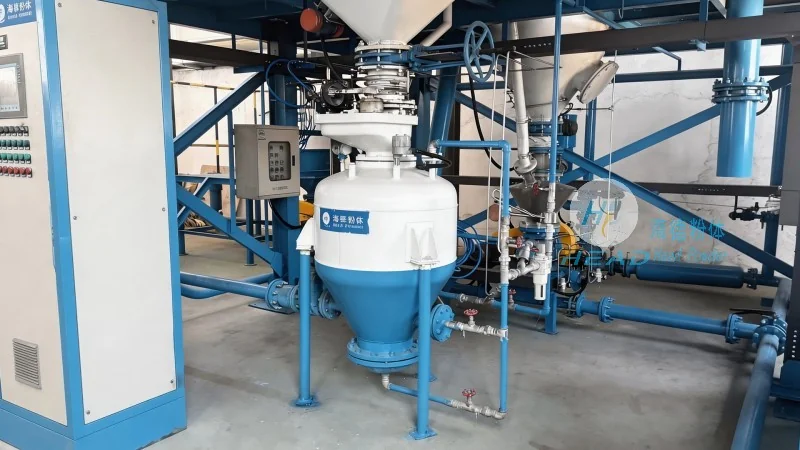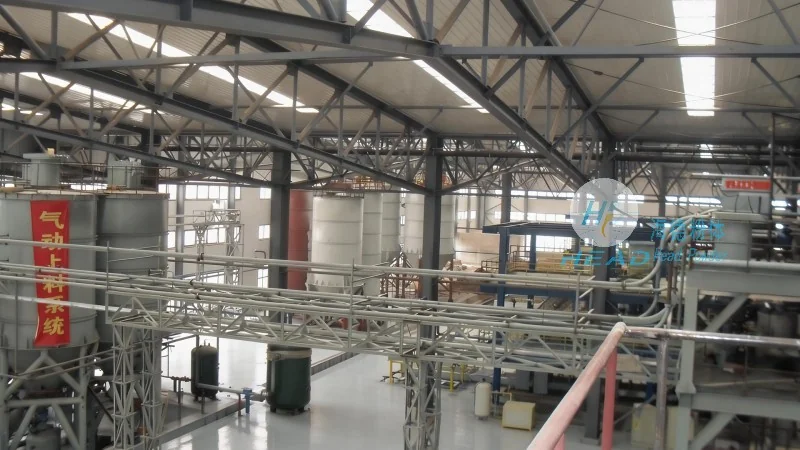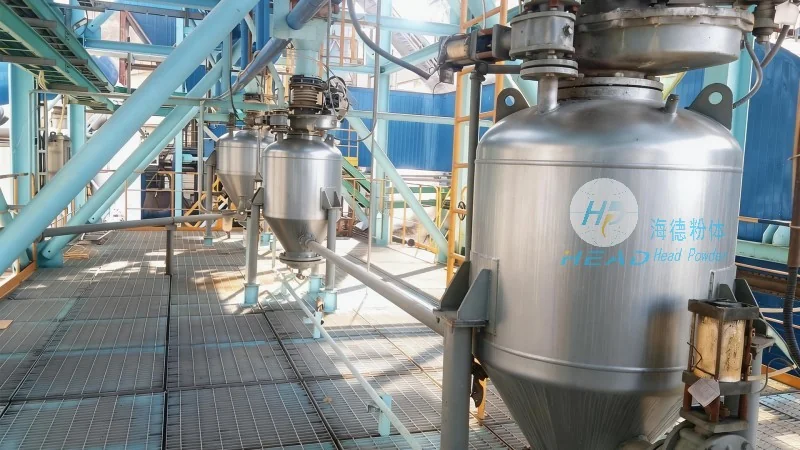

Sawdust pellets have emerged as a fundamental renewable fuel source across industries such as biomass power generation, animal bedding manufacturing, and industrial heating. The efficient transfer of these pellets from production lines to storage silos, loading stations, or end-use equipment is critical to maintaining operational continuity and product quality. Pneumatic conveying systems, specifically designed for sawdust pellets, offer a closed-loop, dust-free, and highly automated solution that minimizes material degradation and energy consumption. As global demand for sustainable energy continues to rise, the market for sawdust pellets pneumatic conveying equipment is expected to see substantial growth through 2026, driven by stricter environmental regulations and the need for higher production efficiency. Understanding the core components, system configurations, and operational parameters of these systems is essential for plant managers, engineers, and procurement specialists seeking reliable and cost-effective material handling infrastructure. This article provides a comprehensive overview of sawdust pellets pneumatic conveying equipment systems, covering design principles, key selection criteria, integration considerations, and industry best practices.

Sawdust pellets are inherently fragile compared to other granular materials. Their low bulk density, typically ranging from 600 to 750 kg/m³, and relatively high moisture content, often between 8% and 12%, make them prone to breakage and dust generation during mechanical handling. Traditional belt conveyors or bucket elevators, while widely used, can cause significant particle degradation and require extensive maintenance for dust control. Pneumatic conveying, by contrast, uses a stream of air to transport pellets through a sealed pipeline, offering a gentle yet efficient alternative. The technology also reduces cross-contamination, enables flexible routing, and supports remote or multi-point delivery without complex mechanical structures. As biomass industries scale up production capacities, the ability to move large volumes of sawdust pellets over long distances with minimal degradation becomes a competitive advantage. The following sections explore the system types, component specifications, operational advantages, and practical implementation strategies that define modern sawdust pellets pneumatic conveying equipment.

Pneumatic conveying systems for sawdust pellets are generally categorized into two main types: dilute phase conveying and dense phase conveying. Each type offers distinct benefits depending on the material characteristics, conveying distance, and process requirements.
In dilute phase conveying, the material is suspended in a high-velocity air stream (typically 20–35 m/s) and transported at a low material-to-air ratio. This method is suitable for shorter distances (up to about 150 meters) and is relatively simple to design and install. It is often used for transferring sawdust pellets from a pellet mill to a nearby storage silo or packaging station. However, the high air velocities can cause greater wear on pipeline bends and may lead to increased fines generation if the pellets are particularly brittle.
Dense phase conveying operates at lower air velocities (4–10 m/s) with a higher material-to-air ratio, pushing the pellets through the pipeline in slugs or plugs. This approach reduces particle degradation significantly, lowers energy consumption per ton conveyed, and allows longer transport distances (up to 500 meters or more). Dense phase systems are preferred when pellet quality must be preserved, such as in premium animal bedding or high-value biofuel applications. The trade-off is a more complex control system and higher initial capital investment. Selecting between the two requires careful analysis of the pellet's crush resistance, pipeline layout, and operational budget.
For typical sawdust pellets with diameter between 6 mm and 8 mm and a hardness index of 80–100 N (measured by compression testing), dense phase conveying consistently yields less than 2% fines generation compared to 5%–8% in dilute phase systems over a 100-meter transport distance. These data points illustrate the importance of matching system type to end-product quality goals.

A well-designed pneumatic conveying equipment system integrates several key components that must work in harmony to achieve reliable and efficient material transfer. Understanding each component's role and specification helps in system selection and troubleshooting.
1. Rotary Air Lock (Feeder)
The rotary air lock is the interface between the pellet supply hopper and the conveying pipeline. It introduces a controlled, metered flow of sawdust pellets into the air stream while minimizing air leakage. For sawdust pellets, a drop-through rotary air lock with a closed rotor design and wear-resistant tips is recommended. The rotor speed should be adjustable from 10 to 30 rpm, with a volumetric filling efficiency of 70%–85% to prevent bridging. Headpowder's rotary air locks incorporate hardened steel blades and a replaceable wear sleeve, ensuring long service life even with abrasive wood-based pellets.
2. Pressure Blower or Compressor
The air-moving device provides the necessary pressure and flow rate to convey the pellets. For dilute phase systems, a positive displacement blower (0.5–1.5 bar) is typical, while dense phase systems often use screw compressors (2–4 bar). The power rating should account for pipeline length, elevation changes, and the number of bends. A system moving 10 tons per hour of sawdust pellets over 100 meters with three 90-degree bends might require a 75 kW blower. Proper sizing avoids undersized blowers that cause line blockages or oversized units that waste energy.
3. Feed Hopper and Material Inlet
The hopper must be designed to prevent bridging and promote smooth flow into the rotary air lock. Sawdust pellets tend to interlock due to their cylindrical shape, so a conical hopper with a slope of at least 60 degrees and a live-bottom agitator is often used. A level sensor ensures continuous feeding. Hopper capacity should match at least 15 minutes of system throughput to buffer upstream fluctuations.
4. Conveying Pipeline
Pipeline diameter is determined by the volumetric flow rate and conveying velocity. For sawdust pellets, typical diameters range from 100 mm to 200 mm. The material of construction is usually carbon steel (Schedule 40 or 80) with a smooth internal finish to reduce friction. Bends must be long-radius (R/D ratio > 6) to minimize impact on pellets and reduce wear. Wear-back plates or ceramic-lined elbows can extend pipeline life significantly.
5. Air and Material Separator (Cyclone or Filter Receiver)
At the discharge point, the pellets must be separated from the conveying air. Cyclone separators are effective for coarse separation, achieving 95%–99% separation efficiency for pellets larger than 6 mm. A rotary air lock at the cyclone base discharges the pellets into storage while a baghouse filter cleans the exhaust air. For closed-loop systems, the filtered air can be returned to the blower intake, reducing dust emission to near zero.
6. Control System
Modern pneumatic conveying systems rely on programmable logic controllers (PLCs) with human-machine interfaces (HMIs). Sensors monitor pressure, flow rate, rotor speed, and material level. Automatic purge cycles prevent line blockages during shutdown. Headpowder's control systems include remote monitoring capabilities, allowing operators to adjust parameters in real time from a central control room.
When evaluating sawdust pellets pneumatic conveying equipment, several technical parameters directly impact system performance and total cost of ownership. The following list details the most critical factors:
According to industry projections for 2026, the global pneumatic conveying equipment market for biomass materials is forecast to grow at a compound annual growth rate (CAGR) of 6.8%, driven by expanding pellet production capacities in Europe, North America, and Southeast Asia. Manufacturers are increasingly demanding systems that can handle multiple pellet types (wood, agricultural residues, herbaceous biomass) with minimal changeover time. Headpowder's modular design allows quick conversion between dilute and dense phase modes by swapping the feeder and adjusting air parameters, a feature that aligns with this market trend.
Installing a sawdust pellets pneumatic conveying system requires careful coordination with existing production lines, storage facilities, and pneumatic controls. The following points outline typical integration steps:
Headpowder has successfully integrated pneumatic conveying systems into more than 200 biomass plants worldwide, including a recent project for a 50,000 t/y sawdust pellet facility in Scandinavia. The client reported a 30% reduction in fines generation and 18% lower energy consumption compared to their previous mechanical conveyor system.
Reliable operation of sawdust pellets pneumatic conveying equipment depends on a proactive maintenance schedule. Key maintenance activities include:
Common operational issues include line blockages (often due to moisture or oversized pellets), excessive pressure drop (caused by fines accumulation), and feeder jamming (from foreign objects). A blockage detection system using pressure transmitters at 50-meter intervals can locate plugging instantly. For persistent moisture problems, installing a dehumidifier upstream of the blower inlet is a cost-effective solution.
Investing in a sawdust pellets pneumatic conveying system delivers tangible returns beyond material handling. Reduced pellet degradation preserves fuel value; every 1% reduction in fines can improve boiler efficiency by 0.5%–0.8%. Lower energy consumption per ton reduces operating costs, while the enclosed design eliminates dust emissions, helping plants comply with increasingly stringent EPA and EU air quality directives. The system's flexibility also supports future expansion—adding a new discharge point or extending the pipeline is straightforward.
From an environmental perspective, pneumatic conveying minimizes spillage and waste, contributing to a circular economy model. Many facilities recover the conveying air's heat for drying processes, further improving overall energy efficiency. As carbon pricing mechanisms expand globally, the ability to document lower emissions through efficient conveying becomes a market differentiator.
By 2026, several technology trends are expected to shape the sawdust pellets pneumatic conveying equipment landscape. The adoption of artificial intelligence for predictive maintenance will allow systems to self-adjust air velocity and feeding rate based on real-time pellet quality data. Wireless sensor networks will eliminate cabling costs and enable retrofitting in older plants. Additionally, manufacturers are developing low-pressure dense phase systems that operate at 1.5–2 bar, bridging the gap between dilute and dense phase economics.
Headpowder is actively researching adaptive pipeline materials with internal lubricious coatings that reduce friction by up to 40%. Prototype systems have demonstrated conveying of sawdust pellets with 14% moisture content without blockages. The company's test laboratory in Shandong, China, offers clients the ability to simulate their exact conveying conditions on a pilot scale before committing to full system design.
Sawdust pellets pneumatic conveying equipment systems represent a sophisticated yet practical solution for modern biomass material handling. By carefully selecting between dilute and dense phase configurations, specifying robust components, and integrating with existing plant infrastructure, operators can achieve high throughput, low degradation, and excellent energy efficiency. As the global pellet market expands toward an estimated 100 million tons annual production by 2026, the role of reliable pneumatic conveying technology becomes even more critical. Whether upgrading an existing line or designing a greenfield facility, partnering with an experienced manufacturer like headpowder ensures that system design is tailored to the specific properties of sawdust pellets, resulting in lower total cost of ownership and minimal environmental impact. For detailed system design consultation and quotation, industry professionals are invited to contact headpowder directly at 156-6277-7102. (咨询热线:156-6277-7102)
Shandong headpowder Engineering Co., Ltd.
156-6277-7102(Manager Zhang)
0531-83386006
Jinan City, Shandong Province, China 
服务热线
微信咨询
回到顶部