

Denitrifier Pneumatic Conveying Design Calculation and Equipment Selection
HeadPowder, a leading engineering firm based in Shandong, China, specializes in the design and selection of equipment for pneumatic conveying systems used in the handling of denitrification agents. This article provides a comprehensive overview of the design calculations and equipment selection process, ensuring efficient and reliable material transport in industrial applications. The company's expertise in this field helps clients optimize their material handling processes, reducing operational costs and improving overall system performance.
Key Design Considerations for Pneumatic Conveying Systems
When designing a pneumatic conveying system for denitrification agents, several critical factors must be considered to ensure optimal performance. These include the physical properties of the denitrification agent, such as particle size, density, and moisture content, which directly impact the conveying velocity and pressure requirements. The system layout, including the number of transfer points, vertical and horizontal distances, and the overall length of the conveying line, also plays a crucial role in determining the necessary air flow rate and pressure. Additionally, the choice of conveying method—whether dilute phase or dense phase—depends on the material's characteristics and the desired system efficiency. HeadPowder engineers conduct thorough calculations to determine the appropriate air velocity, pressure drop, and power consumption, ensuring that the system operates within safe and efficient parameters.
Equipment Selection for Pneumatic Conveying
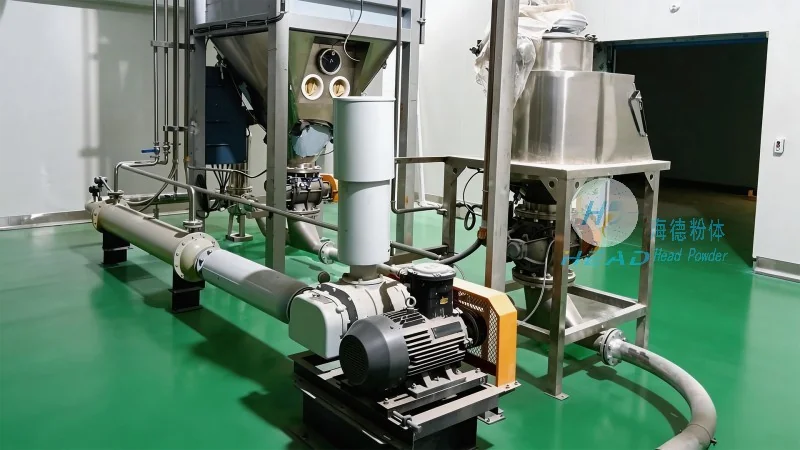
HeadPowder offers a range of equipment tailored to the specific needs of denitrification agent handling. The primary components of a pneumatic conveying system include the feed hopper, air compressor, conveying line, and receiving hopper. The feed hopper is designed to store and feed the denitrification agent into the system, with features such as a rotary valve or screw feeder to control the material flow. The air compressor provides the necessary pressure to move the material through the conveying line, with options including rotary lobe, screw, or piston compressors, depending on the system requirements. The conveying line itself is typically made of stainless steel or other corrosion-resistant materials to handle the chemical properties of the denitrification agent. The receiving hopper collects the material at the end of the conveying line, with a discharge valve to control the material release. HeadPowder selects equipment based on factors such as material flow rate, system pressure, and space constraints, ensuring that each component is compatible and contributes to the overall system efficiency.
Design Calculations for Pneumatic Conveying Systems
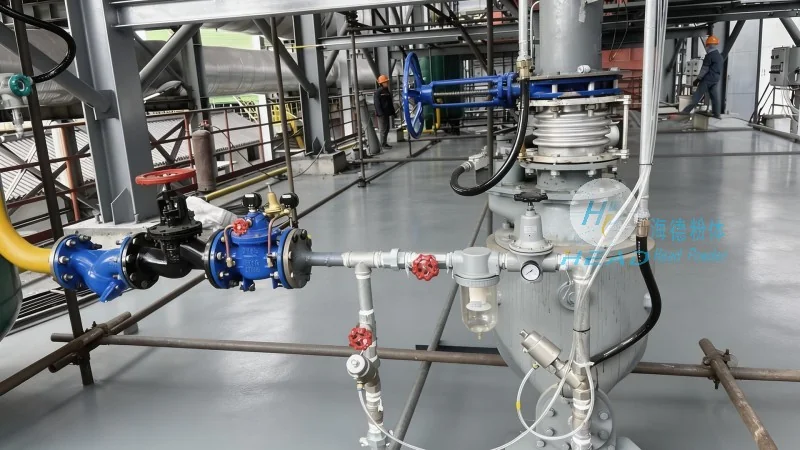
The design calculations for a pneumatic conveying system involve several steps to determine the optimal parameters for material transport. First, the material's physical properties are analyzed to calculate the required air velocity and pressure. The air velocity must be sufficient to lift and transport the particles, typically ranging from 20 to 30 meters per second for dilute phase systems. The pressure drop along the conveying line is calculated based on the length, diameter, and material properties, using formulas such as the Ergun equation. The power consumption of the air compressor is determined by the air flow rate and pressure, ensuring that the system operates within the compressor's capacity. HeadPowder engineers use advanced software and empirical data to perform these calculations, ensuring accuracy and reliability. The calculations also consider the system's efficiency, including the recovery of air from the receiving hopper and the use of cyclones or filters to separate the material from the air stream. These steps help in optimizing the system's performance and reducing energy consumption.
Application Examples and Case Studies
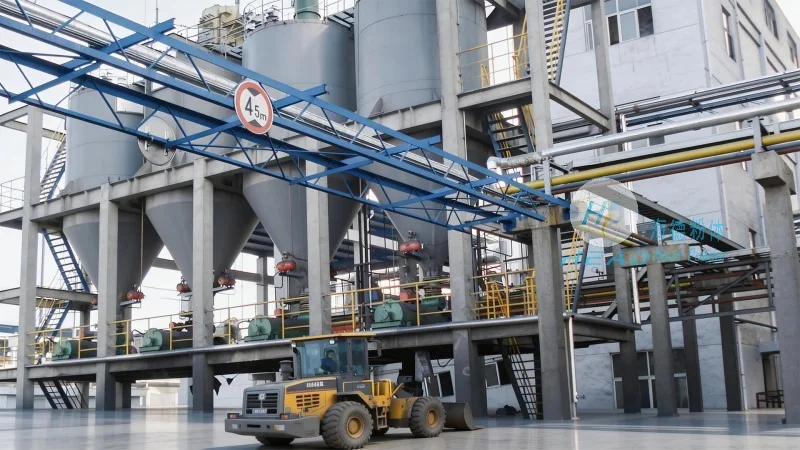
HeadPowder has successfully implemented pneumatic conveying systems for denitrification agents in various industrial applications. For example, in a power plant, the system was designed to transport urea-based denitrification agents from storage silos to the injection points in the boiler. The system included a rotary valve feed hopper, a high-pressure rotary lobe compressor, and a stainless steel conveying line with multiple transfer points. The design calculations ensured that the air velocity was sufficient to transport the particles over a distance of 100 meters, with a pressure drop of 0.5 bar. The system operated efficiently, with minimal material loss and low energy consumption. Another application involved a chemical plant where the denitrification agent was a fine powder with high moisture content. The system was designed as a dense phase conveying system to prevent material degradation and caking. The use of a screw feeder and a high-pressure piston compressor ensured that the material was transported at a controlled rate, with minimal air leakage. These case studies demonstrate the effectiveness of HeadPowder's design and equipment selection process in meeting the specific needs of denitrification agent handling.
Conclusion and Service Offerings
HeadPowder provides comprehensive solutions for the design and selection of pneumatic conveying systems for denitrification agents. The company's expertise in material handling engineering, combined with advanced design calculations and equipment selection, ensures that clients achieve efficient, reliable, and cost-effective material transport. By considering the physical properties of the denitrification agent and the system requirements, HeadPowder engineers develop customized solutions that meet the unique needs of each project. The company's services include system design, equipment supply, installation, and commissioning, ensuring that clients receive end-to-end support. HeadPowder's commitment to quality and customer satisfaction has made it a trusted partner in the industrial material handling sector, particularly in the denitrification agent industry. With its headquarters in Shandong, China, HeadPowder continues to serve clients globally, providing innovative solutions for pneumatic conveying systems.