
In the evolving landscape of industrial material handling, pulverized coal ash management has emerged as a critical operational challenge for power plants, cement manufacturers, and steel producers worldwide. As environmental regulations tighten and production scales expand, the demand for efficient, safe, and cost-effective coal ash transportation systems has never been greater. Pneumatic conveying technology, which utilizes compressed air to move dry bulk solids through enclosed pipelines, offers a proven solution that minimizes dust emissions, reduces manual labor, and ensures continuous material flow. However, the success of any pneumatic conveying system depends heavily on the technical specification—correctly sizing pipelines, selecting appropriate air velocities, choosing feeder mechanisms, and integrating reliable filtration components. This article provides a comprehensive technical solution specification for pulverized coal ash pneumatic conveying, drawing on industry best practices, real-world performance data, and engineering principles. It is designed to help plant managers, project engineers, and procurement specialists make informed decisions when designing or upgrading their ash handling systems. With a focus on system reliability, energy efficiency, and long-term operational cost, the content aims to bridge the gap between theoretical design and practical implementation. The discussion covers system architecture, key component selection, flow regime analysis, pressure drop calculations, and maintenance considerations—all presented in a modular, easy-to-reference format. Whether you are planning a greenfield installation or retrofitting an existing network, this specification serves as a technical roadmap to achieve consistent, dust-free, and low-wear conveying performance.
Before selecting any pneumatic conveying equipment, it is essential to characterize the pulverized coal ash being handled. Ash from coal combustion typically exhibits low bulk density ranging from 0.6 to 1.2 t/m³, fine particle size distribution where over 80% of particles are below 75 microns, and moderate abrasiveness due to silica and alumina content. The moisture content, usually below 2% for dry ash, significantly influences flowability, while the angle of repose and cohesion affect the material's tendency to arch or rat-hole in storage vessels. For pneumatic conveying design, the key parameters include particle density, mean particle diameter, and the Geldart classification. Most pulverized coal ash falls into Group A (aeratable) or Group C (cohesive) depending on particle size and humidity. Understanding these material characteristics allows engineers to specify correct air velocities—typically 10–20 m/s for dilute phase and 2–8 m/s for dense phase—to prevent pipeline blockage, excessive wear, or particle degradation. Additionally, the erosive nature of fly ash demands careful selection of pipe material and bend geometry to extend system life. Headpowder's engineering team has accumulated extensive empirical data on ash behaviors across diverse coal grades, enabling precise calculation of minimum conveying velocity and maximum solids loading ratio for each unique application.

Based on decades of field experience and published research, pulverized coal ash pneumatic conveying can be categorized into two primary regimes: dilute phase and dense phase. In dilute phase conveying, solids are suspended in a high-velocity gas stream with typical solids-to-gas ratios under 15 kg/kg. This method is simple to design, uses cost‑effective rotary airlock feeders, and works well for short distances (up to 200 meters). However, higher air velocities result in greater pipe wear and energy consumption. Dense phase conveying, by contrast, operates at low velocities (2–8 m/s) with high solids loading ratios exceeding 30 kg/kg, often in a plug flow or moving bed pattern. This regime drastically reduces pipe erosion and particle degradation while lowering compressed air consumption by 30–50% compared to dilute phase. For pulverized coal ash, dense phase conveying is increasingly preferred in modern plants due to its superior energy efficiency and reduced maintenance burden. The selection between the two depends on distance, capacity, layout constraints, and ash characteristics. For example, a 500‑meter pipeline transporting 50 t/h of fly ash would likely require a dense phase system with blow tank feeding, while a short 50‑meter transfer at 5 t/h could be economically served by dilute phase. Headpowder has engineered numerous hybrid systems that combine the benefits of both regimes, such as using dilute phase in the initial pickup section and transitioning to dense phase for long-distance transport. The technical specification must clearly define the conveying mode, target capacity (t/h), pipeline route length, number of bends, and allowable pressure drop—typically 1–3 bar for dilute phase and 2–5 bar for dense phase systems.


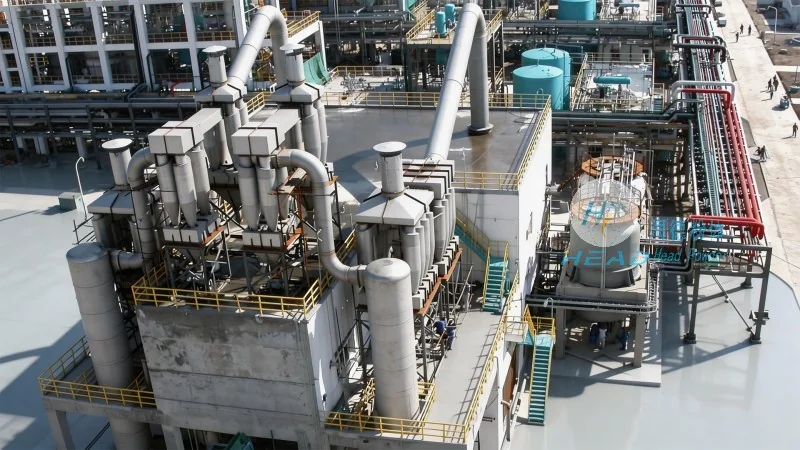
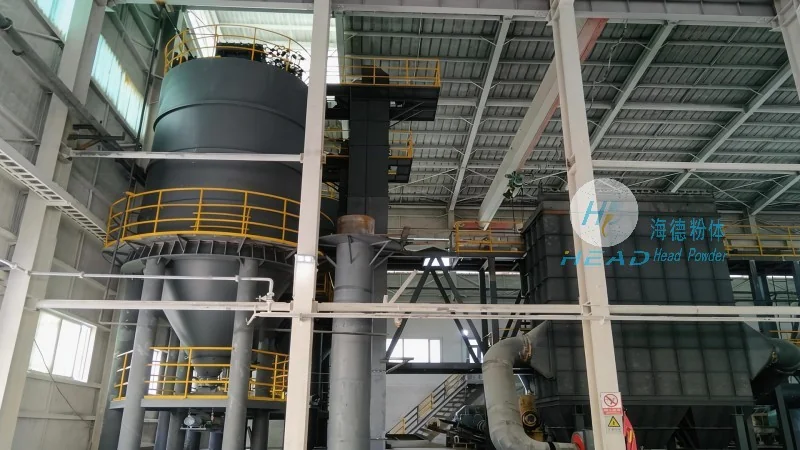
Every pneumatic conveying system for pulverized coal ash can be broken down into four major sub‑systems: feeding device, conveying pipeline, gas‑solid separation, and control instrumentation. A well‑specified system ensures consistent material flow, minimal fugitive dust, and energy optimized operation.
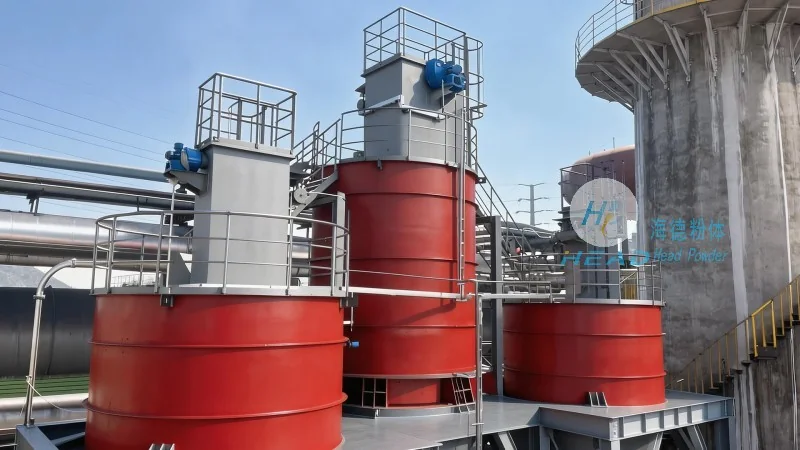
Feeding Devices: Rotary airlock feeders are common for dilute phase but can experience wear and air leakage. For dense phase, blow tanks (pressure vessels) with bottom discharge and fluidizing pads are recommended. The blow tank volume should be sized to hold at least twice the conveying batch capacity to maintain continuous operation. The aeration system inside the blow tank must provide uniform air distribution to prevent blowholes. Headpowder’s proprietary flow‑assist geometry ensures reliable discharge even for cohesive ash grades, with field‑tested feed rates up to 80 t/h per unit.
Conveying Pipeline: Pipe diameter calculation must balance pressure drop and velocity. For a given ash flow rate, larger diameter reduces velocity and wear but increases capital cost. Standard carbon steel schedule 40 pipes with 3–5 mm wall thickness are often used, but for high‑wear applications, internal ceramic lined pipes or hardened steel bends with extra radius (R/D ≥ 10) significantly extend service life. The total number of 90‑degree bends should be minimized—ideally fewer than 10 in a 500‑m line—since each bend can contribute a pressure loss equivalent to 10–20 meters of straight pipe. Detailed isometric drawings should be included in the specification to identify every elbow, tee, and diverter location.
Gas‑Solid Separation: Baghouse filters or pulse‑jet cartridge collectors with an air‑to‑cloth ratio of 0.8–1.2 m/min for ash are standard. The filter medium must resist high temperature (up to 120°C) and fine dust penetration. A screw conveyor or rotary discharge valve at the hopper bottom ensures continuous removal of collected ash. In systems handling large volumes, a primary cyclone can pre‑separate up to 90% of material to reduce filter loading.
Control and Instrumentation: Pressure transmitters at the blow tank outlet and receiver inlet, differential pressure across the filter, and flow meters on the compressed air line are essential for system monitoring. A PLC‑based control with PID loops for air pressure regulation can automatically adjust conveying parameters when ash properties fluctuate. Modern systems also include remote connectivity via OPC‑UA for integration with plant DCS. Headpowder provides a complete control package that logs key performance indicators such as real‑time solids flow rate, specific power consumption (kWh/t), and filter pressure drop trends. These data points enable predictive maintenance and continuous improvement.
Accurate pressure drop calculation is the foundation of a reliable pneumatic conveying specification. For pulverized coal ash, the total pressure loss consists of four components: air‑only loss (friction), solids acceleration loss, solids lifting loss (if vertical), and solids friction loss. Using the standard Ergun equation modified for low‑velocity powder flows, engineers can predict pipeline pressure requirements. For a typical 400‑meter horizontal line conveying 40 t/h of fly ash in dense phase, the total pressure drop often falls between 2.0 and 3.5 bar. The air supply system must be specified accordingly: screw compressors or rotary vane blowers with adequate capacity (e.g., 10–30 Nm³/min) and discharge pressure 0.5–1.0 bar above the maximum system pressure. Variable speed drives on the compressor motor can match air flow to actual demand, reducing energy waste during low‑load periods. Empirical data from Headpowder’s installations show that dense phase systems for ash typically consume 2–5 kWh per ton conveyed, compared to 6–12 kWh/t for dilute phase, representing significant operational cost savings. The specification should include a detailed pressure drop calculation table for each design case, showing velocity profiles at different pipeline sections and verifying that minimum conveying velocity is maintained at all points—especially at bends and vertical risers where deceleration can lead to blockage.
A robust technical specification must also address mechanical installation requirements and startup procedures. Proper pipe support spacing (typically 3 meters for horizontal runs, 1.5 meters for vertical) prevents sagging and misalignment. Expansion joints should be placed every 100 meters to accommodate thermal expansion in outdoor pipelines exposed to sunlight. All flanges and joints must be sealed with high‑temperature gaskets to avoid ash leakage. During commissioning, controlled ramp‑up of ash feed rate from 25% to 100% over several hours allows detection of any flow irregularities. Pressure drops should be recorded at each step and compared to design values—any deviation exceeding 15% indicates potential blockage or incorrect air velocity. Maintenance planning should include quarterly inspection of wear‑sensitive components like bends, blow tank discharge nozzles, and filter bags. Headpowder’s typical service intervals: pipeline visual inspection every 6 months, filter bag replacement every 18–24 months, and blow tank refurbishment every 5 years depending on ash abrasiveness. A well‑maintained system can achieve 95% availability and over 10 years of operational life. Sparing critical components such as rotary airlock seals, pressure transmitters, and solenoid valves ensures minimal downtime. The specification should also include reference to applicable industry standards such as ISO 8573 (compressed air quality), ATEX regulations for dust explosion safety (if applicable), and local emission limits for fugitive dust. With growing emphasis on sustainable operations, the integration of energy recovery (e.g., using exhaust air for pre‑heating) and low‑pressure blow tanks can further reduce the carbon footprint of ash conveying.
Every plant environment presents unique constraints—limited headroom, existing structural steel, or unusual ash chemistry. A one‑size‑fits‑all specification often leads to suboptimal performance. That is why headpowder offers tailored engineering services starting from material sampling and bench‑scale flowability tests through to full finite element analysis of piping stress. For example, a client in the Philippines needed to transport highly abrasive bottom ash with 8% moisture over a 600‑meter route up a 30‑meter elevation. Headpowder designed a hybrid system using a pressurized blow tank with steam injection to reduce friction, plus ceramic‑lined vertical riser sections. The system achieved 98% uptime and cut maintenance costs by 40% compared to the previous dilute phase setup. For cases where baghouse space is constrained, a sintered metal filter option with back‑pulse cleaning can reduce footprint by 50% while maintaining emissions below 10 mg/Nm³. Our team also provides ongoing remote monitoring, predictive wear analytics, and spare parts inventory suggestions to keep the system running at peak efficiency. The technical specification document we deliver includes not only the engineering drawings and component datasheets but also a commissioning protocol, operator training manual, and recommended spare parts list with part numbers. By combining deep process knowledge with practical field experience, headpowder ensures that every pneumatic conveying solution for pulverized coal ash is reliable, economical, and future‑ready.
For any inquiries regarding the design, specification, or retrofit of pulverized coal ash pneumatic conveying systems, please reach out to our technical team. (咨询热线:156-6277-7102) headpowder is committed to providing high‑quality engineering support and customized solutions that meet your exact plant requirements. We welcome the opportunity to discuss your application in detail and share case‑specific performance data from similar installations worldwide.
Shandong headpowder Engineering Co., Ltd.
156-6277-7102(Manager Zhang)
0531-83386006
Jinan City, Shandong Province, China 
服务热线
微信咨询
回到顶部