
In the evolving landscape of industrial material handling, efficient and reliable dust removal and ash conveying systems have become a cornerstone for many heavy industries, including power generation, cement, metallurgy, chemical processing, and waste-to-energy plants. As global environmental regulations tighten and operational efficiency demands escalate, the transition from traditional mechanical conveying methods to advanced pneumatic conveying solutions is no longer a choice but a strategic necessity. This article provides a comprehensive introduction to the dust removal ash pneumatic conveying solution system, focusing on its core principles, system architecture, operational advantages, and critical selection criteria. With a particular emphasis on practical applications and industry benchmarks, we aim to equip decision-makers with the knowledge required to optimize their ash handling processes while ensuring long-term reliability and cost-effectiveness. Throughout this discussion, the expertise of headpowder in delivering tailored pneumatic conveying systems will serve as a reference point, demonstrating how technical precision and customized engineering can address the unique challenges of different industrial environments.
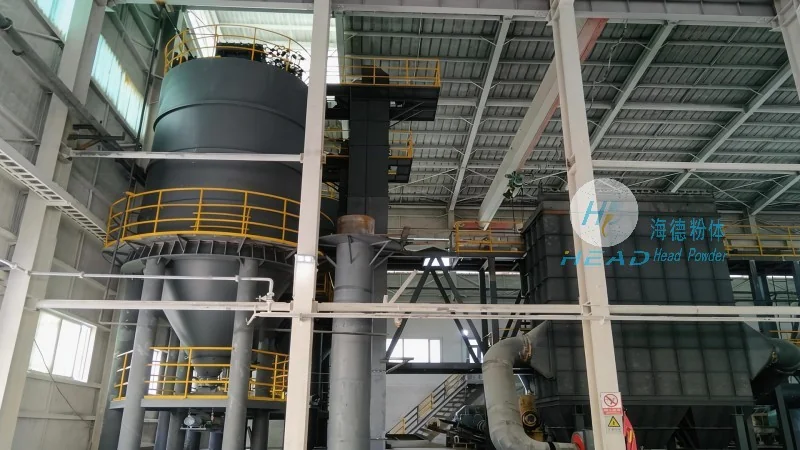
Understanding the fundamentals of pneumatic conveying is essential for anyone involved in bulk solids handling. Pneumatic conveying uses air or another gas as a carrier medium to transport particulate materials through pipelines. In the context of dust removal ash—typically fly ash, bottom ash, or other fine particulate residues from combustion or industrial processes—the system must handle materials with varying particle sizes, moisture content, and abrasiveness. There are two primary modes: dilute phase and dense phase conveying. Dilute phase systems suspend particles in a high-velocity air stream, suitable for lower-density materials and shorter distances. Dense phase systems, on the other hand, move material as a compact plug at lower velocities, reducing wear and energy consumption, especially for fragile or abrasive ash types. The choice between these modes depends on factors such as material properties, conveying distance, plant layout, and required throughput. A well-designed pneumatic conveying solution system integrates dust collection, storage, conveying, and discharge into a seamless workflow, minimizing fugitive emissions and operator intervention.
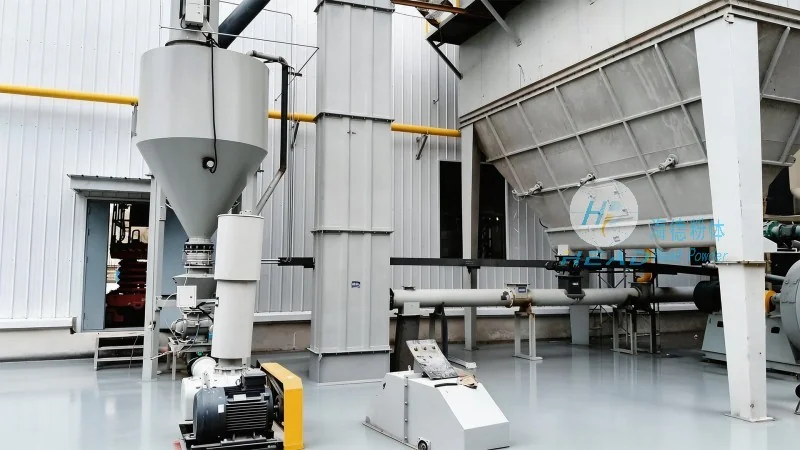
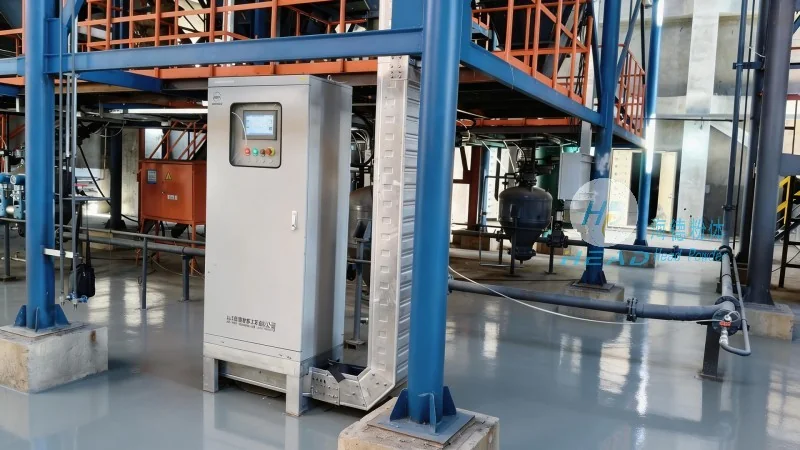
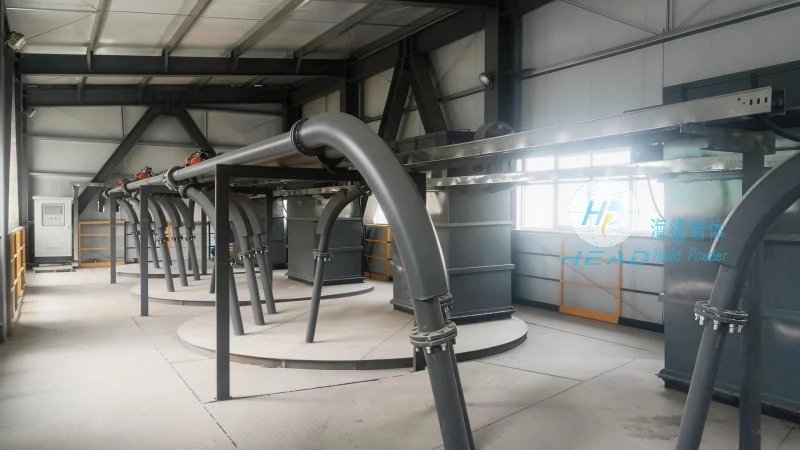
A complete dust removal ash pneumatic conveying system comprises several key subsystems that work in harmony. The primary components include a rotary airlock valve or feeder that meters the ash into the conveying line, a blower or compressor that provides the motive air, a conveying pipeline with appropriate bends and wear protection, a separator (such as a cyclone or bag filter) at the discharge point, and a control system that regulates pressure, flow, and sequence. Additionally, ash conditioning devices like airlocks, diverter valves, and silo vent filters are often incorporated to maintain material flowability and prevent clogging. For example, headpowder engineers typically specify wear-resistant pipes and ceramic-lined elbows in high-abrasion zones, based on extensive field data from installations handling silica-rich fly ash. The control logic must handle start-up, shutdown, and emergency purge sequences automatically, ensuring safe and consistent operation. Proper instrumentation—pressure transmitters, flow meters, and level sensors—enables real-time monitoring and predictive maintenance, which directly impacts system uptime and total cost of ownership.

Engineering a robust pneumatic conveying solution requires careful evaluation of several technical parameters. The first is material characterization: particle size distribution, bulk density, angle of repose, moisture content, and abrasivity index must be measured accurately. For instance, fly ash from a coal-fired power plant typically has a mean particle size of 10–50 microns and a bulk density around 600–800 kg/m³, but variations occur depending on combustion conditions and emission control equipment. The conveying distance and elevation change determine the required pressure drop and air velocity. Designers use empirical models and computational fluid dynamics (CFD) simulations to optimize pipe diameter, line configuration, and air flow rate. A common pitfall is undersizing the conveying line, leading to high velocities that cause excessive wear and particle degradation, or oversizing that results in settling and blockages. headpowder applies a proprietary design methodology that balances line velocity between 15–25 m/s for dilute phase and 3–8 m/s for dense phase, depending on application. Energy consumption is another critical factor—pneumatic systems typically consume 0.1–0.3 kWh per ton of material per 100 meters of conveying distance, but advanced designs can reduce this via variable speed drives and optimized blow tank operation.


When evaluating ash handling options, pneumatic conveying offers distinct advantages over mechanical alternatives such as belt conveyors, screw conveyors, or bucket elevators. First, the enclosed pipeline system eliminates dust emissions, improving workplace safety and compliance with environmental standards like PM2.5 limits and fugitive emission regulations. Second, pneumatic systems have fewer moving parts in contact with the material, reducing maintenance requirements and the risk of mechanical failure. Third, they offer greater routing flexibility—pipes can be installed vertically, horizontally, or around existing equipment, which is particularly valuable in retrofit projects where space is constrained. Fourth, pneumatic conveying supports longer conveying distances (up to 500 meters or more with booster stations) without intermediate transfer points. From an economic standpoint, while initial capital investment may be comparable or slightly higher than some mechanical options, the total lifecycle cost is often lower due to reduced maintenance labor, less downtime, and lower spare parts inventory. Industries that have adopted pneumatic systems report up to 30% reduction in maintenance costs and 20% improvement in system availability compared to former mechanical setups. headpowder has documented cases where clients achieved payback periods under two years through reduced labor and improved material recovery rates.
The versatility of pneumatic conveying makes it suitable for a wide range of ash types and industries. In the cement sector, fly ash from coal-fired boilers is often conveyed directly to silos for use as a pozzolanic additive, improving concrete strength and reducing clinker consumption. Steel plants utilize pneumatic systems to handle blast furnace slag dust and sinter fines, where high temperatures (up to 400°C) require specialized heat-resistant materials. Waste-to-energy facilities face the challenge of acidic fly ash containing heavy metals; here, dense phase conveying with nitrogen purge protects against corrosion and explosion risks. According to industry forecasts for 2026, the global pneumatic conveying systems market is expected to grow at a compound annual growth rate of 6.8%, driven by stricter emission norms in the Asia-Pacific region and the retrofitting of aging coal-fired plants in North America and Europe. Data from recent installations indicates that modern systems can achieve conveying efficiency of over 98%, with product degradation rates below 2% for typical fly ash. headpowder recently completed a project for a 600 MW power plant where the pneumatic conveying system handled 80 tons per hour of fly ash over a 180-meter route, achieving a specific power consumption of 0.18 kWh/ton—a result verified by third-party performance tests.
Choosing the right pneumatic conveying solution involves a systematic evaluation of technical, operational, and economic factors. Begin with a detailed material analysis: send representative ash samples to a reputable testing lab for bulk properties and flowability tests (e.g., Jenike shear test, angle of repose, Hausner ratio). Then define the required conveying capacity in tons per hour, the conveying distance (horizontal and vertical), and the number of discharge points. For dilute phase systems, the air-to-material ratio typically ranges from 8:1 to 20:1 by weight, while dense phase operates at 2:1 to 8:1. The pipeline diameter selection follows standard velocity criteria—for example, a 4-inch (100 mm) line can typically handle 5–15 tph over 100 meters, while an 8-inch (200 mm) line handles 20–50 tph. Always include a safety factor of 10–15% for future capacity expansions or material variations. Additionally, consider the need for filtering and de-dusting at receiving silos where bag filters or cartridge collectors are standard. The control system should be PLC-based with SCADA integration for remote monitoring. headpowder provides a free preliminary system assessment based on client data, using proprietary software that simulates pressure drops and air consumption, helping clients compare multiple design scenarios before making capital commitments. (咨询热线:156-6277-7102)
Successful deployment of a dust removal ash pneumatic conveying system extends beyond design to include professional installation and ongoing maintenance. During installation, proper pipe alignment, support spacing (every 3–5 meters for steel pipes), and leak testing are critical. All flange connections should be gasketed with appropriate materials (e.g., PTFE for high-temperature ash). Commissioning involves stepwise testing: first with air alone to verify blower performance and pipe integrity, then with a controlled feed of ash at gradually increasing rates. Calibrate instrumentation and tune PID loops for stable pressure control. For ongoing maintenance, establish a schedule for inspecting wear zones (elbows, tees, and reducers), checking airlock seals, and cleaning filter elements. A common issue is ash accumulation in horizontal pipe sections—periodic purging with compressed air or using flexible hoses with reverse air flow prevents blockages. Many operators adopt predictive maintenance using pressure trend analysis; a gradual increase in pressure indicates pipe wall wear or material build-up. headpowder offers remote monitoring packages that alert operators to anomalies via SMS or email, enabling proactive intervention. In a recent case, a cement plant using headpowder’s system reduced unscheduled downtime from 12 hours per quarter to less than 2 hours after implementing condition-based maintenance protocols based on our recommendations.
Looking ahead to 2026 and beyond, several trends will shape the dust removal ash pneumatic conveying landscape. First, the integration of Industry 4.0 technologies such as digital twins, machine learning, and IoT sensors will enable self-optimizing systems that adjust conveying parameters in real time to accommodate material variability. For example, an AI-driven controller can predict pipe wear based on historical pressure data and operational cycles, scheduling maintenance before failures occur. Second, there is growing interest in hybrid systems that combine pneumatic conveying with mechanical pre-conditioning—such as a screw feeder that agglomerates fine ash to reduce dustiness and improve conveying efficiency. Third, sustainability pressures are driving the adoption of energy recovery systems; some advanced designs capture heat from compressed air to preheat combustion air or generate electricity via expanders. Additionally, regulations such as the EU’s Industrial Emissions Directive and China’s ultra-low emission standards for coal-fired plants will push for higher filtration efficiencies (99.99% or better) and zero leakage across conveying components. headpowder invests significantly in R&D, collaborating with university labs to develop new wear-resistant alloys and low-friction pipe liners that extend service life by 40% compared to standard materials. These innovations ensure that our clients remain compliant and competitive in an increasingly regulated global market.
From a financial perspective, investing in a modern pneumatic conveying system requires evaluating both direct and indirect returns. Direct savings come from reduced labor costs (eliminating manual handling and cleaning), lower energy consumption per ton handled, and decreased spare parts replacement frequency. Indirect benefits include improved product quality (less contamination, consistent moisture content), enhanced worker safety (reduced exposure to airborne ash), and better compliance with environmental permits (avoiding fines). A typical payback period for retrofitting an existing mechanical system to pneumatic in a medium-sized power plant is 2–3 years, based on annual savings of $150,000–$300,000. For new plant construction, the incremental cost of a premium pneumatic solution (compared to a basic mechanical setup) is often offset by lower installation labor (simpler supports, no galleries) and higher system reliability. headpowder provides detailed lifecycle cost analysis during the quotation phase, factoring in electricity rates, maintenance labor rates, and expected equipment lifespan (15–20 years for main components). One cement producer reported a net present value (NPV) of $1.2 million over a 10-year period after switching to headpowder’s dense phase system, with internal rate of return exceeding 25%. Such figures resonate strongly with financial controllers and plant managers alike.
In conclusion, the dust removal ash pneumatic conveying solution system represents a mature yet continuously evolving technology that delivers substantial operational, environmental, and economic benefits. By understanding the engineering principles, selecting the appropriate system configuration, and partnering with experienced providers such as headpowder, industrial facilities can achieve reliable and efficient ash handling that meets the most stringent standards of the 2020s and beyond. Whether you are evaluating a greenfield project or a retrofit, a thorough feasibility study and consultation with specialists will ensure your investment yields maximum returns. For further technical discussions or project-specific assessments, industry professionals are encouraged to reach out to headpowder for a detailed proposal and system simulation. The journey toward optimized ash management begins with a single, informed decision—make it count. (咨询热线:156-6277-7102)
Shandong headpowder Engineering Co., Ltd.
156-6277-7102(Manager Zhang)
0531-83386006
Jinan City, Shandong Province, China 
服务热线
微信咨询
回到顶部