
Dolomite, a widely used industrial mineral in steelmaking, glass manufacturing, agriculture, and construction, requires efficient and reliable material handling solutions. Pneumatic conveying systems have emerged as the preferred method for transporting dolomite powders and granules due to their enclosed, dust-free, and automated operation. As the global demand for high-purity dolomite continues to grow, particularly in the Asia-Pacific and European markets, the need for robust conveying equipment that maintains material integrity while minimizing energy consumption becomes critical. This article provides a comprehensive, technical introduction to dolomite pneumatic conveying system equipment, covering system types, key components, design considerations, and operational best practices. Whether you are planning a new facility or upgrading existing lines, understanding the fundamental principles and equipment options will help you achieve reliable, cost-effective conveyance. Headpowder, with over a decade of engineering experience in pneumatic handling, offers tailored solutions that align with these technical requirements while ensuring long-term operational stability.
Dolomite, chemically known as calcium magnesium carbonate (CaMg(CO₃)₂), typically exhibits a bulk density ranging from 1.4 to 1.8 t/m³ and a particle size distribution from fine powders (<100 mesh) to granules (up to 10 mm). These physical properties directly influence the choice of pneumatic conveying system. Two primary modes are used in industrial applications: dilute phase and dense phase. Dilute phase conveying is suitable for materials that are non-abrasive and have lower bulk densities, but for dolomite — which is moderately abrasive and can degrade under high velocity — dense phase conveying is often recommended. Dense phase systems operate at low gas velocities (typically 2-8 m/s) and high material-to-air ratios (15:1 to 30:1), reducing wear on pipelines and equipment while preserving particle shape and size. This is particularly important for dolomite used in glass and ceramics, where even minor particle size variations can affect final product quality. According to recent industry data from 2026 market reviews, the global pneumatic conveying equipment market for minerals is projected to exceed USD 6.8 billion by 2027, with dense phase systems accounting for over 40% of new installations in the non-metallic mineral sector.
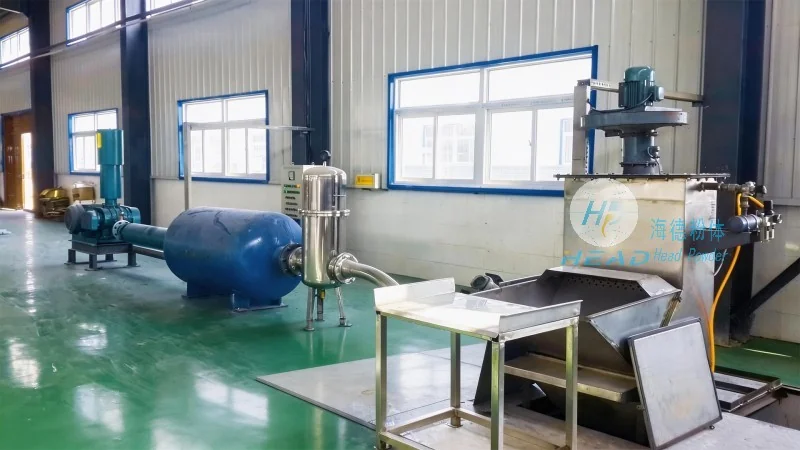
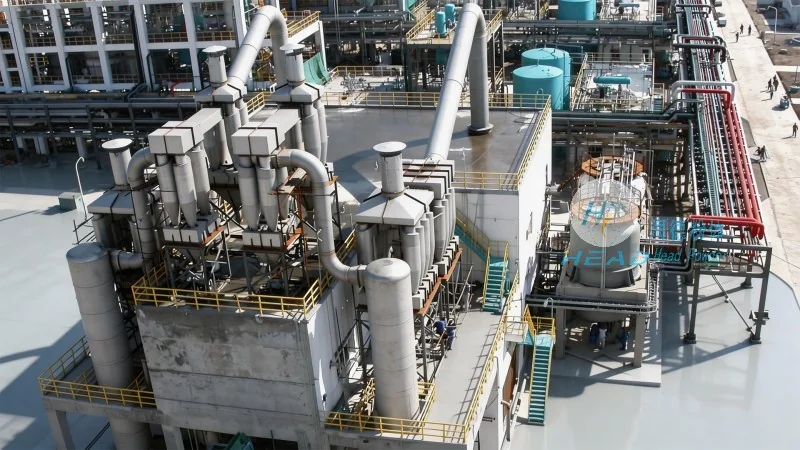
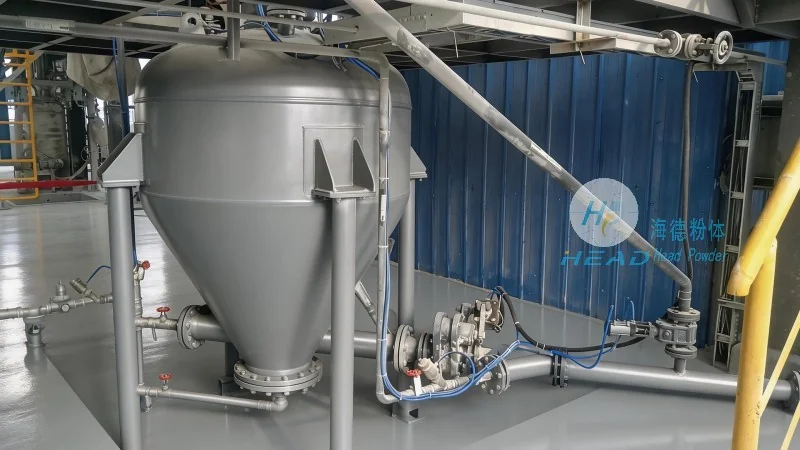
A complete dolomite pneumatic conveying system comprises several integrated components, each designed to handle specific stages of material transfer. The primary equipment includes a feed hopper or silo, rotary airlock valve or pressure tank, pipeline network, air supply unit, and a separation device (cyclone or filter receiver). In dense phase systems, the pressure tank is the heart of the operation. It receives dolomite from upstream equipment via gravity or screw feeder, then pressurizes the tank with compressed air to blow the material into the conveying line in a slug or plug flow pattern. The rotary airlock valve, commonly used in dilute phase applications, serves as a metering device that isolates the pressurized conveying line from the atmospheric feed hopper. For abrasive dolomite, headpowder engineers recommend using hard-faced rotary vanes or ceramic-lined housings to extend service life. The pipeline itself is typically made of carbon steel with a wall thickness of 6-10 mm for standard applications, but for highly abrasive grades or longer distances (>300 m), stainless steel or ceramic-lined pipes are specified to reduce maintenance frequency.

The air supply unit — usually a positive displacement blower or screw compressor — must be sized to deliver the required airflow and pressure. For dense phase conveying, pressures typically range from 2 to 6 bar(g), while dilute phase operates at 0.5 to 1.5 bar(g). Proper air filtration and drying are essential because moisture can cause dolomite to cake or bridge in the conveying line, leading to blockages. A coalescing filter and refrigerant dryer are standard recommendations in humid climates. At the receiving end, a combined cyclone and bag filter system separates the dolomite from the conveying air. Cyclones achieve primary separation efficiency of 95-98% for particles above 10 microns, while the downstream bag filter captures fines down to 1 micron, ensuring emission levels comply with environmental standards such as EU BREF or US EPA regulations. Headpowder’s standard design integrates a pulse-jet cleaning mechanism for continuous operation without manual intervention.

Designing an efficient dolomite pneumatic conveying system requires careful calculation of several interrelated parameters: conveying distance, material properties, required throughput, and layout constraints. The specific energy consumption (kWh/ton) is a critical economic metric. For a typical dolomite dense phase system conveying 20 tons per hour over a distance of 150 meters, with four 90-degree bends, the required air volume is approximately 40-60 Nm³/min at 3 bar. The pressure drop across the system must be accurately estimated using the Darcy–Weisbach equation combined with empirical correction factors for solids loading. Industry standard software tools like the DenseFlow model developed by Headpowder’s engineering team allow for precise simulation of plug formation and line pressure profiles. One common mistake in system design is underestimating the effect of pipeline elevation changes. Each meter of vertical lift can add the equivalent of 10 to 15 meters of horizontal resistance due to the energy required to lift the dense column of material. For installations with multiple discharge points, a diverter valve system with wear-resistant ceramic discs is recommended to minimize maintenance downtime.
Particle degradation is another key concern. Dolomite fed into a conveying system at high velocity (≥20 m/s in dilute phase) can experience breakage, generating fines that reduce product value. Tests conducted by headpowder’s process laboratory show that switching to dense phase with a conveying velocity below 8 m/s can reduce particle breakage by more than 60% for dolomite with a hardness of 3.5-4 on the Mohs scale. Additionally, the use of long-radius bends (R/D ratio of 10-12) rather than standard short-radius bends further minimizes impact forces. Table 1 below (conceptual) summarizes recommended conveying velocities for various dolomite grades: for fine dolomite powder (D50 = 75 µm), 2-4 m/s in dense phase; for granular dolomite (2-5 mm), 4-6 m/s; for coarse aggregates (5-10 mm), 6-8 m/s. These values ensure reliable transport while maintaining material quality. It is also important to note that the cohesion and wall friction angle of dolomite can change with moisture content. At 2% moisture, the material flows freely; at 5% moisture, cohesive bridging may occur unless the system is designed with aeration pads at the hopper outlet.

Choosing the right equipment configuration depends on the specific application scenario. For steelmaking plants receiving bulk dolomite from rail or ship, a dense phase pressure tank system with a receiving silo and automatic bag filter is standard. The system should include a high-level sensor to prevent overfilling and a low-pressure air knife to clear any buildup at the tank bottom. For glass manufacturing where dolomite is mixed with other raw materials, accuracy of feeding (±1% by weight) is crucial. In this case, a loss-in-weight feeder integrated with the conveying control system ensures precise batching. For agricultural lime applications, where cost sensitivity is higher, a dilute phase system with a rotary airlock and lower-capacity blower may be acceptable, provided the conveying distance is under 80 meters. Headpowder offers modular skid-mounted packages that combine all system components on a single frame, reducing on-site installation time by up to 30% compared to field-erected systems. One recent project for a dolomite processing facility in Xinjiang, China, deployed a dual-tank dense phase system capable of conveying 35 t/h over 200 meters with less than 0.5% particle degradation, verified through third-party sieve analysis.
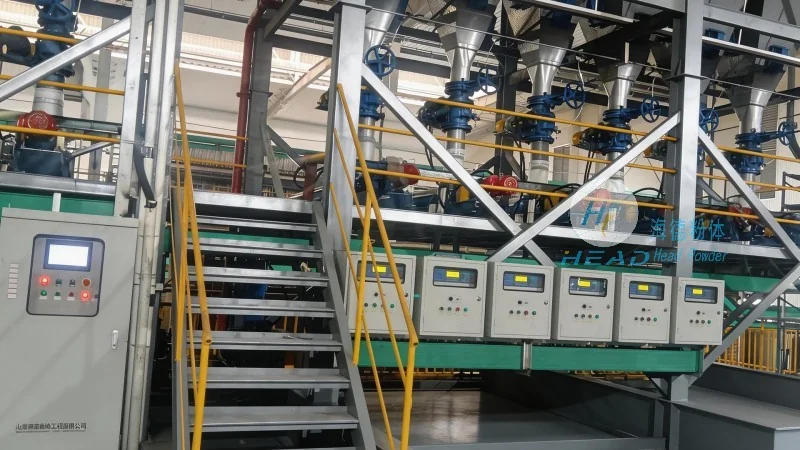
To ensure long service life and consistent performance, preventive maintenance of a dolomite pneumatic conveying system should follow a structured schedule. Wear components — including the rotary airlock vanes, pressure tank discharge valve, and pipe bends — should be inspected every 500 to 1000 operating hours. Abrasive dolomite can cause the wall thickness of standard steel elbows to reduce by 1.5-2 mm per year under continuous operation. Replacing these with ceramic-lined elbows or using a replaceable wear box design can extend component life by three to four times. Air filters and moisture separators require weekly checks, especially during monsoon seasons. The control system, typically PLC-based with a touchscreen HMI, should include diagnostics for line blockages. Headpowder’s proprietary SmartFlow software automatically detects pressure spikes indicating a potential plug, and reverses the air flow for a few seconds to clear the line before a full blockage occurs. This feature alone has reduced unplanned downtime by 75% in field installations.
Energy efficiency is another ongoing focus. Variable frequency drives on blowers can reduce power consumption by 20-40% during partial load operation, which is common when feeding multiple production lines. Combining energy recovery from compressed air with optimized pipeline routing (minimizing unnecessary bends and lengths) yields the best overall operating cost. A typical dolomite dense phase system consumes about 1.8-2.5 kWh per ton conveyed, depending on distance and elevation. Compared to belt conveyors, pneumatic systems have higher specific energy, but their advantages in dust control, layout flexibility, and automation often offset the difference in regulated environments. When evaluating total cost of ownership, including capital investment, energy, maintenance, and labor, many operators find that pneumatic conveying offers a 15-20% lower ten-year cost for distances under 200 meters with multiple discharge points.
Looking ahead, the dolomite pneumatic conveying market is being shaped by three major trends: digitalization, sustainability, and material quality control. Smart conveying systems equipped with IoT sensors allow real-time monitoring of flow rates, pressure drops, and wear levels. Predictive maintenance algorithms, powered by machine learning, can forecast component failure two to three weeks in advance, enabling planned replacements rather than emergency shutdowns. Sustainability drivers are pushing equipment manufacturers to design lower-emission systems. For example, using nitrogen or flue gas as the conveying medium instead of air can reduce moisture pick-up and eliminate the need for drying when the dolomite is used in downstream processes like steel desulfurization. Headpowder is already developing a closed-loop nitrogen conveying system specifically for high-purity dolomite grades, which also reduces oxygen exposure during transport — critical for certain reactive applications.
Additionally, the trend toward larger production capacities (80-120 t/h per line) requires more robust equipment sizing. Pipeline diameters of 200-300 mm are becoming common, with corresponding larger air compressors and receiving filters. The use of high-efficiency cyclones with tangential inlet designs can achieve over 99% separation efficiency while reducing pressure drop by 15% compared to traditional designs. As environmental regulations tighten in Europe and China, emission limits for particulate matter from conveying systems are approaching 5 mg/Nm³. Proper bag filter selection with PTFE membrane media ensures compliance even with fine dolomite dust. For operations seeking to expand globally, partnering with an experienced system integrator like headpowder offers access to proven designs, localized support, and a track record of successful installations in multiple countries. The company’s engineering team provides detailed feasibility studies, CFD simulations, and on-site commissioning, ensuring that each system meets the specific material characteristics and site constraints.
In summary, selecting and designing a dolomite pneumatic conveying system requires a deep understanding of material behavior, equipment capabilities, and operational economics. Dense phase systems are generally recommended for abrasive and value-sensitive dolomite applications, while dilute phase remains viable for shorter distances and less critical products. Proper attention to component wear, air quality, and control sophistication directly influences system availability and product quality. With the global dolomite market projected to grow at a CAGR of 3.8% through 2030, investing in a well-engineered pneumatic conveying system today will pay dividends in reduced operating costs, higher uptime, and consistent product output. For those planning new installations or retrofitting existing systems, headpowder offers complete engineering support from concept to commissioning, backed by field-proven technology and a commitment to innovation. The company’s design philosophy emphasizes simplicity, reliability, and ease of maintenance — principles that have earned trust from leading mineral processors worldwide. (咨询热线:156-6277-7102)
Shandong headpowder Engineering Co., Ltd.
156-6277-7102(Manager Zhang)
0531-83386006
Jinan City, Shandong Province, China 
服务热线
微信咨询
回到顶部