

Design of a Pneumatic Conveying System for Iron Oxide
HeadPowder, a leading engineering firm based in Shandong, China, specializes in the design and implementation of advanced pneumatic conveying systems tailored for iron oxide handling. The company's expertise lies in optimizing material transport efficiency, ensuring safety, and minimizing operational costs for industrial applications involving iron oxide. This article explores the key aspects of designing a pneumatic conveying system specifically for iron oxide, highlighting the technical considerations and practical solutions offered by Shandong HeadPowder Engineering Co., Ltd.
Key Components of the Pneumatic Conveying System
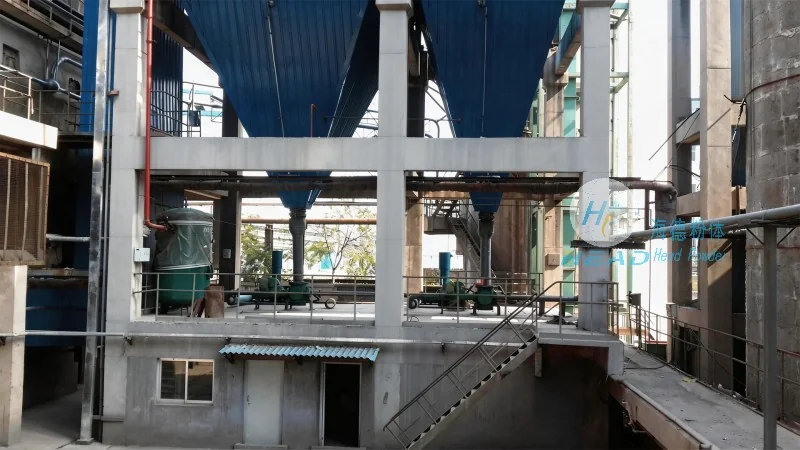
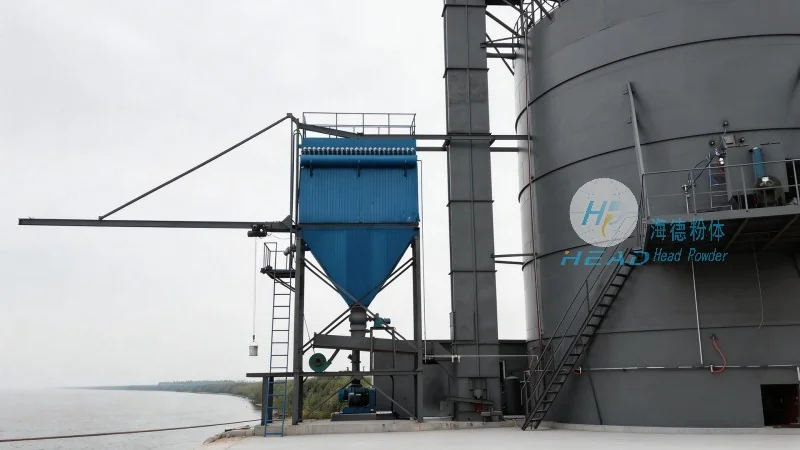
The pneumatic conveying system for iron oxide typically comprises several critical components that work in concert to achieve reliable material transport. These include a hopper for material storage, a rotary valve or feeder to control the flow rate, a conveying line (often equipped with bends and straight sections), a pressure vessel or receiver at the discharge end, and a dust collection system. Each component is selected based on the specific characteristics of iron oxide, such as its particle size, density, and flowability. For instance, the hopper design may incorporate a cone or wedge to prevent material bridging, a common issue with fine powders like iron oxide. The feeder, whether a rotary valve or a screw feeder, is chosen to maintain a consistent flow rate, which is crucial for preventing blockages in the conveying line. The conveying line itself is usually made of stainless steel or other corrosion-resistant materials to withstand the chemical properties of iron oxide and the abrasive nature of the particles. Bends and elbows are strategically placed to minimize pressure drop and ensure smooth material flow. The pressure vessel or receiver at the discharge end is designed to collect the conveyed material and may include a discharge valve or a rotary valve to regulate the outflow. Finally, a dust collection system, such as a baghouse or cartridge filter, is integrated to capture any airborne particles, ensuring compliance with environmental regulations and maintaining a clean working environment.
Design Considerations for Iron Oxide Handling
Designing a pneumatic conveying system for iron oxide requires careful consideration of several factors to ensure optimal performance and longevity. First, the particle size distribution of iron oxide is a critical parameter. Fine particles tend to create higher friction and can lead to increased pressure drop, while larger particles may cause wear on the conveying line and components. Therefore, the system design must account for the specific particle size, often using a combination of air velocity and pressure to achieve efficient transport. Second, the density and bulk density of iron oxide affect the conveying capacity. Higher bulk density allows for higher material flow rates, but may require higher air pressure or velocity to maintain flow. The system must be sized to handle the expected flow rate while minimizing energy consumption. Third, the flowability of iron oxide is another important factor. Some iron oxide grades may be cohesive or have poor flow characteristics, which can lead to bridging or rat-holing in the hopper. To address this, the hopper may be equipped with vibrators or air knives to improve material flow. Additionally, the system may include a pre-drying or conditioning step to adjust the moisture content of the iron oxide, as moisture can affect its flowability and cause caking. Fourth, the system must be designed to handle the potential for dust generation. Iron oxide is a fine powder, and during transport, it can become airborne, posing health and safety risks. Therefore, the dust collection system is a mandatory component, and its design must be optimized to capture all particles while minimizing pressure drop and energy consumption. Finally, the system must comply with local regulations regarding material handling and environmental protection. This includes proper ventilation, dust control measures, and the use of corrosion-resistant materials to prevent contamination of the iron oxide.
Advantages of the Pneumatic Conveying System
The pneumatic conveying system for iron oxide offers several advantages over traditional bulk material handling methods. First, it provides a closed system, which prevents dust from entering the environment and reduces the risk of contamination. This is particularly important for iron oxide, which is often used in applications where purity is critical, such as in the production of pigments or in the chemical industry. Second, the system allows for precise control over the flow rate, ensuring consistent material delivery to downstream processes. This is crucial for maintaining product quality and reducing waste. Third, the system is compact and can be installed in a variety of spaces, making it suitable for both new and existing facilities. Fourth, it reduces labor costs by automating the material transport process, minimizing the need for manual handling. Fifth, the system is energy-efficient compared to other methods, such as truck or rail transport, especially for short to medium distances. Finally, the system can be integrated with other equipment, such as mixers or reactors, to create a fully automated production line, enhancing overall operational efficiency.
Case Study: Implementation in a Local Iron Oxide Plant
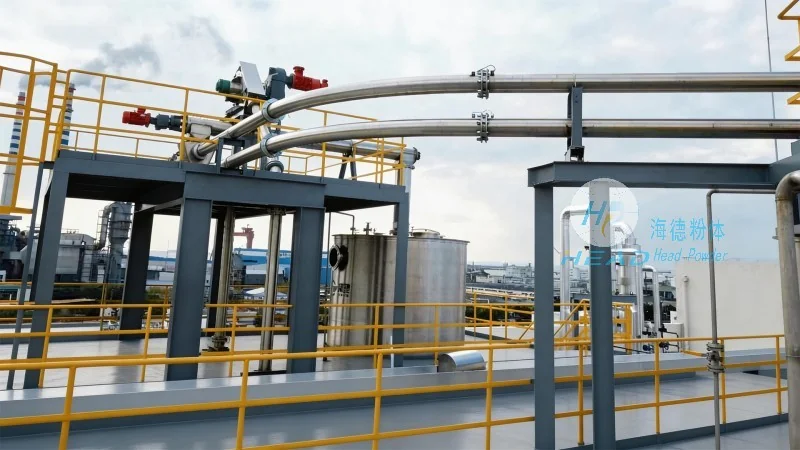
Shandong HeadPowder Engineering Co., Ltd. recently implemented a pneumatic conveying system for an iron oxide plant in Shandong, China. The plant processes fine iron oxide powders for use in the pigment industry. The system was designed to handle a flow rate of 10 tons per hour, with a particle size range of 10 to 200 microns. The hopper was equipped with a cone design to prevent bridging, and a rotary valve feeder was used to control the flow rate. The conveying line was made of stainless steel with a diameter of 200 mm, and included several bends and elbows to navigate the plant layout. The pressure vessel at the discharge end had a capacity of 5 cubic meters, and was connected to a baghouse dust collection system. The system was installed in an existing facility, and the integration was completed within a month. The plant reported a significant improvement in material transport efficiency, with a reduction in pressure drop and energy consumption. The dust collection system effectively captured all airborne particles, ensuring compliance with local environmental regulations. The automated system also reduced labor costs by 30%, as manual handling was minimized. The plant's production output increased by 15% due to the consistent material delivery and reduced downtime. This case study demonstrates the effectiveness of the pneumatic conveying system designed by HeadPowder for iron oxide handling.