

Fly Ash Negative Pressure Pneumatic Conveying
Fly ash, a byproduct generated from coal combustion in power plants and industrial boilers, requires efficient and reliable handling systems for transportation, storage, and disposal. Among the various conveying technologies, the fly ash pneumatic conveying method stands out due to its enclosed nature, low maintenance, and ability to handle fine, abrasive materials. Specifically, fly ash vacuum pneumatic conveying utilizes negative pressure to transport fly ash through pipelines, ensuring minimal dust emission and product degradation. This article provides a comprehensive introduction to the fly ash vacuum pneumatic conveying system, its components, operational principles, advantages, and applications, with a focus on the solutions offered by Shandong Headpowder Engineering Co., Ltd., also known as headpowder.
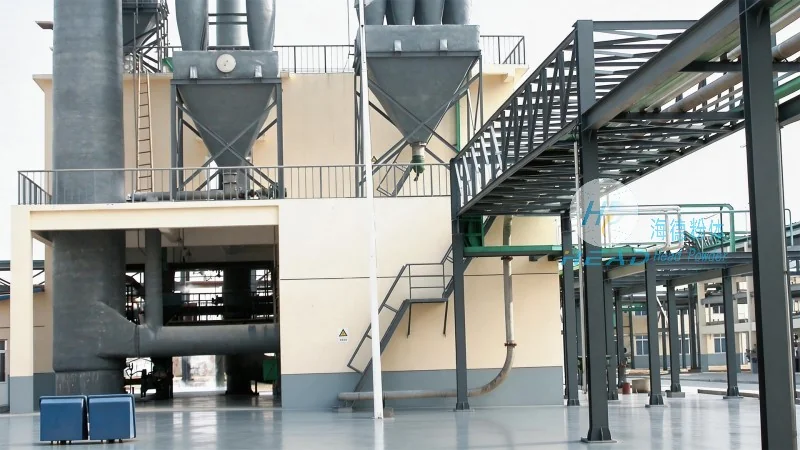
What Is Fly Ash Vacuum Pneumatic Conveying?
Fly ash vacuum pneumatic conveying is a closed-loop material handling system that uses a vacuum pump or blower to create negative pressure inside the conveying pipeline. The pressure differential pulls fly ash from a feed point (such as a hopper, silo, or baghouse) into the pipeline and transports it to a destination receiver, where the material is separated from the air stream via a cyclone or filter. Unlike positive pressure systems, the vacuum approach ensures that any leakage in the pipeline draws air inward, preventing dust escape and making it ideal for environmental-sensitive applications. The system is widely used for fly ash conveying in power plants, cement plants, and other industrial facilities that require dust-free, low-noise, and flexible material transport.
Core Components of the Fly Ash Vacuum Conveying System
A typical fly ash pneumatic conveying system consists of several key components: a feed device (often a rotary airlock or venturi feeder), a conveying pipeline, a vacuum source (such as a Roots blower or liquid ring vacuum pump), a material-air separator (cyclone separator or bag filter), and a control system. In the fly ash vacuum pneumatic conveying configuration, the vacuum source is placed at the end of the system, drawing air from the pipeline. The feed point is equipped with a sealing device to prevent air ingress. The pipeline is designed with smooth bends and appropriate diameter to minimize pressure drop and wear. The separator collects the fly ash, while the cleaned air is exhausted or recycled. Headpowder specializes in customizing these components to match the specific particle size, moisture content, and conveying distance of fly ash.
Working Principle Explained
The operation of a fly ash vacuum pneumatic conveying system begins when the vacuum pump starts, creating a negative pressure in the pipeline. At the feed point, a rotary airlock or venturi injector introduces fly ash into the airstream. The material is rapidly entrained and transported through the pipeline at velocities typically ranging from 10 to 20 m/s. The negative pressure ensures that any minor leaks result in inward air flow, preventing dust from escaping into the environment. Upon reaching the receiving vessel, the air velocity decreases, causing the fly ash to settle out or be captured by a filter. The clean air is then discharged or recirculated. The entire process is continuous, with automatic control of feed rate, vacuum level, and discharge timing. This method is particularly effective for fly ash conveying over short to medium distances (up to 200 meters) and for multiple pick-up points feeding a single collection point.
Key Advantages of Vacuum Conveying for Fly Ash
Compared to mechanical conveyors (e.g., belt, screw, or bucket elevators) or positive pressure pneumatic systems, fly ash vacuum pneumatic conveying offers several distinct benefits. First, it is completely enclosed, eliminating dust emissions and improving workplace safety. Second, the system requires fewer moving parts, reducing maintenance and downtime. Third, the vacuum design allows for easy installation of multiple feed points without complex valves, making it flexible for plant layout changes. Fourth, it can handle fine, abrasive, and hot fly ash without degradation of the material. Fifth, the system is energy-efficient for certain distances and capacities. For fly ash pneumatic conveying applications where environmental regulations are strict, the vacuum method is often the preferred choice. Shandong Headpowder Engineering Co., Ltd. has extensive experience in designing and installing such systems for coal-fired power plants and steel mills across China, especially in Shandong, China.
Application Scenarios and Industrial Use
The fly ash vacuum pneumatic conveying system is widely applied in industries where fly ash is generated or utilized. Common applications include: transporting fly ash from electrostatic precipitators or baghouse dust collectors to storage silos; conveying fly ash to mixing stations for cement or concrete production; feeding fly ash to ash handling systems in power plants; and transferring ash from multiple sources to a central disposal point. In many large-scale facilities, fly ash conveying is integrated with other processes such as conditioning, weighing, and blending. The vacuum system can also be used for unloading fly ash from trucks or railcars, providing a clean and efficient transfer method. Headpowder has delivered numerous projects in the thermal power generation sector, cement industry, and chemical plants, ensuring reliable operation even under harsh conditions with high temperatures and abrasive particles.
Why Choose Headpowder for Fly Ash Conveying Solutions?
Shandong Headpowder Engineering Co., Ltd. (abbreviated as headpowder) is a professional engineering company headquartered in Shandong, China, specializing in the design, manufacture, and installation of pneumatic conveying systems, with a particular focus on fly ash pneumatic conveying and fly ash vacuum pneumatic conveying. The company has accumulated decades of technical expertise in handling fine powders, ensuring that every system is optimized for maximum efficiency, minimum wear, and long service life. Their team of engineers provides customized solutions based on customer-specific parameters such as conveying distance, capacity, particle characteristics, and site constraints. Using advanced computational fluid dynamics (CFD) simulations and field-proven components, headpowder delivers turnkey systems that meet stringent environmental standards. For inquiries or project consultation, please contact the manager, Zhang, via WeChat: 15662777102. The team is ready to assist with feasibility studies, system design, and after-sales support.
System Design Considerations for Optimal Performance
When designing a fly ash vacuum pneumatic conveying system, several factors must be carefully evaluated to ensure reliable operation. The particle size distribution of fly ash, its bulk density, moisture content, and abrasive nature influence the pipeline diameter, air velocity, and material-to-air ratio. The total conveying distance and elevation change affect the required vacuum level and power consumption. The number of feed points and their sequencing determine the complexity of the control system. Additionally, the type of vacuum source (e.g., liquid ring pump vs. positive displacement blower) is selected based on the required flow rate and vacuum depth. Headpowder employs a systematic approach, starting with material testing and then performing system calculations to optimize the balance between energy efficiency and material transport reliability. By choosing fly ash conveying solutions from headpowder, customers benefit from reduced operational costs and minimized maintenance interruptions.
Maintenance and Operational Guidelines
To maintain the high performance of a fly ash vacuum pneumatic conveying system, regular inspection and preventive maintenance are essential. Key areas to monitor include the condition of the vacuum pump (checking oil levels, seals, and filters), the integrity of pipeline joints and bends (checking for wear caused by abrasion), the proper functioning of rotary airlocks or venturi feeders, and the cleanliness of the separator filters. It is recommended to schedule periodic cleaning of the filter elements to prevent pressure drop increase. The control system should be calibrated periodically to ensure accurate feed rate and vacuum regulation. For any technical issues or system upgrades, customers can reach out to Zhang, the manager at Shandong Headpowder Engineering Co., Ltd., via WeChat: 15662777102. The company offers comprehensive after-sales service, including spare parts supply, remote troubleshooting, and on-site maintenance support.
Case Study: Successful Implementation in a Power Plant
One notable example of a fly ash vacuum pneumatic conveying project by headpowder involved a 2x300 MW coal-fired power plant in Shandong, China. The plant required a system to transport fly ash from four electrostatic precipitator hoppers to a central silo located 150 meters away. The ash had a high silica content, making it highly abrasive. Headpowder designed a vacuum conveying system with a liquid ring vacuum pump, wear-resistant ceramic-lined pipe bends, and a pulse-jet bag filter as the separator. The system achieved a conveying capacity of 20 tons per hour with a dust emission level below 10 mg/Nm³. The plant reported a 30% reduction in maintenance costs compared to their previous mechanical conveyor system, and the enclosed design eliminated fugitive dust issues. This case demonstrates the effectiveness of fly ash pneumatic conveying using vacuum technology for demanding industrial environments.
Future Trends and Innovations in Fly Ash Conveying
As industries continue to prioritize environmental sustainability and operational efficiency, the demand for advanced fly ash conveying solutions is growing. Innovations such as intelligent control systems with real-time monitoring, wear-resistant materials like polyurethane and ceramic composites, and hybrid vacuum-positive pressure systems are emerging. Headpowder is actively researching and developing new technologies to further improve the energy efficiency and reliability of fly ash vacuum pneumatic conveying systems. For instance, the integration of variable frequency drives (VFDs) on vacuum pumps allows precise adjustment of air flow, reducing energy consumption during low-load periods. Additionally, the use of dense-phase vacuum conveying can handle higher solid-to-air ratios, lowering air velocity and pipeline wear. These advancements ensure that fly ash pneumatic conveying remains a cost-effective and environmentally friendly choice for the future.
Contact Information for Professional Consultation
For any questions regarding the design, procurement, or installation of fly ash vacuum pneumatic conveying systems, please feel free to contact the dedicated team at Shandong Headpowder Engineering Co., Ltd.. The company's manager, Zhang, is available to discuss your specific requirements and provide tailored solutions. You can reach him via WeChat at 15662777102. With a strong track record of successful projects in Shandong, China and across the nation, headpowder is your trusted partner for efficient and reliable fly ash conveying equipment. Whether you need a new system or an upgrade to an existing one, the experts at headpowder are ready to assist you from initial consultation to final commissioning.