

Fly ash positive pressure pneumatic conveying
Fly ash positive pressure pneumatic conveying represents a highly efficient and reliable method for transporting fly ash from one point to another within industrial facilities, particularly in power plants, cement factories, and other bulk material handling environments. This technology leverages compressed air to push fly ash through a sealed pipeline system, ensuring dust-free operation, minimal material degradation, and consistent flow rates. Unlike negative pressure systems, positive pressure conveying can handle longer distances and higher capacities, making it the preferred choice for large-scale operations. Headpowder, a leading specialist in this field, delivers customized solutions that integrate advanced engineering principles with robust equipment to meet the most demanding fly ash handling requirements.
What Is Fly Ash Positive Pressure Pneumatic Conveying?
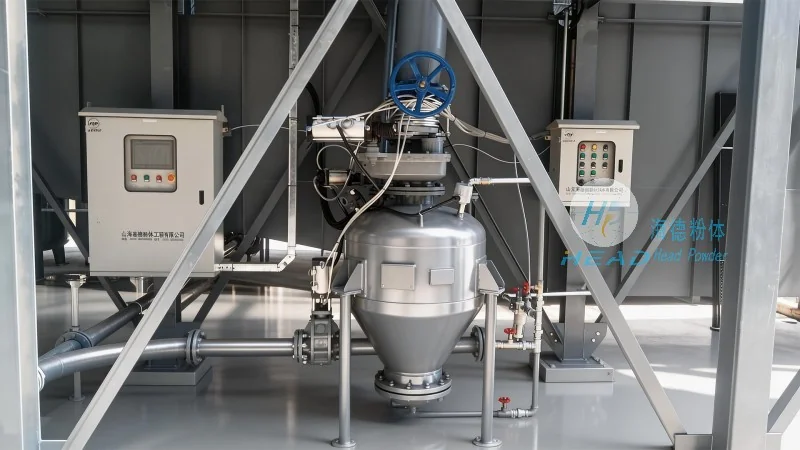
Fly ash positive pressure pneumatic conveying is a closed-loop system where air pressure above atmospheric level is used to propel fly ash particles through a network of pipes. The process begins with a pressure vessel or blow tank that feeds fly ash into the conveying line. Compressed air, generated by a screw compressor or blower, is introduced at the inlet, creating a high-velocity air stream that carries the material forward. At the discharge end, a separator or silo receiver collects the fly ash, while the air is filtered and released. This method is particularly effective for abrasive and fine powders like fly ash, as it minimizes wear and tear on components while maintaining a clean working environment. The core product keywords—fly ash pneumatic conveying, fly ash conveying, and fly ash positive pressure pneumatic conveying—are all integral to describing the technology and its applications.
Key Advantages of Positive Pressure Conveying for Fly Ash
Positive pressure conveying offers several distinct benefits over alternative methods such as vacuum or mechanical conveying. First, it supports long-distance transport—often exceeding 500 meters—without significant pressure loss, which is critical for plants with sprawling layouts. Second, the system can handle high tonnages, typically up to 100 tons per hour, making it suitable for large fly ash volumes generated by coal-fired power stations. Third, the sealed nature of the pipeline prevents fugitive dust emissions, complying with strict environmental regulations. Additionally, the positive pressure design allows for multiple feed points and multiple discharge points, enabling flexible routing. Headpowder’s engineering team has optimized these systems to reduce energy consumption by up to 20% compared to conventional designs, further enhancing operational efficiency. The fly ash conveying process becomes more economical and sustainable with such innovations.
How Headpowder Delivers Reliable Fly Ash Conveying Solutions
Shandong Headpowder Engineering Co., Ltd. (Headpowder) is a premier provider of turnkey fly ash handling systems, specializing in fly ash positive pressure pneumatic conveying technology. Headquartered in Shandong, China, the company has accumulated decades of experience in designing, manufacturing, and installing pneumatic conveying systems for a wide range of bulk solids. Every system is tailored to the specific physical properties of the fly ash, such as particle size distribution, moisture content, and abrasiveness. Headpowder’s scope includes blow tanks, rotary valves, pipeline diverter valves, control panels, and automated monitoring systems. Their engineers conduct rigorous CFD simulations to ensure optimal air-to-material ratios and pipeline routing, guaranteeing reliable operation even under harsh conditions. Whether the application involves boiler ash, economizer ash, or ESP ash, Headpowder’s solutions are built to last.
Applications in Power Plants and Industrial Facilities
Fly ash positive pressure pneumatic conveying systems are most commonly deployed in thermal power plants, where fly ash is a major byproduct of coal combustion. The system conveys ash from collection hoppers under electrostatic precipitators or baghouses to storage silos, from which it can be loaded into trucks or railcars for disposal or sale. Beyond power generation, these systems are used in cement plants, where fly ash is used as a pozzolanic additive; in steel mills, for handling blast furnace dust; and in chemical processing facilities, for conveying fine powders. The fly ash pneumatic conveying technology is also adapted for biomass ash and other industrial residues. Headpowder has successfully installed dozens of systems across Asia, Europe, and the Americas, each designed to meet local safety and environmental standards.
System Components and Design Considerations
A typical positive pressure fly ash conveying system consists of several key components: a blow tank (pressure vessel), a compressed air supply unit, a conveying pipeline, a filter receiver, and a control system. The blow tank is equipped with fluidizing pads to prevent material bridging, and its discharge port is fitted with a pinch valve or dome valve for precise flow control. The pipeline is constructed from wear-resistant steel or ceramic-lined bends to withstand the erosive nature of fly ash. The filter receiver, often a pulse-jet baghouse, separates the ash from the conveying air. Headpowder’s design approach emphasizes pressure drop calculations, velocity optimization, and redundancy to avoid blockages. The company’s fly ash conveying expertise ensures that each system achieves a consistent solids-to-air ratio, typically between 10 and 30 kg of ash per kg of air, maximizing efficiency.
Comparison with Other Conveying Methods
When selecting a fly ash handling method, engineers often compare positive pressure pneumatic conveying with dilute phase, dense phase, and mechanical alternatives. Dilute phase systems use high air velocities (20–30 m/s) and are suitable for short distances, but they incur higher energy costs and wear. Dense phase systems operate at lower velocities (3–10 m/s) and are ideal for friable or abrasive materials, but they require higher air pressures. Positive pressure conveying bridges the gap by offering moderate velocities and pressures, with the ability to handle both fine and coarse fractions. Mechanical conveyors like screw conveyors or belt conveyors are less flexible and prone to dust leakage, making pneumatic systems the preferred choice for environmental compliance. Headpowder’s fly ash positive pressure pneumatic conveying systems are engineered to combine the best of both worlds: low maintenance, high reliability, and low emissions.
Why Choose Headpowder for Your Fly Ash Handling Project?
Shandong Headpowder Engineering Co., Ltd. stands out in the global market due to its commitment to quality, innovation, and customer support. The company’s in-house manufacturing facility produces all critical components, ensuring strict quality control and short lead times. Every system is tested under simulated operating conditions before shipment. Headpowder also provides comprehensive after-sales services, including installation supervision, commissioning, and training. For any fly ash handling challenge, from retrofit upgrades to greenfield projects, the team at Headpowder is ready to deliver a tailored solution. To discuss your specific requirements, please contact the head of sales, Zhang Manager, directly via WeChat: 15662777102. Whether you need a small-scale system or a large-capacity plant-wide network, Headpowder has the expertise to design and deliver the most cost-effective fly ash pneumatic conveying solution.
Contact Information for Headpowder
For inquiries, quotes, or technical consultation regarding fly ash conveying systems, do not hesitate to reach out to the sales team. The general manager, Zhang Manager, is available to answer your questions and provide professional guidance. You can contact him via WeChat at 15662777102. Shandong Headpowder Engineering Co., Ltd. is located in Shandong, China, and serves clients worldwide. With a proven track record of hundreds of successful projects, Headpowder is your trusted partner for all fly ash positive pressure pneumatic conveying needs.