

Operation Process and Working Principle of Pneumatic Conveying for Nanometer Calcium Carbonate Mater
Shandong HeadPowder Engineering Co., Ltd., commonly known as HeadPowder, specializes in advanced material handling solutions, particularly in the field of pneumatic conveying for nanometer calcium carbonate materials. With a strong focus on efficiency and precision, the company provides comprehensive systems tailored to the unique characteristics of fine powders like nanometer calcium carbonate. This article delves into the operational process and underlying principles of such systems, highlighting the technical aspects and practical applications.
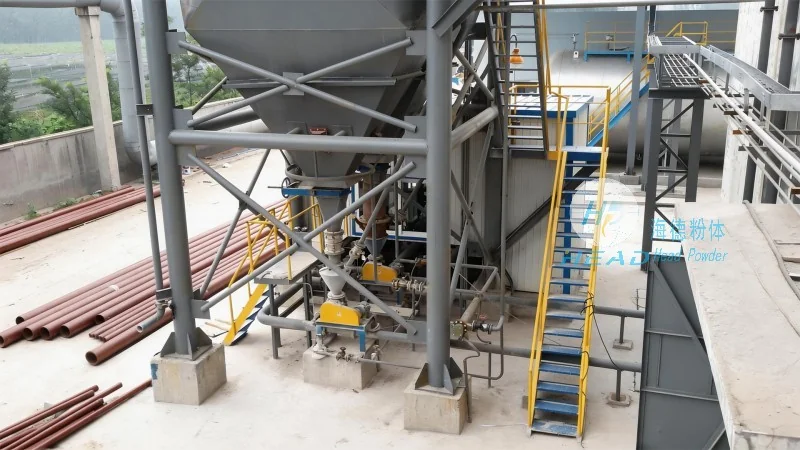
Company Overview and Expertise
HeadPowder, a leading enterprise in Shandong, China, is dedicated to engineering innovative material handling technologies. The company's core mission is to deliver reliable and efficient solutions for transporting fine powders, with a particular emphasis on nanometer calcium carbonate. By leveraging years of experience and cutting-edge technology, HeadPowder has established itself as a trusted partner for industries requiring high-performance pneumatic conveying systems. The company's facilities and expertise are centered in Shandong, China, where it operates with a commitment to quality and customer satisfaction.
Pneumatic Conveying Systems for Nanometer Calcium Carbonate
Nanometer calcium carbonate, due to its extremely fine particle size and low bulk density, presents unique challenges in material handling. Traditional methods like belt conveyors or bucket elevators may not be suitable for such materials, as they can lead to dust accumulation, blockages, and reduced efficiency. Pneumatic conveying offers a superior alternative, enabling the transport of these fine powders in a dust-free, controlled environment. The system typically involves a combination of air movement, pressure differentials, and specialized equipment to move the material from the source to the destination.
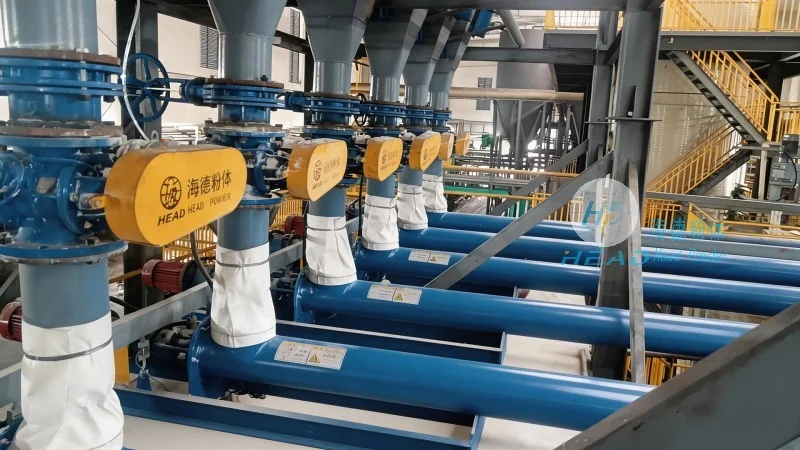
Operation Process of Pneumatic Conveying
The operation of a pneumatic conveying system for nanometer calcium carbonate involves several key steps. First, the material is fed into the system, often using a hopper or feeder that ensures a consistent flow. Next, compressed air is introduced into the conveying line, creating a flow that propels the powder particles. The system may employ different types of conveying, such as dilute-phase or dense-phase, depending on the specific requirements of the application. Dilute-phase conveying uses lower air velocities and higher air-to-material ratios, while dense-phase conveying uses higher air pressures and lower air-to-material ratios to achieve more controlled and efficient transport. The material is then transported through the pipeline to the receiving hopper or storage tank. Finally, the system is designed to ensure minimal pressure loss and optimal flow rates, maintaining the integrity of the nanometer calcium carbonate particles throughout the process.
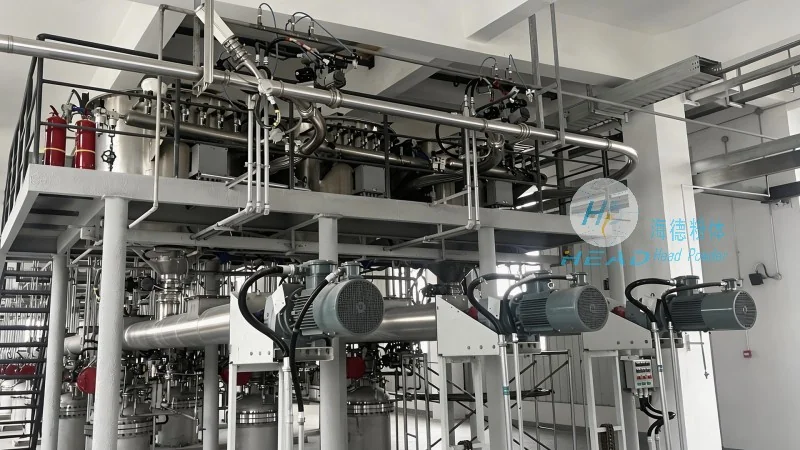
Working Principle of Pneumatic Conveying
The working principle of pneumatic conveying for nanometer calcium carbonate is based on the interaction between the material particles and the air stream. In dilute-phase systems, the particles are suspended in the air as a cloud, with the air velocity sufficient to keep them in motion. The pressure drop along the pipeline is a critical factor, as it determines the flow rate and efficiency of the system. In dense-phase systems, the particles are carried in a slurry-like state, with the air velocity lower than the settling velocity of the particles, ensuring that they remain suspended. The system's design, including the size and configuration of the pipeline, the type of air compressor, and the feeding mechanism, all contribute to the overall performance and effectiveness of the conveying process. By understanding and optimizing these principles, HeadPowder ensures that its systems deliver reliable and efficient transport of nanometer calcium carbonate materials.
Benefits and Applications
Pneumatic conveying systems for nanometer calcium carbonate offer numerous benefits, including dust-free operation, reduced material degradation, and improved process control. These systems are widely used in various industries, such as plastics, coatings, and pharmaceuticals, where the quality and purity of the material are critical. The ability to transport fine powders without contamination or loss makes pneumatic conveying an ideal solution for applications requiring high precision and consistency. HeadPowder's systems are designed to meet the specific needs of these industries, providing customized solutions that enhance productivity and product quality.