

The Operation Process and Working Principle of Perlite Powder Conveying
Perlite powder, a lightweight, porous volcanic glass material, is widely used in construction, horticulture, and industrial applications due to its excellent thermal insulation and fire-resistant properties. Efficient and reliable powder conveying systems are crucial for handling perlite powder, ensuring consistent performance and minimal material loss. This article provides a detailed overview of the operation process and working principles of perlite powder conveying systems, highlighting key components, operational steps, and the importance of proper system design.
Key Components of Perlite Powder Conveying Systems
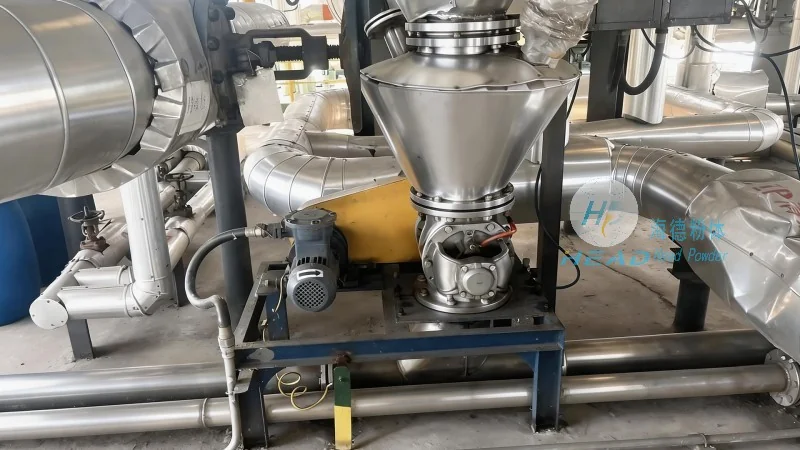
The core components of a perlite powder conveying system typically include a hopper for material storage, a feeder to control the flow rate, a conveying device (such as a pneumatic or mechanical conveyor), and a control system to regulate the entire process. The hopper is designed to hold a sufficient quantity of perlite powder, often equipped with a level indicator to monitor the material volume. The feeder, which may be a rotary valve or a screw feeder, ensures a steady and controlled discharge of the powder into the conveying line. The conveying device, whether pneumatic (using air pressure to transport the powder) or mechanical (using belts or screws), is responsible for moving the perlite powder from the source to the destination. The control system integrates sensors and actuators to adjust the flow rate, pressure, and other parameters, ensuring optimal operation and preventing issues like blockages or overloading.
Operation Process of Perlite Powder Conveying
The operation process of a perlite powder conveying system involves several sequential steps, each critical to maintaining efficiency and safety. First, the perlite powder is loaded into the hopper from a storage silo or bulk container. The hopper’s level indicator alerts operators when the material is low, prompting refilling. Next, the feeder is activated to control the flow rate of the powder. The feeder’s speed is adjusted based on the required output rate, which is determined by the downstream processing equipment or storage needs. Once the powder is fed into the conveying line, the conveying device begins to transport it. In a pneumatic system, compressed air is introduced into the line, creating a flow that carries the perlite particles. The air velocity is carefully managed to prevent particle separation or agglomeration. In a mechanical system, a conveyor belt or screw rotates, pushing the powder forward. The system’s control panel monitors pressure, flow rate, and temperature, providing real-time feedback to operators. If any parameter deviates from the set points, the control system automatically adjusts the feeder speed or air pressure to maintain stable operation. Finally, the perlite powder is discharged into the receiving container or processing unit. The entire process is continuous, with the system running until the hopper is emptied or the required amount is conveyed.
Working Principles of Different Conveying Methods
Two primary methods are commonly used for perlite powder conveying: pneumatic and mechanical. Each method has distinct working principles and applications.
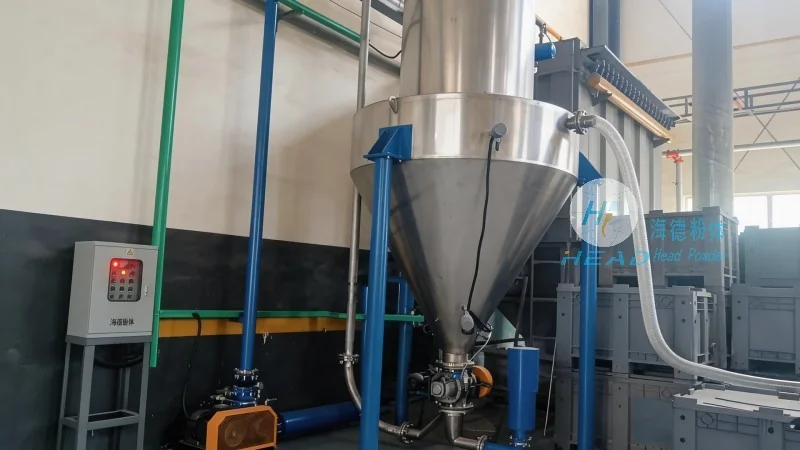
1. Pneumatic Conveying: This method utilizes air pressure to transport the powder. The system consists of a blower or compressor that generates high-pressure air, which is introduced into the conveying line. The air flow carries the perlite particles, creating a suspension that moves through the line. The velocity of the air is crucial; it must be high enough to prevent the powder from settling but low enough to avoid excessive wear on the system components. Pneumatic conveying is suitable for long-distance transport and can handle fine powders like perlite effectively. However, it requires careful control of air pressure and flow rate to prevent blockages or material loss.
2. Mechanical Conveying: Mechanical systems use physical force to move the powder. The most common types include belt conveyors and screw conveyors. Belt conveyors consist of a continuous belt that moves over rollers, with the perlite powder placed on the belt. The belt’s motion transports the powder to the desired location. Screw conveyors use a rotating screw (auger) inside a tube to push the powder forward. The screw’s speed and pitch are adjusted to control the flow rate. Mechanical conveying is often preferred for short-distance transport or when the powder needs to be mixed with other materials. It is generally more cost-effective and requires less maintenance than pneumatic systems, but it may not be suitable for very fine or abrasive powders.
Importance of Proper System Design and Maintenance
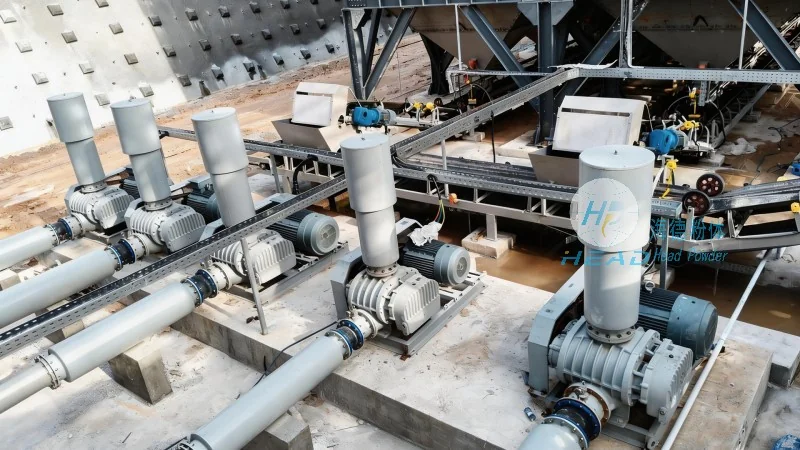
Proper design and regular maintenance are essential for the reliable operation of perlite powder conveying systems. The system must be designed to handle the specific characteristics of perlite powder, such as its particle size, density, and flowability. For example, if the perlite is very fine, the conveying line may need to be larger or the air velocity adjusted to prevent clogging. The hopper and feeder should be designed to minimize material bridging or segregation, which can lead to uneven flow. Regular maintenance is crucial to prevent wear and tear on components, such as the blower in a pneumatic system or the screw in a mechanical system. Filters and cyclones are often used in pneumatic systems to separate the powder from the air, preventing dust accumulation and ensuring the system operates efficiently. Cleaning the system periodically, especially after long periods of inactivity, helps maintain performance and prevent contamination.
Applications and Benefits of Efficient Perlite Powder Conveying
Efficient perlite powder conveying systems offer several benefits across various industries. In construction, perlite is used as a lightweight aggregate in concrete and plaster, and reliable conveying ensures consistent material quality. In horticulture, perlite is used as a soil amendment, and proper conveying helps maintain the purity of the material. Industrial applications, such as in insulation and filtration, also benefit from efficient powder handling. The benefits include reduced material loss, improved process consistency, and enhanced safety by minimizing dust exposure. Additionally, well-designed systems can reduce energy consumption and operating costs, making them economically viable for long-term use.
Conclusion
Understanding the operation process and working principles of perlite powder conveying systems is vital for optimizing performance and ensuring the reliable handling of this valuable material. By incorporating proper components, following the sequential operation steps, and maintaining the system regularly, users can achieve efficient and safe powder transport. The choice between pneumatic and mechanical conveying depends on the specific application requirements, with each method offering unique advantages. As the demand for perlite continues to grow, the importance of efficient powder conveying systems will only increase, supporting the needs of various industries and contributing to sustainable material handling practices.