

Operation Process and Working Principle of Bicarbonate of Soda Pneumatic Conveying Equipment
Bicarbonate of soda, also known as sodium bicarbonate, is a widely used chemical in various industries, including food processing, pharmaceuticals, and chemical manufacturing. The efficient and reliable transportation of this material from storage to processing units is crucial for maintaining production efficiency and product quality. Pneumatic conveying systems offer a solution to this challenge by using air to move the material through a pipeline network. This article provides a detailed overview of the operation process and working principle of a bicarbonate of soda pneumatic conveying system, highlighting the key components, operational steps, and technical aspects that ensure smooth and effective material handling.
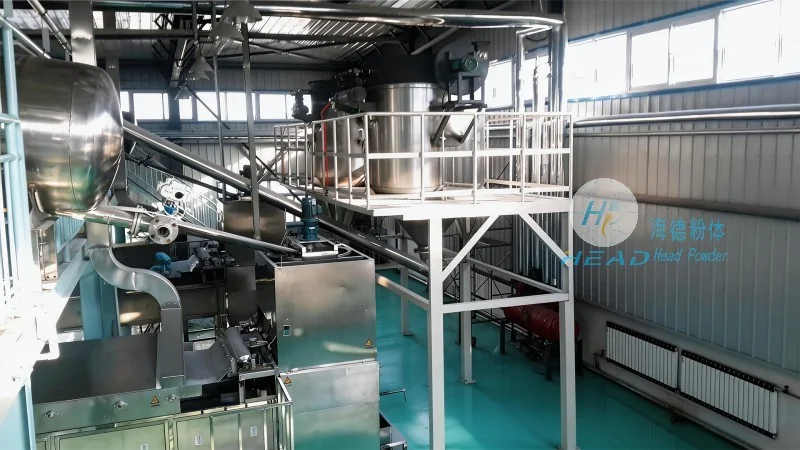
Company Profile: Shandong HeadPowder Engineering Co., Ltd.
As a leading manufacturer in the field of material handling equipment, Shandong HeadPowder Engineering Co., Ltd. specializes in designing and manufacturing high-quality pneumatic conveying systems tailored to the specific needs of clients. With a strong commitment to innovation, quality, and customer satisfaction, the company has established itself as a trusted partner for businesses requiring reliable and efficient material transport solutions. HeadPowder's expertise in engineering and manufacturing ensures that their pneumatic conveying equipment is built to withstand the demands of industrial applications while delivering optimal performance and longevity.
Key Components of the Pneumatic Conveying System
The bicarbonate of soda pneumatic conveying system consists of several critical components that work in tandem to achieve effective material transport. These components include the hopper or storage bin, the feeder, the air compressor, the conveying line, the control system, and the discharge unit. Each component plays a vital role in the overall operation of the system, and their proper integration is essential for ensuring the system's efficiency and reliability.
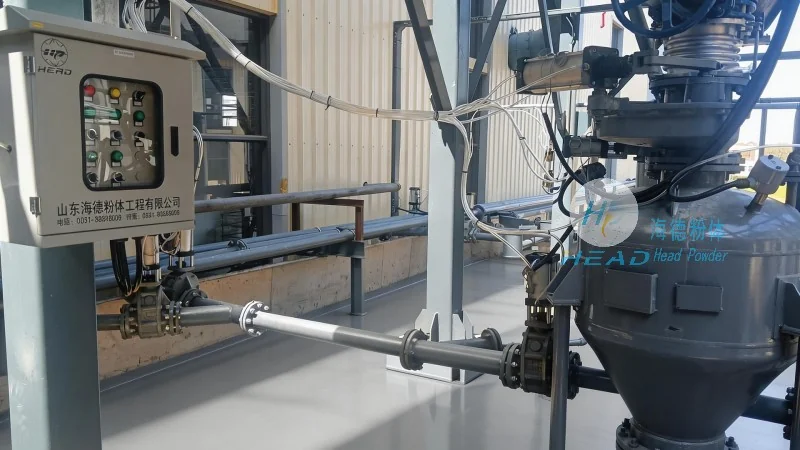
The hopper or storage bin is where the bicarbonate of soda is stored before being conveyed. It is designed to hold a sufficient quantity of material to meet the production requirements and is equipped with a discharge valve or gate to control the flow of material into the feeder. The feeder, typically a rotary valve or a screw feeder, regulates the flow of material from the hopper into the conveying line, ensuring a consistent and controlled feed rate. The air compressor generates the necessary air pressure to move the material through the pipeline. The conveying line, usually made of stainless steel or other corrosion-resistant materials, is designed to withstand the pressure and temperature conditions of the material being transported. The control system monitors and regulates the air pressure, flow rate, and material feed rate to maintain optimal operation. Finally, the discharge unit, such as a rotary valve or a hopper, receives the material at the end of the conveying line and directs it to the processing unit or storage area.
Operation Process of the Bicarbonate of Soda Pneumatic Conveying System
The operation of the bicarbonate of soda pneumatic conveying system involves several sequential steps that ensure the smooth and continuous transport of the material. The process begins with the material being loaded into the hopper from a bulk storage or production line. The feeder then starts to discharge the material into the conveying line at a controlled rate. Simultaneously, the air compressor generates the required air pressure, which is introduced into the conveying line through a venturi or a blower. The air and material mixture travels through the pipeline, with the air providing the necessary force to move the material. The control system continuously monitors the pressure and flow rates, adjusting the air supply as needed to maintain a stable conveying condition. At the receiving end, the material is discharged from the conveying line into the discharge unit, which then directs it to the next processing stage or storage location. The system operates in a closed loop, with the air being filtered and recycled to minimize waste and energy consumption.
Working Principle of the Pneumatic Conveying System
The working principle of the bicarbonate of soda pneumatic conveying system is based on the principle of fluidization and pneumatic transport. The air compressor provides a high-pressure air stream that is introduced into the conveying line. As the air flows through the line, it creates a low-pressure zone that draws the material from the hopper into the line. The material is then carried along with the air stream, forming a mixture of air and material particles. The velocity of the air stream is critical, as it must be sufficient to overcome the gravitational force and the frictional resistance of the material particles. The conveying line is designed with appropriate dimensions and angles to ensure that the material is transported efficiently without causing blockages or excessive wear. The control system plays a crucial role in maintaining the optimal air velocity and pressure to achieve the desired conveying rate and material quality.
Advantages of Using Pneumatic Conveying for Bicarbonate of Soda
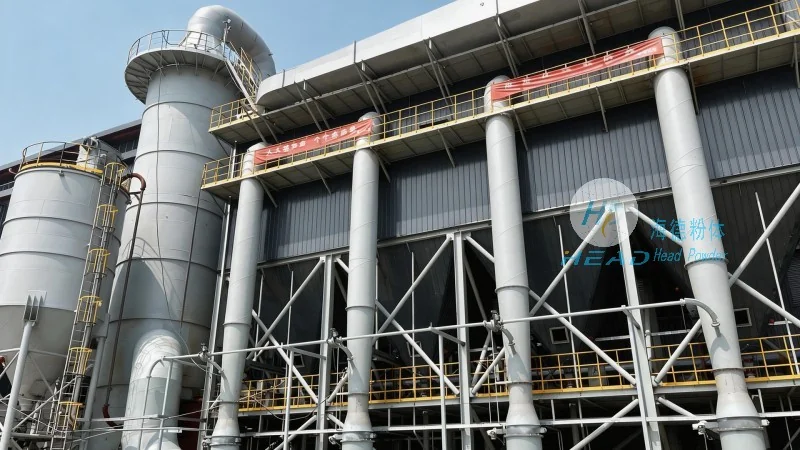
There are several advantages to using a pneumatic conveying system for transporting bicarbonate of soda. First, the system is fully enclosed, which helps to prevent dust contamination and ensures a clean and hygienic environment, which is particularly important in food and pharmaceutical applications. Second, the system is flexible and can be easily integrated with existing production lines, allowing for seamless material transport. Third, the system is energy-efficient, as the air can be recycled and reused, reducing energy consumption and operating costs. Fourth, the system is low-maintenance, as it has fewer moving parts compared to other material handling systems, such as belt conveyors or bucket elevators. Finally, the system is capable of handling a wide range of material sizes and shapes, making it suitable for various industrial applications.
Applications of Bicarbonate of Soda Pneumatic Conveying Systems
Bicarbonate of soda pneumatic conveying systems are used in a variety of industrial applications, including food processing, where it is used as a leavening agent in baking and as a pH adjuster in beverages. In the pharmaceutical industry, it is used as an antacid and a buffering agent in drug formulations. In the chemical industry, it is used as a raw material in the production of other chemicals and as a neutralizing agent in wastewater treatment. The versatility of the pneumatic conveying system makes it an ideal solution for these applications, as it can handle the material in its bulk form without the need for pre-processing or packaging.