

Operation Process and Working Principle of Aggregate Pneumatic Conveying Systems
Aggregate pneumatic conveying systems are essential in modern material handling, particularly for transporting bulk materials like aggregates efficiently and safely. These systems utilize air pressure to move materials through a pipeline network, offering advantages such as reduced dust, minimal maintenance, and the ability to handle a wide range of materials. Understanding the operation process and working principles of such systems is crucial for optimizing performance and ensuring reliable material transport in industrial applications. Shandong HeadPowder Engineering Co., Ltd., a leading manufacturer in the field, specializes in designing and supplying high-quality aggregate pneumatic conveying systems tailored to meet the specific needs of various industrial sectors.
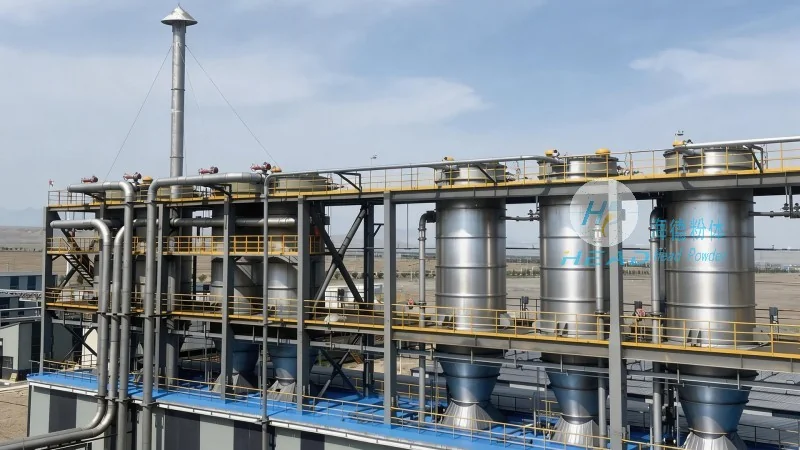
Overview of Aggregate Pneumatic Conveying Systems
Aggregate pneumatic conveying systems are designed to transport loose bulk materials, including sand, gravel, and other construction aggregates, from one location to another. The system typically consists of a hopper for material storage, a blower or compressor to generate air pressure, a pipeline network, and a discharge point. The primary goal is to move these materials without the need for mechanical components like belts or buckets, which can be prone to wear and tear. This approach not only enhances operational efficiency but also minimizes the risk of material contamination and dust exposure.
Key Components and Their Functions
The effectiveness of an aggregate pneumatic conveying system relies on several critical components, each playing a specific role in the material transport process. The hopper serves as the storage and feeding unit, ensuring a consistent supply of material to the system. It is equipped with a feeder, often a rotary valve or a screw feeder, which controls the flow rate of the material into the pipeline. The blower or compressor is the heart of the system, generating the necessary air pressure to move the material through the pipeline. This component can be a positive displacement blower or a centrifugal fan, depending on the system's design and the material's characteristics. The pipeline network connects the hopper to the discharge point, and its design, including diameter and bends, is crucial for maintaining air velocity and preventing material settling or blockages. Finally, the discharge point, often a silo or a hopper at the receiving end, collects the transported material, completing the process.
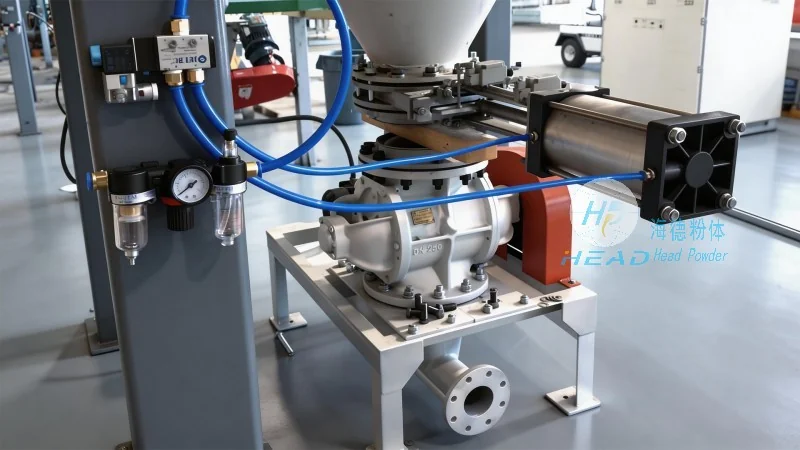
Working Principle of Pneumatic Conveying
The working principle of an aggregate pneumatic conveying system is based on the principle of fluidization and drag. When air is introduced into the pipeline at a high velocity, it creates a flow that lifts and transports the material particles. The material is suspended in the air stream, and the air velocity must be sufficient to overcome the gravitational force acting on the particles. This process is known as the "drag" or "pressure" conveying method, where the air pressure pushes the material through the pipeline. The system operates in either positive pressure or negative pressure mode. In positive pressure systems, the blower supplies air under pressure, pushing the material forward. In negative pressure systems, a vacuum is created at the discharge end, pulling the material through the pipeline. The choice between these modes depends on the system's layout, the distance to be covered, and the material's properties.
Operation Process: From Hopper to Discharge
The operation process of an aggregate pneumatic conveying system involves several sequential steps that ensure smooth and continuous material transport. The process begins with the material being fed into the hopper from a storage silo or truck. The feeder then regulates the flow rate, controlling the amount of material entering the pipeline. The blower or compressor starts, generating the required air pressure. As the air flows through the pipeline, it picks up the material from the hopper and transports it to the discharge point. The material is then discharged into the receiving hopper or silo. The system continuously operates, with the feeder and blower working in tandem to maintain a steady flow. The control system monitors parameters such as air pressure, material flow rate, and pipeline pressure, adjusting the operation as needed to prevent blockages or inefficiencies. This automated process ensures that the material is transported efficiently and reliably, minimizing downtime and maximizing productivity.
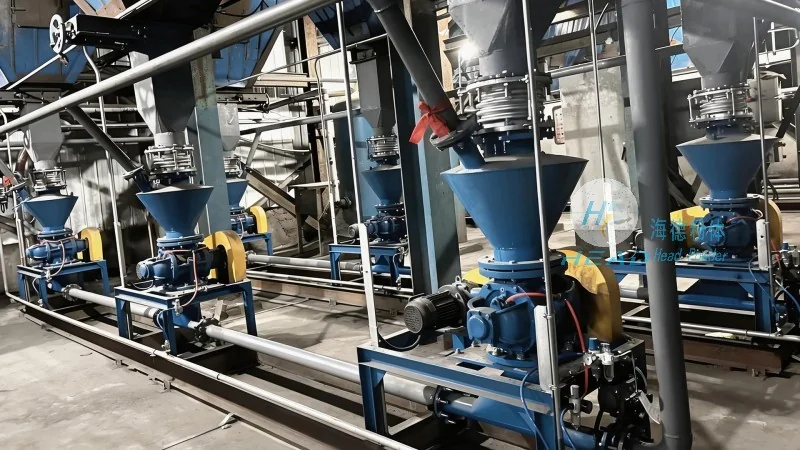
Optimizing Performance and Maintenance
Optimizing the performance of an aggregate pneumatic conveying system requires careful consideration of several factors. The air velocity in the pipeline must be maintained at an appropriate level to prevent material settling or blockages. This is achieved by selecting the correct pipeline diameter and ensuring smooth bends and transitions. The blower or compressor must be sized appropriately to provide sufficient air pressure for the system's length and material characteristics. Regular maintenance is also crucial to ensure the system operates efficiently. This includes checking the condition of the feeder, cleaning the hopper and pipeline to prevent material buildup, and inspecting the blower or compressor for wear and tear. By implementing these measures, the system can achieve high efficiency, low maintenance costs, and reliable material transport over its operational life.
Applications and Benefits
Aggregate pneumatic conveying systems are widely used in various industries, including construction, mining, and manufacturing. They are particularly beneficial in applications where long-distance transport is required, or where dust control is a priority. The systems offer several advantages over traditional mechanical conveying methods, such as reduced labor costs, minimal space requirements, and the ability to handle materials with high moisture content or abrasive properties. Additionally, the systems are relatively easy to install and can be integrated into existing facilities with minimal disruption. The benefits of using aggregate pneumatic conveying systems extend to improved safety, as they eliminate the need for manual handling of bulk materials, and enhanced environmental performance, as they reduce dust emissions and material spillage.