Case
urea particles have the following basic physical and chemical properties: density is about 0.85g/cm3, melting point is about 133°C, boiling point is about 153°C, soluble in water, stable chemical properties, non-flammable, non-explosive, and less corrosive to metals. During the conveying process, urea particles should be kept dry to avoid moisture agglomeration. Common conveying methods of urea particles include: screw conveying, bucket elevator, pneumatic conveying, belt conveying, etc. When choosing the transportation method of urea particles, the characteristics of the material, the transportation needs, and whether there are other transportation needs should be taken into account. At present, the common urea particle transportation methods in the industry mainly include the following types: spiral conveying is suitable for short-distance, horizontal or inclined conveying; Bucket elevators are suitable for vertical conveying; Pneumatic conveying is suitable for long-distance and large-flow conveying; Belt conveying is suitable for long-distance, large-flow, and multi-variety material conveying.

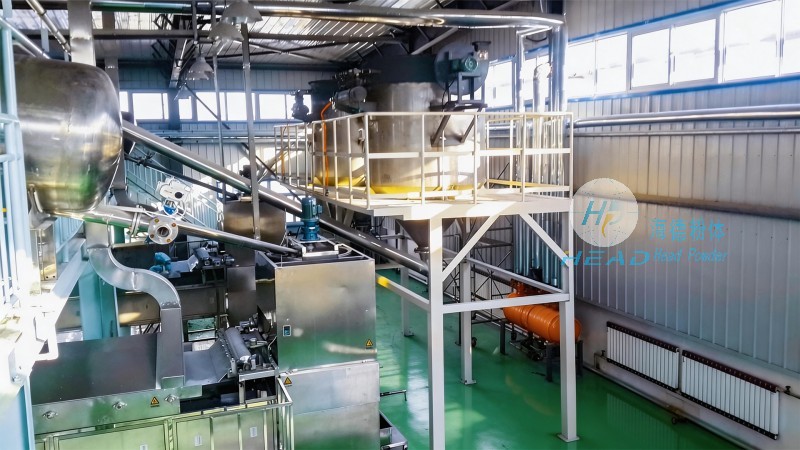
Urea particles are commonly conveyed into mechanical conveying and pneumatic conveying. Mechanical conveying relies on the movement of mechanical components, which is a traditional basic method, suitable for short-distance, low-height, and small-flow scenarios, including screw conveyors, bucket elevators, belt conveyors, and scraper conveyors, each with its own specific principles and characteristics. Pneumatic conveying uses airflow energy to transport materials in closed pipelines, which is the core technology of material processing, warehousing, and packaging, and can be adapted according to the characteristics of different materials.
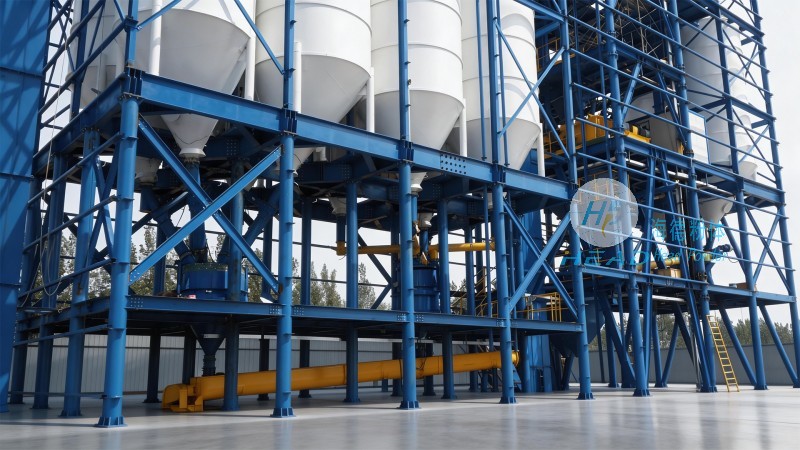
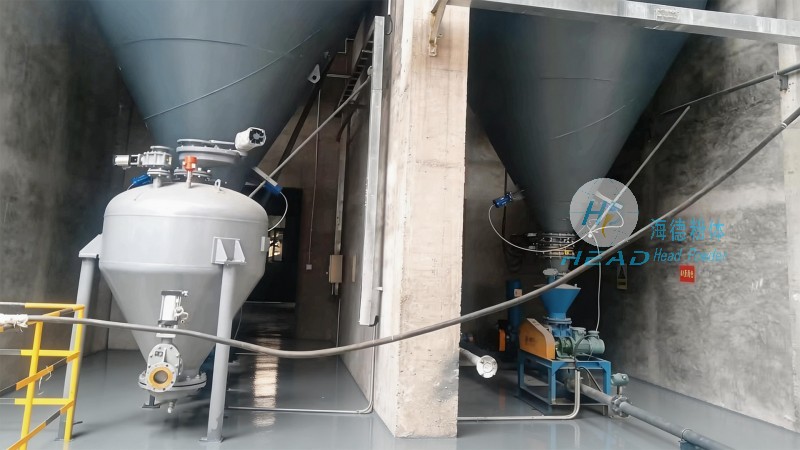
urea particles are very suitable for pneumatic conveying because of their fine particles, small density, good fluidity and no obvious cohesion, which uses compressed air or vacuum as the power source to form an airflow with material in a closed pipeline, and realizes gas-solid separation through a separator. Pneumatic conveying is divided into negative pressure suction type, positive pressure pressure pressure conveying type and mixed type according to the conveying pressure and power form, and dilute phase conveying is usually used to improve the concentration of gas-solid mixing.

pneumatic conveying of urea pellets is an efficient method of material conveying that transports urea particles from the feeding point to a designated location through compressed air. The system is composed of conveying pipelines, fans, gas storage tanks, controllers, etc., which has the advantages of long conveying distance, large conveying capacity, fast conveying speed, easy operation, safety and reliability, and is widely used in chemical, fertilizer, food and other industries. During the conveying process, urea particles are fully mixed with air, which prevents friction and wear between particles, reduces energy consumption, and avoids dust pollution and protects the environment.

urea particles are that they have low energy consumption and high transportation efficiency during transportation, which can effectively reduce dust pollution and achieve cleaner production. At the same time, this conveying method has a simple structure, easy operation, strong adaptability, and is widely used in industrial fields.
When selecting a pneumatic conveying system for urea particles, it is necessary to pay attention to the physical and chemical properties of the conveying medium, the conveying distance, the conveying volume, the material of the conveying pipeline, the diameter of the pipeline, the conveying air speed, the dust removal equipment, the control system and other factors to ensure the stable, efficient and safe operation of the system. At the same time, it is also necessary to consider comprehensive factors such as equipment selection, installation and commissioning, operation and maintenance, etc., to meet production needs.
Hyde urea particle pneumatic conveying system adopts an efficient and energy-saving design, which has the advantages of large conveying capacity, long conveying distance, low dust emission and easy operation. The system uses high-quality materials and precision processes to ensure a stable and reliable conveying process, effectively reduce energy consumption, improve production efficiency, and bring users an environmentally friendly, efficient, and economical production experience.
The pneumatic conveying method ofurea particles has the advantages of high conveying efficiency, good conveying quality and fast conveying speed, but it also has disadvantages such as high energy consumption and certain impact on the environment. With years of industry experience, Hyde Powder is committed to simplifying the material handling process by being able to tailor conveying solutions for thousands of materials. For the service of Hyde Powder, everyone has a positive attitude and believes that its professionalism and efficiency are trustworthy. Feel free to share your views and discussions in the comment area. Hyde Powder is committed to making material transportation more convenient and efficient!

 Shandong Haide Powder Engineering Co., Ltd
 156-6277-7102(Manager Zhang)
  0531-83386006
  No. 1 Shanggao Industrial Park, Zhangqiu District, Jinan City, Shandong Province
 telephone
top