

Operation Process and Working Principle of Pneumatic Conveying Equipment for Nickel Sulfate Crystall
HeadPowder, a leading engineering firm based in Shandong, China, specializes in the design and manufacturing of advanced pneumatic conveying systems tailored for handling nickel sulfate crystalline materials. This article delves into the operational process and underlying working principles of such equipment, providing a comprehensive overview for industry professionals and potential clients.
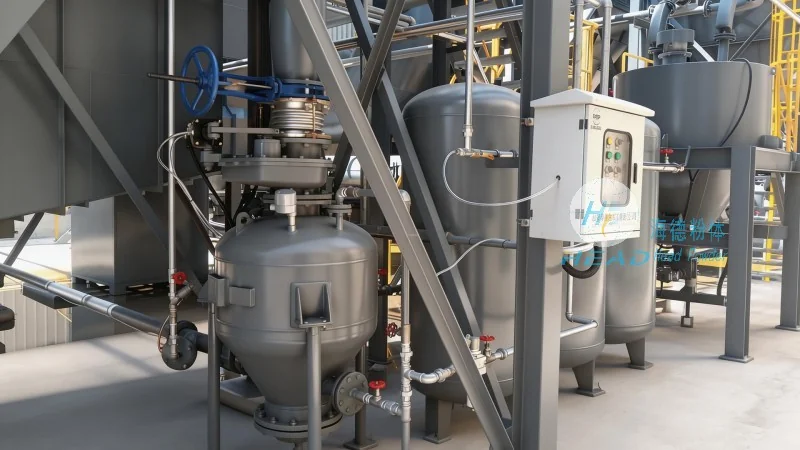
Overview of Pneumatic Conveying Systems for Nickel Sulfate Crystalline Material
Pneumatic conveying equipment is a critical component in the processing and transportation of nickel sulfate crystalline material, which is widely used in battery manufacturing and other industrial applications. The system utilizes compressed air or other gas to transport solid particles through a pipeline, eliminating the need for mechanical components like conveyors or elevators that might cause contamination or material degradation. HeadPowder's solutions are engineered to ensure efficient, reliable, and safe material handling, meeting the stringent requirements of modern industrial operations.
Key Components and Their Functions
The pneumatic conveying system for nickel sulfate crystalline material typically consists of several key components, each playing a vital role in the overall operation. These include the material hopper, which stores and feeds the crystalline material; the air compressor or blower, which generates the necessary airflow; the conveying pipeline, which transports the material from the hopper to the destination; and the separation or collection unit, which discharges the material at the end of the pipeline. Additionally, the system may incorporate filters and cyclones to separate air from the material, ensuring clean operation and preventing dust contamination.
Working Principle of the Pneumatic Conveying Process
The operation of the pneumatic conveying equipment for nickel sulfate crystalline material follows a systematic process. Initially, the crystalline material is fed into the material hopper from a storage silo or batch container. The hopper is equipped with a feeding mechanism, such as a rotary valve or screw feeder, which controls the flow rate of the material into the conveying pipeline. Simultaneously, the air compressor or blower starts, generating a high-pressure airflow that enters the pipeline. As the material is introduced into the pipeline, the airflow lifts and transports the particles through the system. The velocity of the air is carefully controlled to ensure that the material is conveyed without causing excessive wear on the equipment or material degradation.
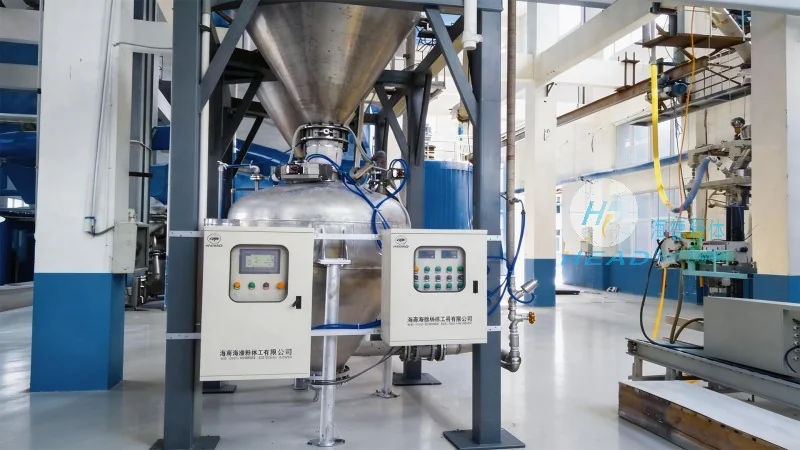
Upon reaching the destination point, such as a storage silo or processing unit, the material is discharged from the pipeline. The air, now mixed with fine particles, passes through a separation unit, which may consist of a cyclone or filter. The cyclone uses centrifugal force to separate the material from the air, directing the material to a collection bin while the clean air is discharged to the atmosphere or recirculated. This separation process is crucial for maintaining the purity of the material and preventing dust emissions.
Operational Process Flow
The operational process of the pneumatic conveying equipment for nickel sulfate crystalline material can be broken down into several sequential steps. First, the system is prepared by checking the air compressor, ensuring sufficient pressure and proper air filtration. Next, the material hopper is filled with the crystalline material, and the feeding mechanism is activated to start the material flow. The air compressor then begins operation, creating the necessary airflow to initiate the conveying process. As the material is transported through the pipeline, the system continuously monitors the flow rate and pressure to maintain optimal performance. At the receiving end, the material is discharged and collected, while the air is separated and handled as per the design. The entire process is automated to minimize human intervention, ensuring consistent and reliable operation.
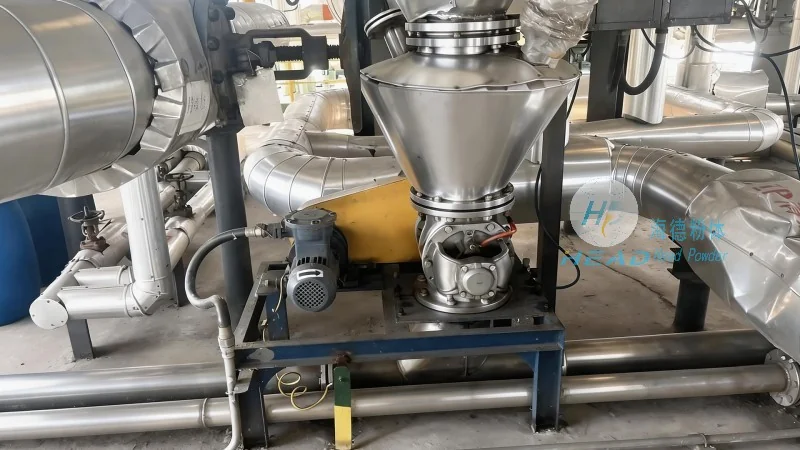
Advantages of Using Pneumatic Conveying for Nickel Sulfate Crystalline Material
HeadPowder's pneumatic conveying systems offer several advantages when handling nickel sulfate crystalline material. Firstly, the system provides a dust-free and hygienic environment, which is essential for maintaining the quality of the material, especially in applications related to battery production. Secondly, the equipment is highly efficient, with minimal material loss and low energy consumption compared to traditional mechanical conveying methods. Additionally, the system is flexible and can be easily integrated into existing production lines, allowing for seamless material transfer between different processing stages. The compact design of the equipment also reduces the footprint required for installation, making it suitable for both new and retrofit applications.
Customization and Application Considerations
HeadPowder understands that each industrial application has unique requirements, and therefore, offers customized pneumatic conveying solutions tailored to the specific needs of clients. Factors such as material properties, flow rates, and distance of transportation are carefully considered during the design phase to ensure optimal performance. For nickel sulfate crystalline material, which may have varying particle sizes and moisture content, the system is designed with appropriate air velocities and pipeline diameters to prevent blockages and ensure smooth operation. The company also provides comprehensive support, including installation, commissioning, and maintenance services, to ensure that the equipment operates at peak efficiency throughout its lifecycle.
Conclusion
In conclusion, the pneumatic conveying equipment for nickel sulfate crystalline material developed by HeadPowder is a sophisticated and reliable solution for efficient material handling. By understanding the operational process and working principles of the system, users can appreciate the benefits of using such technology in their industrial operations. With its focus on quality, efficiency, and customization, HeadPowder continues to be a trusted partner in providing advanced engineering solutions for the processing industry.