

Principles and Application Scenarios of Pneumatic Conveying for Manganese Silicate
HeadPowder, a leading provider in the field of material handling and processing, specializes in advanced pneumatic conveying systems tailored for various industrial applications. This article delves into the fundamental principles of pneumatic conveying and highlights the specific characteristics of working scenarios where such systems are effectively utilized, particularly in the context of manganese silicate material handling.
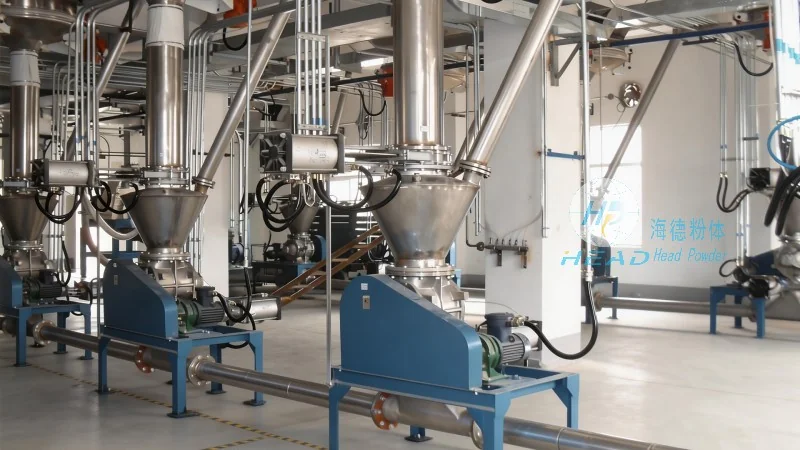
Understanding Pneumatic Conveying Principles
Pneumatic conveying is a method of transporting bulk materials through a pipeline using a gas stream, typically air or other gases. The core principle involves creating a flow of air that carries the solid particles, enabling the material to be moved from one location to another without the need for mechanical components like belts or buckets. There are two primary types of pneumatic conveying systems: pressure and vacuum (or suction) systems. Pressure systems use compressed air to push the material through the pipeline, while vacuum systems use a vacuum to draw the material into the pipeline. The choice between these systems depends on factors such as the distance to be covered, the material's properties, and the desired flow rate.
In the case of manganese silicate, a compound often used in industrial applications like battery production, steelmaking, and chemical manufacturing, the properties of the material play a crucial role in selecting the appropriate pneumatic conveying system. Manganese silicate typically has a relatively fine particle size and can be abrasive, which may affect the system's efficiency and lifespan. Therefore, understanding the material's characteristics is essential for designing an effective conveying system.
Key Working Scenarios for Pneumatic Conveying of Manganese Silicate
HeadPowder's pneumatic conveying solutions are widely applied in several key working scenarios within industrial settings. One common scenario is in the processing plants where manganese silicate is produced or refined. Here, the material is often transferred from storage silos to processing equipment, such as mixers or reactors, requiring a reliable and efficient transport method. Pneumatic conveying excels in this scenario as it allows for continuous and unobstructed material flow, minimizing downtime and enhancing production efficiency.
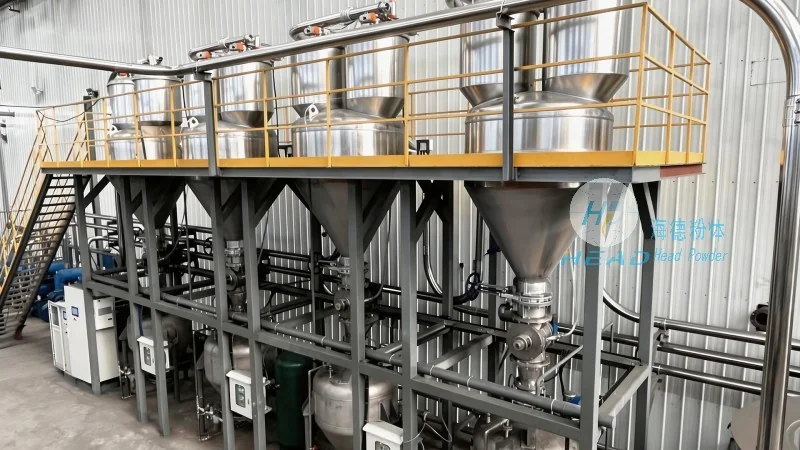
Another important application is in the distribution of manganese silicate to various end-users or downstream processes. For instance, in battery manufacturing facilities, the material may need to be conveyed from a central storage area to multiple production lines. Pneumatic conveying systems can handle this task effectively, ensuring that the material is delivered to each line in a controlled manner, maintaining consistent quality and reducing the risk of contamination.
Additionally, in industrial environments where space is limited or where the material needs to be transported over vertical or inclined distances, pneumatic conveying offers a compact and flexible solution. Unlike traditional mechanical conveyors, which may require extensive space and structural support, pneumatic systems can be installed in tight spaces and adapted to various layouts, making them ideal for modern industrial facilities.

Advantages and Considerations in Manganese Silicate Pneumatic Conveying
Implementing pneumatic conveying for manganese silicate offers several advantages. Firstly, it provides a clean and hygienic method of material transport, which is particularly important in food, pharmaceutical, and chemical industries where contamination must be strictly avoided. Secondly, the system is highly flexible, allowing for changes in the conveying route or capacity without major modifications. Thirdly, it can handle a wide range of material types and particle sizes, making it suitable for diverse applications.
However, there are also considerations to keep in mind when using pneumatic conveying for manganese silicate. The abrasive nature of the material can lead to wear and tear on the system components, such as pipelines and valves, requiring regular maintenance and possibly the use of wear-resistant materials. Additionally, the system's efficiency may be affected by factors like air pressure, flow rate, and the material's moisture content. Proper system design and regular monitoring are essential to ensure optimal performance and longevity.
HeadPowder's Expertise in Pneumatic Conveying Solutions
As a company based in Shandong, China, HeadPowder Engineering Co., Ltd. leverages its extensive experience and technical expertise to provide customized pneumatic conveying solutions for manganese silicate and other industrial materials. With a focus on innovation and quality, HeadPowder designs and manufactures systems that meet the specific needs of its clients, ensuring reliability, efficiency, and cost-effectiveness. The company's commitment to customer satisfaction and technical excellence has made it a trusted partner in the material handling industry.