

Principle and Working Scene Characteristics of Graphite Lumps Pneumatic Conveying Line
Graphite lumps pneumatic conveying lines are advanced industrial systems designed to transport graphite particles efficiently and safely. These systems utilize air as the primary medium to move graphite lumps from one location to another, offering a reliable solution for material handling in various industrial applications. The technology behind these lines combines principles of fluid dynamics and mechanical engineering to ensure optimal performance and minimal material degradation, as developed by Shandong HeadPowder Engineering Co., Ltd.
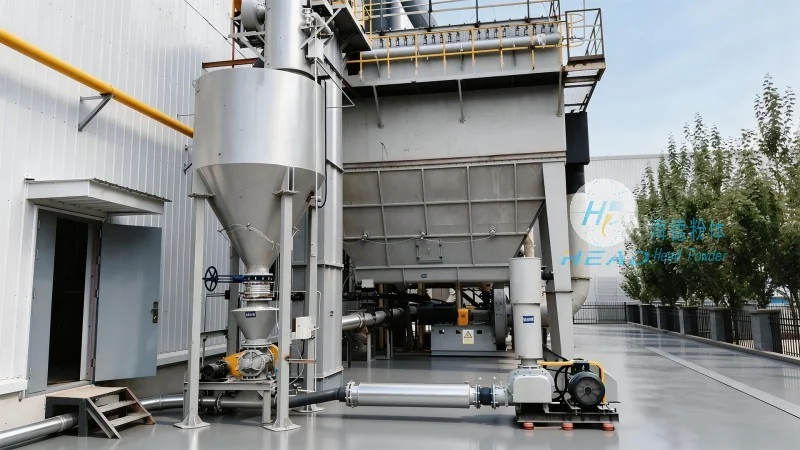
Core Principle of Pneumatic Conveying
The fundamental principle of a graphite lumps pneumatic conveying line is the use of compressed air to create a flow that propels the graphite particles through a pipeline. The system typically consists of a hopper for material storage, a blower or compressor to generate the necessary air pressure, and a pipeline network that guides the material to its destination. As air is introduced into the hopper, it creates a negative pressure or positive pressure environment, depending on the system design, which lifts the graphite lumps and carries them through the pipeline. This process is often referred to as dilute phase or dense phase conveying, with dilute phase being more common for graphite due to its light weight and the need for efficient transport over longer distances.
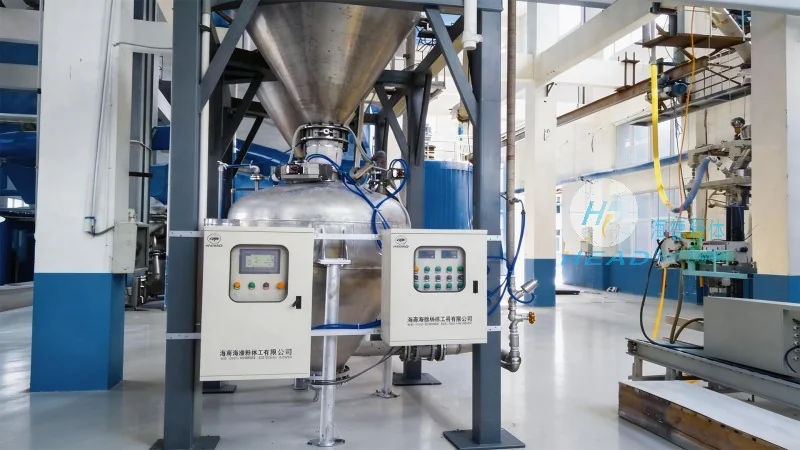
Key Components and Their Functions
Several critical components work in tandem to ensure the smooth operation of a graphite lumps pneumatic conveying line. The hopper serves as the storage and feeding unit, where graphite lumps are loaded and prepared for transport. It is equipped with a feeding valve that controls the flow rate of the material into the pipeline. The blower or compressor is the heart of the system, providing the necessary air pressure to move the material. It can be a rotary lobe blower or a positive displacement compressor, chosen based on the specific requirements of the application. The pipeline network, made of materials resistant to graphite and corrosion, such as stainless steel or special alloys, ensures the material is transported without contamination or degradation. Additionally, the system may include filters and cyclones to separate the graphite from the air at the receiving end, preventing dust accumulation and maintaining air quality.
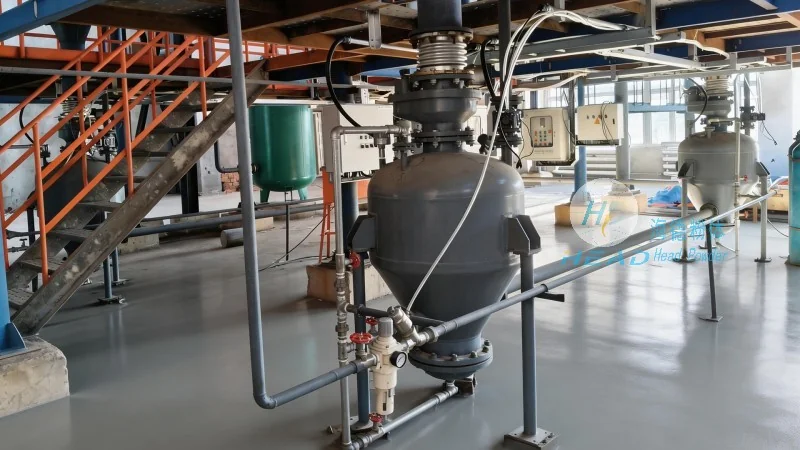
Working Scene Characteristics
The working scene characteristics of graphite lumps pneumatic conveying lines vary based on the specific industrial application. For example, in graphite processing plants, these lines are used to transport raw graphite lumps from storage to processing equipment, such as crushers or grinders. The system must handle varying particle sizes and moisture content, ensuring consistent material flow. In battery manufacturing facilities, the lines transport graphite powder to mixing and compounding units, where it is combined with other materials to create electrode materials. The working environment in these facilities often involves high temperatures and humidity, requiring the conveying line to be durable and resistant to environmental factors. Another common application is in chemical processing plants, where graphite is used as a lubricant or additive, and the pneumatic conveying line ensures safe and efficient transport of the material to processing tanks. The characteristics of the working scene, such as the scale of production, the distance to be covered, and the environmental conditions, all influence the design and configuration of the conveying line.
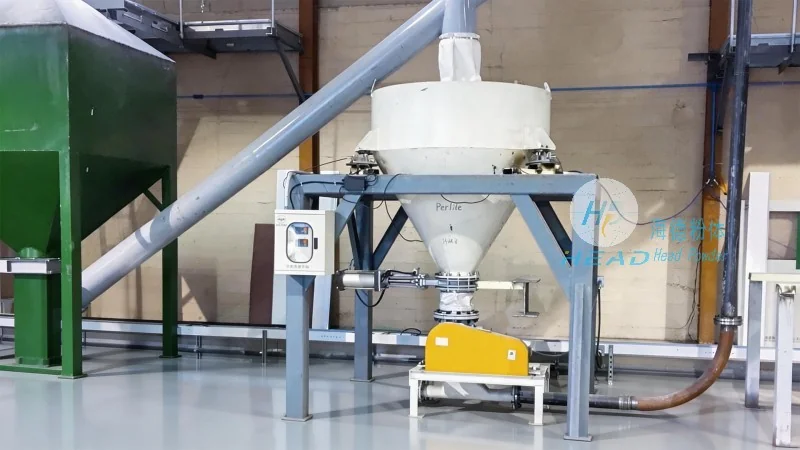
Advantages and Applications
Graphite lumps pneumatic conveying lines offer several advantages over traditional material handling methods, such as belt conveyors or bucket elevators. One of the primary advantages is the ability to transport material in a closed system, which prevents dust emissions and maintains a clean working environment. This is particularly important in industries where graphite dust can be hazardous to workers or affect product quality. Another advantage is the flexibility of the system, as it can be easily reconfigured to accommodate changes in production volume or material flow. The system also reduces the need for manual handling, improving safety and efficiency. In terms of applications, these lines are widely used in the graphite industry, battery manufacturing, chemical processing, and other industries that require the transport of fine or lumpy materials. The ability to handle varying particle sizes and moisture content makes them suitable for a wide range of applications, from small-scale laboratory use to large-scale industrial production.